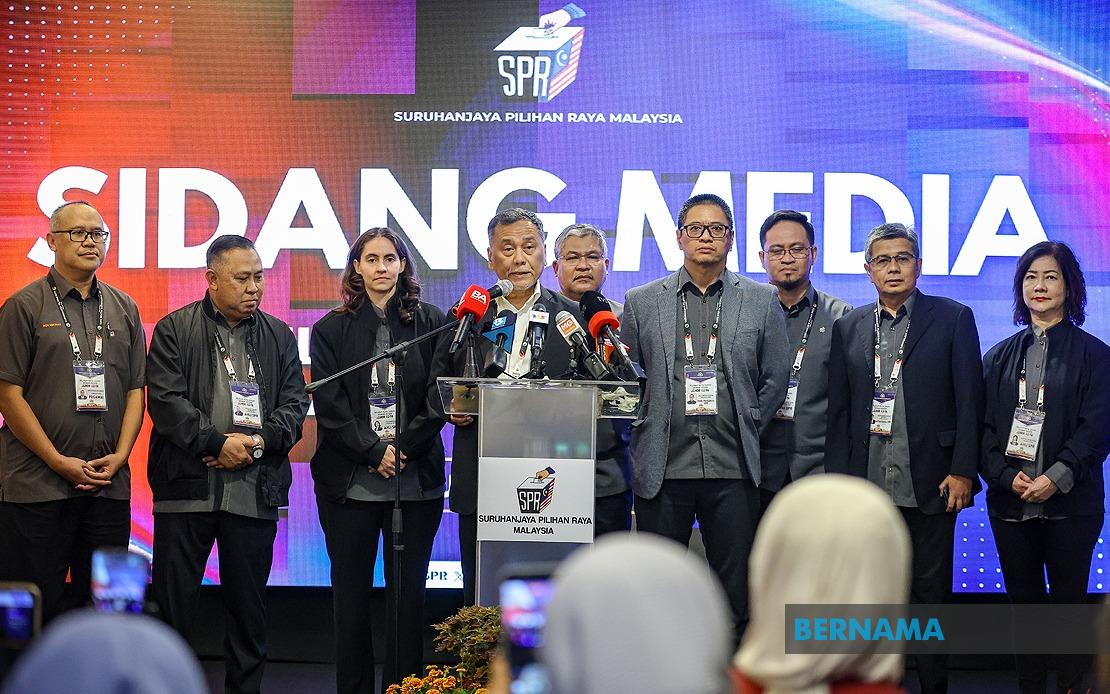
Johor has reaffirmed its political allegiance to Barisan Nasional in decisive fashion, with the ruling coalition capturing 48 of the 56 contested seats in yesterday's state election to secure a commanding two-thirds supermajority. The results, announced just after 1 am, represent a significant consolidation of BN's grip on Malaysia's southern political heartland, building substantially on the coalition's 40-seat performance in the 2022 state election. Pakatan Harapan managed to retain just eight seats, marking a considerable retreat from its previous position and signalling a shift in voter sentiment in the peninsula's second-most populous state.
The composition of BN's victory reflects the coalition's internal power dynamics, with Umno capturing the lion's share of 36 seats, followed by MCA's eight and MIC's four. This breakdown underscores Umno's renewed dominance within the broader coalition structure, a development with implications for federal political alignments heading into the next general election. For the opposition, DAP secured six of Pakatan Harapan's seats, whilst PKR and Amanah each retained just one. The decisive outcome effectively eliminates any meaningful challenge from Perikatan Nasional, which failed entirely to hold onto the three seats it had won in 2022, including high-profile constituencies contested by prominent party figures such as former Johor Menteri Besar Dr Sahruddin Jamal.
The election proved catastrophic for smaller parties and independent candidates alike. Parti Bersama Malaysia, which fielded 15 candidates, lost deposits across its entire slate, whilst Perikatan Nasional, despite contesting 33 seats, drew a complete blank. Parti Sosialis Malaysia, MUDA, Parti Orang Asli Malaysia, and six independent candidates similarly failed to translate their candidacies into electoral victory. This outcome reinforces a broader Southeast Asian pattern wherein coalition politics and established party machinery tend to overwhelm newer entrants, particularly in regional contests where local organisation networks remain paramount.
MIC's performance deserves particular attention, as the party achieved a perfect sweep of all four seats it contested, with victors K. Raven Kumar in Kemelah, V. Rugendran in Kahang, P. Pannir Selvam in Perling and R. Kumaran in Bukit Batu all succeeding in their bids. MCA's eight successful candidates include Ling Tiang Soon in Yong Peng, Lee Ting Han in Paloh, Tan Chong in Bekok, Tan Eng Meng in Pekan Nanas, Chua Jian Boon in Layang-Layang, Haw Chin Teck in Tangkak, See Ann Giap in Jementah and Chan San San in Johor Jaya. The capture of Johor Jaya, along with Tangkak, Jementah and Perling, represents significant territorial gains for MCA, as these four seats had previously been held by DAP, demonstrating a notable erosion of the opposition party's support base.
DAP's performance proved deeply disappointing, seeing the party lose eleven of seventeen contested seats and relinquish four previously held constituencies to coalition rivals. The party retained representation in Skudai, Mengkibol, Bentayan, Senai, Penggaram and Stulang, but the overall contraction reflects changing voter preferences in several urban and semi-urban areas where the party had previously found strong support. Amanah managed to hold Simpang Jeram whilst PKR secured Puteri Wangsa through former Health Minister Dr Maszlee Malik, who defeated four competitors including Bersama's Nicholas Paul Vincent and MUDA's Rashifa Aljunied in a contest that underscored the fragmentation affecting the broader opposition landscape.
Higher-profile contests produced mixed outcomes for both coalitions. BN chairman Datuk Onn Hafiz Ghazi retained Machap with commanding authority, defeating PKR's Nur Hafiz Roslan by a majority of 15,375 votes and polling 20,382 votes overall in a straight fight. Meanwhile, former Health Minister Datuk Seri Dr Adham Baba successfully reclaimed the Pasir Raja seat, which he had held for two previous terms, demonstrating the electoral appeal of established personalities even following their departure from federal office. Conversely, two Members of Parliament encountered electoral reversal, with Onn Abu Bakar losing in Senggarang and Suhaizan Kayat defeated in Larkin by BN candidates, suggesting potential vulnerabilities for opposition parliamentarians at the state election level.
The election witnessed a historic achievement when Datuk Samsolbari Jamali, the Ayer Hitam UMNO division chief, successfully defended Semarang for a sixth consecutive term, cementing his status as a durable political force in his local constituency. Meanwhile, all nine state executive councillors who sought renomination retained their respective seats, indicating broad voter satisfaction with the incumbent administration's performance. These microlevel results collectively paint a portrait of an electorate granting BN explicit authority to continue steering the state apparatus according to its preferred policy trajectory.
Johor BN chairman Datuk Onn Hafiz Ghazi characterised the victory as a substantial democratic mandate authorising the coalition to pursue its developmental agenda and address outstanding governance challenges affecting the broader Johor population. He framed the election outcome as both a testament to public confidence and a responsibility that BN accepted with appropriate humility. The victory's margin provides the governing coalition with legislative flexibility for implementing policy initiatives without requiring opposition cooperation, a position substantially enhanced compared with its 2022 standing.
From the opposition perspective, PKR election director Datuk Seri Amirudin Shari urged Johoreans to recognise the democratic legitimacy of the results whilst pledging that Pakatan Harapan would leverage its reduced parliamentary contingent to articulate constructive criticism and advance alternative policy solutions addressing unresolved community concerns. Johor PAS similarly accepted the outcome as a democratic expression of public choice, maintaining measured rhetoric notwithstanding its coalition partner Perikatan Nasional's complete elimination from state assembly representation. This gracious acknowledgement of electoral defeat stands in contrast to the defensive or combative posturing sometimes witnessed in regional contests elsewhere.
The election engaged approximately 2.7 million registered voters across the 56 constituencies, with one hundred seventy-two candidates competing across multiple party affiliations. This broad candidate field—comprising 56 each from BN and PH, 33 from PN, 15 from Bersama, four from MUDA, six independents, and individual representatives from PSM and ASLI—reflected genuine competition despite the ultimate decisive outcome. The Johor result assumes particular significance for Malaysian politics given the state's economic importance, substantial population, and historical role as a political bellwether offering early indicators of evolving national sentiment as the country approaches its next federal election cycle.

