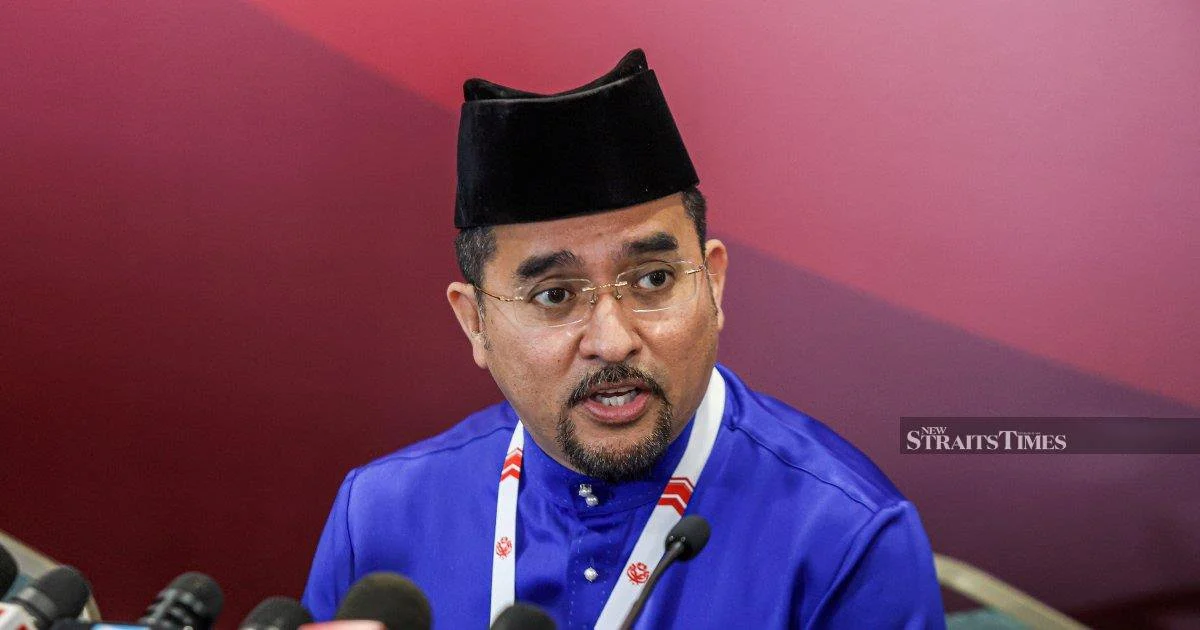
The postponement of Barisan Nasional's candidate announcement for the upcoming Johor election stems directly from the coalition's decision to implement a thorough and exhaustive vetting process, Umno secretary-general Datuk Dr Asyraf Wajdi Dusuki revealed in Kuala Lumpur. The senior party official attributed the delay to the meticulous screening procedures put in place to evaluate potential contenders, suggesting that BN leadership prioritised comprehensive candidate assessment over rapid announcement timelines.
This explanation offers insight into the coalition's approach to candidate selection, a process that has historically been a source of internal tension and controversy within BN's constituent parties. The emphasis on stricter vetting mechanisms indicates an attempt by party leadership to address longstanding concerns about candidate quality and electability, while simultaneously managing expectations among party members and the broader public. For Malaysian political observers, this represents a notable shift in how the coalition manages its pre-election preparations.
The Johor state election holds particular significance for Barisan Nasional, as the state remains one of the coalition's traditional strongholds and a key indicator of its broader political health. Any misstep in candidate selection could have ramifications extending beyond the state itself, affecting BN's positioning ahead of future national contests. The decision to conduct more rigorous vetting therefore reflects high-stakes calculations within the party machinery.
Candidate selection processes in Malaysian politics are rarely purely technical exercises. They intersect with factional dynamics, regional power bases, and negotiations between coalition partners. By emphasizing the importance of a stringent vetting process, Umno's leadership appears to be signalling a commitment to disciplined party management while simultaneously managing internal expectations about who would and would not be selected. This messaging serves multiple audiences: party members seeking reassurance about fairness, voters concerned about candidate quality, and rival coalitions observing BN's internal cohesion.
The delay itself carries political costs and benefits. Extended deliberation risks allowing opposition momentum to build and creates space for speculation and rumour-mongering that can damage BN's campaign narrative. Conversely, rushing the process invites criticism about hasty decision-making and inadequate scrutiny. The coalition's choice to absorb the reputational risk of delay suggests that leadership deemed the integrity of the vetting process more important than speed to market.
For Johor specifically, the thoroughness of candidate selection matters enormously. The state has witnessed significant demographic and economic changes in recent years, with shifts in voter composition particularly evident in urban and semi-urban constituencies. Candidates who understand these evolving voter landscapes and can articulate responses to local concerns around development, cost of living, and community services are particularly valuable. A more comprehensive vetting process theoretically allows for better matching of candidates to constituency-specific challenges.
The vetting criteria employed by Barisan Nasional during this exercise likely encompassed multiple dimensions: electoral track records and winnability assessments, financial probity and absence of legal complications, alignment with party positions on key policy issues, and local community standing and networking capabilities. Each criterion requires time-intensive evaluation, particularly for a coalition managing the competing interests of multiple parties with distinct membership bases and regional concentrations.
Southeast Asian political systems increasingly emphasize candidate quality and integrity as voter priorities, particularly in light of corruption scandals and governance failures that have affected public confidence in political institutions. By publicly identifying stricter vetting as the rationale for delays, Umno's leadership may be attempting to position Barisan Nasional as responsive to these broader regional trends toward demanding higher standards from political candidates and office-holders.
The announcement delay also occurs against a backdrop of shifting electoral dynamics in Malaysia. Recent election cycles have demonstrated that traditional BN support cannot be taken for granted, with younger voters, urban constituencies, and previously reliable demographic groups showing increased openness to opposition alternatives. In this environment, candidate selection becomes even more critical as a lever for electoral recovery or consolidation. The resources devoted to careful vetting reflect an acknowledgment that the coalition cannot afford significant missteps in seat allocation or candidate quality.
Political implications extend to coalition unity itself. Barisan Nasional comprises multiple parties with divergent interests and power bases, and candidate allocation has frequently sparked disputes about fairness and representation. A transparent, rigorous vetting process can help legitimize final decisions across the coalition's constituent members by demonstrating that selection criteria were applied consistently and rationally. This becomes especially important in managing tensions between larger parties like Umno and smaller coalition partners who fear their interests will be overlooked in seat negotiations.
For Malaysian voters, the delay raises substantive questions about what standards the vetting process actually applied and whether the final candidate slate genuinely reflects merit-based selection or remains influenced by patronage and factional considerations. The credibility of Umno's explanation depends partly on whether voters perceive the eventual candidate announcement to justify the extended timeline through demonstrably stronger candidate quality compared to opposition offerings.
The timing of Johor's election remains significant for national political trajectories. As one of the most economically productive and demographically significant states, its electoral outcome will reverberate through federal politics and influence calculations about when general elections might be called. The coalition's deliberate approach to candidate selection in this context reflects awareness that Johor's result carries disproportionate weight in assessments of Barisan Nasional's broader electoral viability and capacity for political renewal.