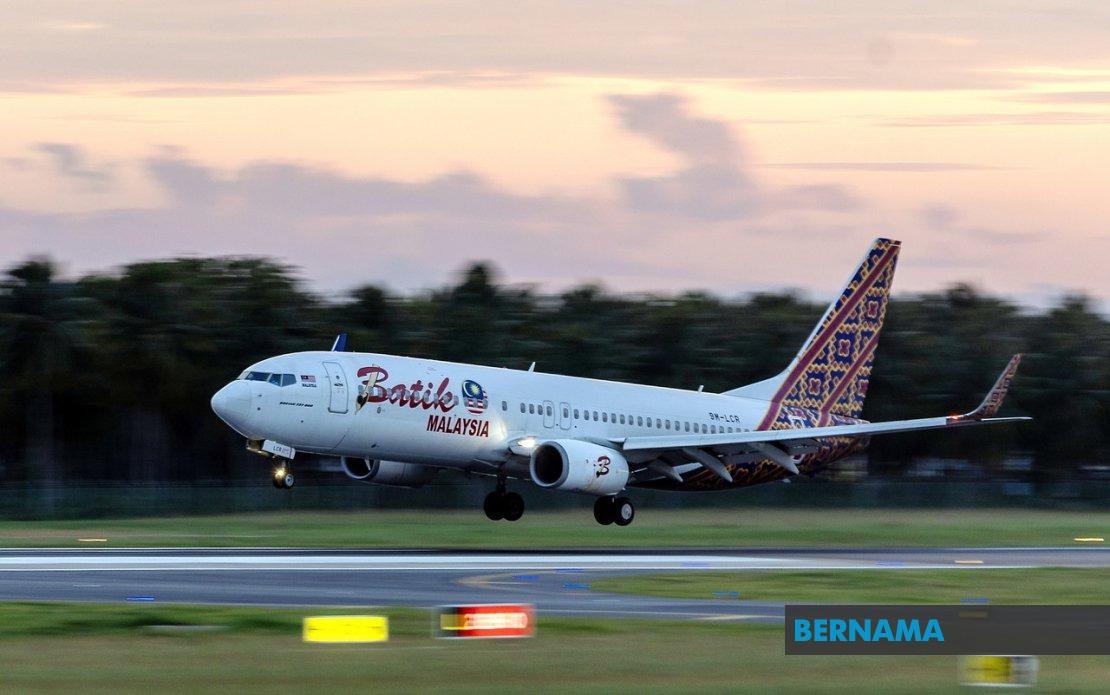
Batik Air will establish twice-daily flights between Bintulu and Kuala Lumpur beginning July 20, marking a significant expansion of regional aviation capacity that reflects mounting pressure on airlines to address public grievances over limited flight availability and escalating fares. Tourism, Arts and Culture Minister Datuk Seri Tiong King Sing announced the expansion following sustained negotiations with the carrier, positioning the move as a response to community concerns that have intensified following recent service reductions and price surges on the route.
The decision to increase frequency comes after sustained engagement between the government and Batik Air to resolve long-standing issues that have frustrated both regular commuters and businesses relying on consistent connectivity between Peninsular Malaysia and the Sarawak interior. Tiong revealed that his initial proposal sought three daily flights, but after discussions with the airline, both parties settled on a phased approach beginning with one additional departure per direction. This pragmatic compromise reflects the complex balancing act that airlines must perform when expanding routes, weighing capacity constraints, operational feasibility, and market demand against mounting public expectations.
Under the new schedule, westbound services will depart Bintulu at 1.10 pm and 5.40 pm daily, while eastbound flights will leave Kuala Lumpur at 10 am and 2.30 pm. The timetabling represents careful coordination to optimise passenger convenience and business travel patterns, with afternoon departures from Bintulu and morning flights from the capital likely designed to accommodate overnight stays and flexible work arrangements. These specific time slots suggest the airline has analysed travel behaviour patterns to maximise utility for both leisure and corporate passengers navigating the route.
Bintulu's accelerating economic development has catalysed growing travel demand that outpaced available capacity, creating bottlenecks affecting diverse sectors. The town's position as a major industrial hub, combined with its role as a medical and education centre attracting students and patients from across Sarawak's interior, has generated consistent passenger demand that single daily flights struggled to accommodate. Tiong emphasised that this economic trajectory necessitates proportionate improvements in transportation infrastructure, ensuring that connectivity does not become a constraint on growth.
The airfare issue constitutes a critical concern that extends beyond mere convenience into questions of regional equity and economic accessibility. Passengers on the Bintulu route have reported dramatic price fluctuations that appear disconnected from operational costs, with some fares becoming prohibitively expensive for ordinary citizens and small business operators. By highlighting this issue publicly, Tiong has positioned affordable access to regional air services as a government priority, implicitly challenging airlines to balance commercial imperatives with social responsibility. His suggestion that competitive pricing could stimulate passenger volume and create mutual benefits represents a nuanced economic argument rather than simple populism.
The minister explicitly cautioned Batik Air against operational inconsistency, specifically warning against frequent cancellations and last-minute schedule modifications that undermine passenger confidence and disrupt commercial planning. Such disruptions carry outsized consequences on thin routes where alternatives remain limited, effectively holding travellers hostage to operational decisions beyond their control. By making reliability a public condition of government support for expansion, Tiong has established accountability frameworks that transcend formal regulatory mechanisms, leveraging political capital to influence corporate behaviour.
The potential pathway to three daily flights introduces a conditional expansion mechanism tied to demonstrated demand growth. Rather than imposing unrealistic frequency targets, this graduated approach allows Batik Air to build operational efficiency and gather demand data before committing to further expansion. For passengers and communities, it represents recognition that aviation capacity improvements may occur incrementally rather than through dramatic overnight transformation. This framework also provides the airline with clear performance expectations and demonstrates that government backing for expansion remains conditional on service quality.
The Bintulu-Kuala Lumpur corridor exemplifies broader challenges facing Malaysian regional aviation, where secondary cities require reliable, affordable connectivity to prevent economic marginalisation relative to Kuala Lumpur and other major hubs. Unlike densely-served routes offering multiple carrier options, thin regional routes depend on single operators, leaving passengers vulnerable to capacity constraints and pricing power imbalances. The intervention by a cabinet minister in commercial airline scheduling reflects the political salience of aviation access in Malaysian politics, particularly in Sarawak where geographic isolation makes air connectivity essential infrastructure.
Successful implementation of the expanded schedule will depend on whether the additional capacity translates into stable, affordable service rather than simply shifting supply while maintaining high prices. Industry observers will scrutinise whether the new flights achieve consistently high load factors, whether airfare volatility diminishes, and whether cancellation rates remain acceptable. The arrangement essentially constitutes an informal social contract wherein the airline gains regulatory goodwill and implicit government support in exchange for accepting expanded operational responsibilities and pricing moderation.
Malaysian and Southeast Asian readers should recognise this development as part of broader regional patterns where governments increasingly intervene in airline operations to ensure equitable access to connectivity. Countries across Asia have grappled with similar tensions between commercial airline prerogatives and public expectations for affordable, reliable regional services. The Bintulu case suggests that political pressure, while imperfect, remains an effective mechanism for addressing capacity and pricing failures that markets alone may not resolve, particularly on routes with limited competition and constrained demand elasticity.
The expanded Bintulu service also carries implications for regional competitiveness and talent retention. Young professionals, academics, and entrepreneurs from interior Sarawak communities who might otherwise relocate permanently to Kuala Lumpur or overseas may choose to maintain connections home if transportation becomes reliable and affordable. Conversely, businesses seeking to establish operations in secondary cities like Bintulu require confidence that personnel can move efficiently between locations. Improved aviation connectivity thus functions as indirect economic policy, influencing settlement patterns and investment location decisions.
Looking forward, sustained government attention to regional aviation will likely extend beyond Batik Air to encompass broader infrastructure development, including airport terminal capacity, ground handling services, and integration with other transport modes. The Bintulu expansion represents not merely an airline scheduling adjustment but rather a marker of political commitment to regional development that transcends purely commercial considerations. Whether this commitment translates into systematic improvements across Malaysia's regional aviation network remains to be determined, but the minister's detailed engagement suggests sustained focus on the issue.

