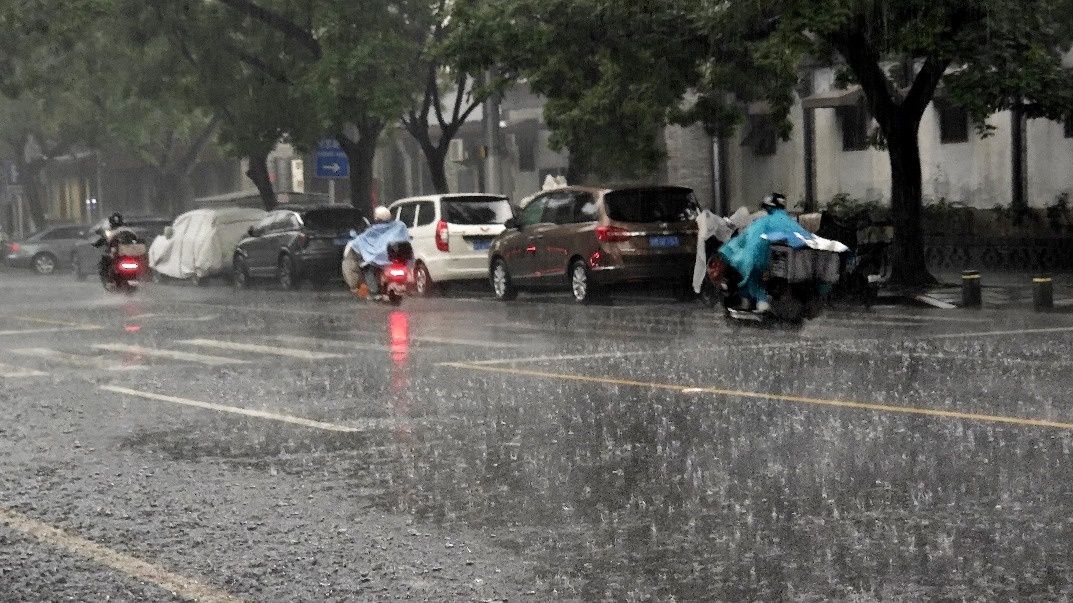
The Beijing meteorological observatory declared an orange-level rainstorm alert on Thursday afternoon, triggering immediate precautionary measures across China's capital as the 2026 flood season intensifies. The warning, issued at 1:30 pm, represents the first alert of its category since the rainy season commenced, prompting the city's flood control authorities to simultaneously activate Level-II emergency protocols. This twin response signals the severity of weather conditions anticipated over the coming weekend, with forecasters predicting sustained and intense precipitation across the sprawling metropolitan region.
The meteorological alert identifies a critical weather window spanning from Friday afternoon through early Sunday morning, during which multiple districts will experience significant rainfall. Five areas—Huairou, Miyun, Pinggu, Shunyi and Fangshan—are specifically flagged as vulnerable to torrential conditions. Precipitation rates in certain localities are projected to reach hourly peaks exceeding 70 millimetres, while the cumulative three-day total could surpass 150 millimetres. These figures position the anticipated rainfall in the upper range of seasonal precipitation events, creating conditions where drainage systems and waterway management will face considerable stress.
Mountainous and hilly terrain surrounding Beijing faces heightened risk during this alert period, as the combination of steep gradients and saturated soil conditions heightens the potential for landslides and debris flows. Simultaneously, low-lying urban areas and districts with inadequate drainage infrastructure face elevated waterlogging risks. The convergence of these hazards across varied topography means vulnerability extends from suburban and exurban zones directly into the city's core, necessitating a comprehensive rather than localized response framework.
Civilian preparedness forms a cornerstone of the authority's strategy. Residents are being strongly advised to minimize unnecessary outdoor movement and remain attentive to continuous weather bulletins and official guidance throughout the alert period. Public transportation is being positioned as the preferred option for any essential travel, presumably reflecting concerns about flash flooding on roadways and reduced visibility from heavy downpours. The guidance implicitly acknowledges that individual vehicle navigation during torrential conditions poses heightened accident risks and complicates emergency response coordination.
Major employers and institutional operators have been encouraged to adopt flexible work protocols during the alert window. Staggered commuting schedules and remote work arrangements where operationally feasible would reduce both the number of commuters exposed to hazardous conditions and the congestion that typically amplifies transportation difficulties during weather emergencies. Such measures also distribute demand on public transit systems, preventing overcrowding that could compromise passenger safety and service reliability.
Educational continuity faces disruption, with schools authorized to suspend both regular classroom instruction and supplementary activities. Field-based teaching—particularly outdoor education programs, geography excursions, and sports activities—will cease entirely. In-person training activities conducted by educational institutions are similarly to be halted. These suspensions recognize that congregating groups during hazardous weather, especially where outdoor components are involved, creates unacceptable safety exposures for both students and educators.
Recreational activities and tourist movement face significant constraints under the alert. Scenic attractions involving mountains or water features are explicitly off-limits to visitors, eliminating two categories of terrain where localized flooding and slope instability pose acute dangers. Underground commercial establishments—shopping complexes, markets, and entertainment venues situated below street level—represent drowning hazards during urban waterlogging events and are effectively closed to public access. Residents are warned categorically against approaching rivers, streams, channels and drainage infrastructure, which transform into rapid-flow hazards capable of sweeping away pedestrians during intense precipitation.
Constructive and commercial operations face mandatory suspension across the board. Outdoor work sites, maintenance activities, delivery operations, and installation projects all cease during the alert period. This blanket industrial pause, while economically disruptive, reflects the judgment that operating crews face unmanageable hazard exposure and that equipment and materials left unsecured create secondary hazards during high-wind and flooding conditions.
Beijing's meteorological warning framework operates on a four-tiered hierarchy, with red representing maximum severity, followed by orange, yellow and blue alerts in descending order of urgency. The deployment of an orange alert—the second most serious classification—underscores the considerable intensity of the anticipated weather system. Such warnings are issued infrequently and carry the implicit weight of near-certain major disruption if precautionary measures are not comprehensively implemented.
For Malaysian and Southeast Asian observers, Beijing's systematic and comprehensive response demonstrates how major Asian cities operationalize weather emergency protocols across governmental, corporate and civilian sectors. The coordination between meteorological forecasting, flood management authorities, transportation operators, educational institutions and emergency services reflects institutional sophistication in hazard response. Readers in Malaysia, where monsoon seasons and flash flooding create comparable challenges, may recognize parallels in the essential elements of warning dissemination, institutional closure decisions, and public behavioral guidance, though Malaysia's own multi-layered institutional landscape and federal-state governance structures create distinct implementation pathways.

