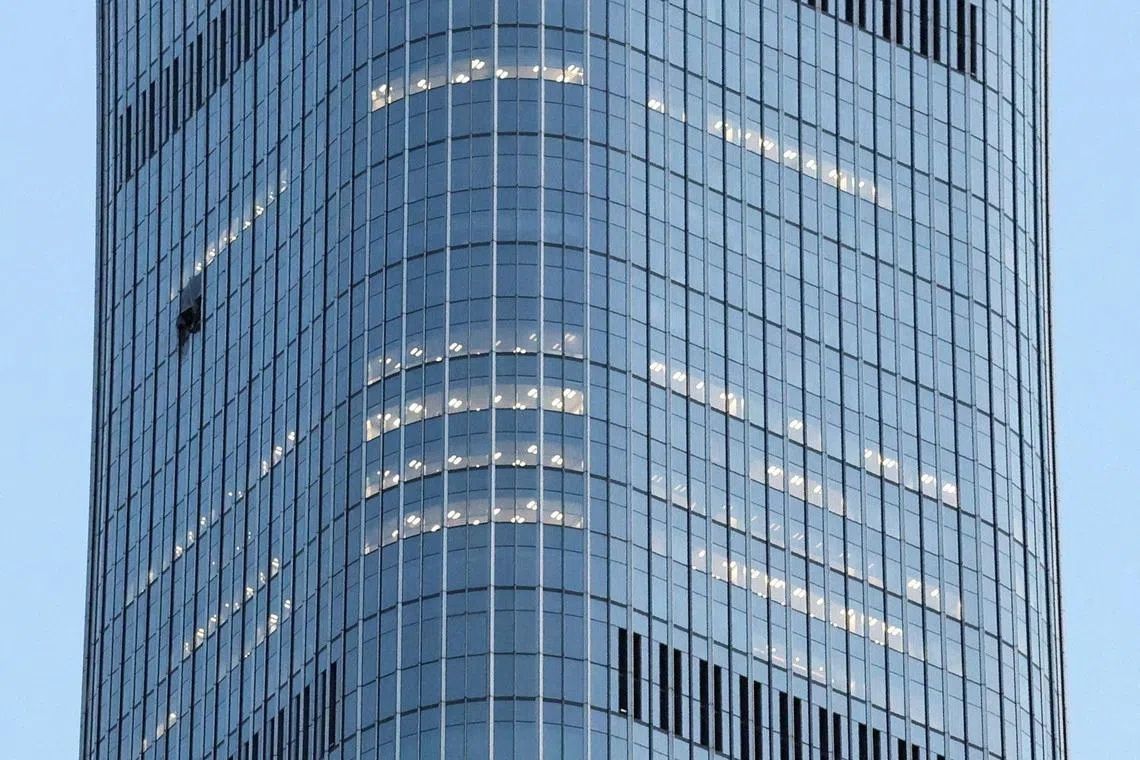
A retired pilot who died after flying a small aircraft directly into Beijing's CITIC Tower, China's tallest building, had documented mental health struggles including repeated references to suicide in his personal diary, Chinese authorities disclosed on Thursday. The crash, which occurred on Friday afternoon at 5:55pm local time, sent shockwaves through the nation's capital and raised uncomfortable questions about security gaps in one of the world's most tightly controlled airspaces, situated just kilometres from the nerve centre of Chinese government power.
The 66-year-old pilot, identified by the surname Liu, flew his two-seat propeller-driven aircraft into the 528-metre CITIC Tower in Beijing's Central Business District, leaving a visible hole in the building's upper floors and injuring 13 people. The incident occurred barely seven kilometres from Zhongnanhai, the heavily fortified compound that serves as home to China's top political leadership, raising immediate concerns about how such an intrusion could occur in one of the planet's most restricted and monitored airspaces.
Chaoyang district authorities characterised the incident as fundamentally a personal tragedy rooted in Liu's deteriorating psychological condition rather than any systemic security failure. According to their statement, the pilot had endured prolonged battles with insomnia and anxiety disorder. The authorities highlighted that his diary contained multiple references to ending his life, framing the crash as an act driven by personal despair rather than any calculated threat. The statement concluded by describing the incident simply as "an incident endangering public safety caused by personal reasons."
Liu's background painted a picture of an isolated individual who had recently obtained aviation credentials. Operating as a freelancer, he secured his sport pilot license in 2021 and upgraded to a private pilot license in 2024, both relatively recently. His living situation—divorced and residing alone in Beijing—provided little buffer against his psychological challenges. The progression from obtaining certifications to the fatal crash raised difficult questions about whether his medical examinations had adequately screened for suicide risk, particularly given that such examinations are theoretically mandatory under Chinese aviation regulations.
On the day of the incident, Liu departed from a general aviation facility in suburban Pinggu district. His flight plan included both a supervised flight with an instructor and subsequently a solo flight. It was during this final solo flight that Liu deviated dramatically from his authorised flight corridor and lost radio contact with ground control before the aircraft struck the building. The registration number of the plane was later confirmed as B-12PP, marking the first official disclosure of this identifying detail.
The most troubling aspect of the incident concerns how Liu's aircraft penetrated layers of airspace that Chinese regulations theoretically make impenetrable. China maintains some of the world's strictest aviation controls, with all flights—including general aviation operations—requiring advance approval. Operators must submit detailed flight plans to flight-control authorities before 3pm on the day preceding takeoff. Chinese civil aviation law explicitly prohibits flying over urban areas under normal circumstances. Yet Liu's aircraft somehow navigated from authorised general aviation airspace into restricted zones adjacent to permanent no-fly areas and crossed highly controlled corridors used by commercial traffic arriving at and departing from Beijing Capital Airport.
The security breach created an immediate propaganda challenge for Beijing authorities. Within hours of the crash, Chinese social media platforms began systematically removing photographs and videos documenting the incident. Police at the scene actively prevented journalists and bystanders from photographing the damaged building. This information control intensified further when officials released their narrative about Liu's mental health, effectively attempting to close public discussion by attributing the crash entirely to individual pathology rather than institutional shortcomings. The timing added political sensitivity—the crash occurred just days before the Communist Party's 105th anniversary celebrations, one of the year's most symbolically important state occasions.
Internet users nevertheless persisted in seeking explanations beyond the mental health narrative. Comments beneath the official statement questioned how security systems failed so dramatically, though these discussions were swiftly deleted. Anonymously quoted pilot sources familiar with Chinese aviation requirements noted that obtaining a private licence demands physical medical examinations and appropriate certifications, raising uncomfortable questions about how Liu passed such screening given his documented suicidal ideation. The gap between regulatory requirements and actual implementation remained unaddressed in official statements.
For Malaysian and Southeast Asian observers, the incident illuminates persistent vulnerabilities in even the world's most heavily militarised airspaces. China's approach—blending psychological explanation with aggressive information control—reflects broader regional patterns where governments prioritise stability narratives over transparent safety investigations. The crash simultaneously demonstrates that individual agency and mental health crises can defeat even sophisticated technological and bureaucratic oversight systems. The incident occurred amid China's sweeping security expansions under Xi Jinping, making the breach particularly embarrassing for authorities who have invested heavily in surveillance and control infrastructure throughout the capital.
The unresolved technical question of how Liu's aircraft penetrated multiple security layers will likely remain officially unanswered. Chinese authorities have signalled that the investigation's conclusion focuses on individual culpability rather than systemic examination. This approach, common throughout the region, prioritises political stability and protecting institutional credibility over comprehensive safety reforms. Whether other general aviation operators can similarly deviate from flight plans and penetrate restricted airspace near sensitive facilities remains unknown, as does the adequacy of psychological screening protocols for commercial and private pilots operating throughout Asia.

