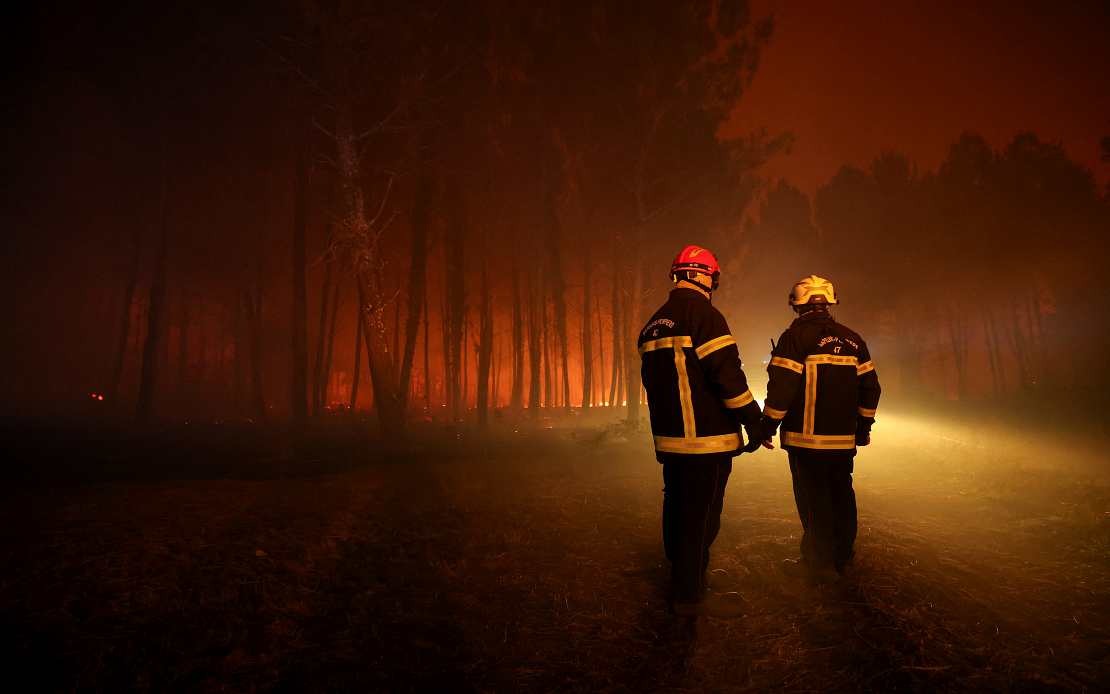
Belgium is confronting an unprecedented natural disaster as a massive wildfire swept through the High Fens area in the eastern part of the country, destroying roughly 2,700 hectares of land by Saturday evening and triggering the evacuation of around 600 residents from surrounding communities. The scale of the conflagration dwarfs all previous incidents in the country's recorded history, marking a troubling escalation in the frequency and intensity of European wildfires that regional observers attribute to climate-driven temperature extremes.
The fire ignited on Friday afternoon at approximately 2 pm within the High Fens nature reserve, positioned near the Belgian-German frontier, and continued its destructive advance well into Saturday despite sustained firefighting operations. The Liege governor's office documented the alarming pace of expansion, noting that the burned perimeter nearly doubled from around 1,600 hectares measured earlier in the day—a trajectory that underscores the ferocious conditions driving the blaze's progression across the landscape.
This catastrophe surpasses Belgium's previous worst recorded wildfire incident from 2011, when approximately 1,400 hectares burned according to data maintained by the European Forest Fire Information System. The comparison illustrates a troubling pattern of intensifying fire episodes, reflecting broader environmental shifts affecting Europe as a whole. Southeast Asian observers monitoring climate trends may recognize parallels to transboundary haze crises in their own region, where seasonal fires and atmospheric conditions create cross-border humanitarian emergencies.
Emergency responders encountered formidable obstacles in combating the rapidly advancing flames. The High Fens reserve's topographically challenging terrain prevented firefighters from deploying conventional ground-based suppression methods at close proximity to active fire zones, forcing reliance on alternative approaches. Simultaneously, volatile wind patterns continuously threatened to redirect smoke and spark new ignition points, effectively weaponizing the weather against containment efforts and complicating the strategic positioning of emergency personnel.
The human toll extended beyond residential evacuations. Local authorities ordered the departure of tourists present throughout the region, while staff at a children's summer camp in the vicinity rapidly relocated young campers to safety. These rapid population movements across multiple settlements underscored the fire's unpredictable trajectory and the precautionary approach adopted by officials confronting an emergency of unprecedented magnitude within Belgian borders.
Extreme meteorological conditions provided the crucial catalyst for the disaster. Belgium endured an intense heat wave during the preceding week, with temperatures surging to 37 degrees Celsius in certain regions on Friday alone. These scorching conditions transformed vegetation throughout the High Fens into kindling-dry material, essentially creating optimal circumstances for ignition and rapid fuel consumption. Climate scientists have increasingly documented how such temperature extremes, themselves becoming more frequent under warming global patterns, dramatically elevate wildfire susceptibility across temperate regions previously considered less vulnerable to large-scale fire events.
Recognizing the crisis exceeded national capacity, Belgium's government invoked the European Union Civil Protection Mechanism, initiating a coordinated international response that drew firefighting aircraft from the Czech Republic, Sweden, and the Netherlands. The mechanism represents the EU's structured protocol for member states facing disasters beyond their immediate resources, ensuring cross-border assistance flows rapidly to threatened regions. This activation reflected the severity of the situation and the transnational nature of modern environmental emergencies within Europe.
The firefighting coalition expanded significantly beyond aerial support. Firefighters from across Belgium mobilized in unprecedented numbers, while personnel from neighboring Germany and Luxembourg crossed borders to assist, demonstrating the cooperative frameworks established among Central European nations. Additionally, the Belgian military deployed resources alongside local farming communities who contributed equipment and labor, illustrating how major disasters mobilize diverse institutional and civilian actors across administrative boundaries.
The High Fens wildfire carries implications extending beyond Belgium's immediate borders. Transboundary smoke dispersion threatened air quality throughout the Low Countries and potentially Central Europe more broadly, while the incident reinforces mounting evidence that climatic transformation is rendering previously low-risk regions vulnerable to extreme fire events. For Southeast Asian policymakers accustomed to managing seasonal wildfire crises affecting multiple nations simultaneously, Belgium's experience provides a cautionary template: even developed nations with advanced firefighting infrastructure can be overwhelmed by rapidly accelerating fire behavior driven by temperature extremes and dry conditions.

