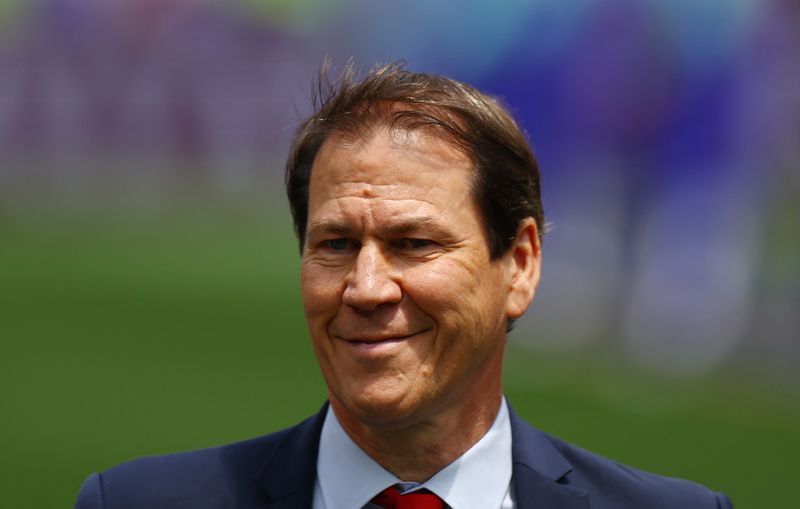
Rudi Garcia's tenure as Belgium's national football coach will conclude at the end of July following a mutually agreed decision by the French tactician and the Belgian Football Association not to extend his contract beyond its scheduled expiration date. The announcement, made on Monday, comes in the aftermath of a tumultuous World Cup campaign that saw the Red Devils exit at the quarter-final stage after succumbing to eventual champions Spain, marking an underwhelming conclusion to what many had anticipated would be a more triumphant tournament for a squad laden with experienced talent.
Garcia's appointment had arrived during a particularly fraught period for Belgian football, when the organisation faced considerable sporting and financial headwinds that threatened to destabilise the national programme. The 62-year-old Frenchman inherited a squad in transition, tasked with rebuilding team cohesion and establishing a foundation for future success after years of fluctuating performances. His eighteen-month tenure represented an intensive rehabilitation effort, aimed at restoring credibility and direction to a programme that had previously captured significant global attention through its performances in the 2018 World Cup and Euro 2020 campaigns.
Belgium's World Cup performance proved decidedly inconsistent, oscillating between periods of inspired play and moments that invited searching questions about tactical acumen. The campaign opened inauspiciously, with the Belgian team drawing both matches against Egypt and Iran—results that prompted intense scrutiny from the domestic media and fuelled early doubts about Garcia's strategic approach. The opening group stage performances generated sufficient criticism that Garcia felt compelled to convene a formal meeting with journalists to articulate and justify his tactical decisions, an unusual step that underscored the mounting pressure surrounding his position even before the tournament's decisive stages had begun.
The trajectory shifted dramatically when Belgium executed a remarkable comeback against Senegal in the round of thirty-two, though the nature of this reversal proved as controversial as it was consequential. Facing elimination after conceding two goals with time ebbing away, Belgium benefited from a catastrophic goalkeeping error that permitted an improbable recovery. The controversy deepened when Video Assistant Referee technology awarded Belgium a disputed penalty kick in the final moments of extra time, ultimately facilitating a 3-2 victory that preserved their tournament life. Such fortune proved temporary, however, as Garcia subsequently orchestrated an assured 4-1 victory over hosts United States, a performance that temporarily restored confidence in both the coach and his strategic framework.
The triumph against the United States proved to represent the apex of Garcia's tenure, however, as Belgium's confrontation with Spain in the quarter-finals precipitated his ultimate undoing. The elimination at the hands of the Spanish side, combined with Garcia's controversial substitution decisions—particularly his removal of goalkeeper Thibaut Courtois—catalysed widespread calls for his dismissal. The decision to bench a world-class goalkeeper in such a critical fixture appeared indefensible to observers and amplified existing reservations about Garcia's tactical judgement. Rather than engineer a contested termination, both the Belgian Football Association and Garcia opted for a face-saving arrangement, characterising the separation as a mutual and amicable conclusion.
Vincent Mannaert, the Belgian federation's sports director, articulated the official position through a carefully worded statement acknowledging Garcia's contributions whilst maintaining diplomatic composure. Mannaert emphasised that Garcia had navigated the Belgian programme through a particularly challenging period, successfully restoring team cohesion and delivering a respectable World Cup performance despite the ultimate quarter-final elimination. The federation's public comments reflected an attempt to preserve Garcia's professional reputation whilst simultaneously preparing the ground for a transition to new leadership, suggesting that the mutual separation represented a pragmatic resolution rather than an acrimonious rupture.
Garcia himself adopted a measured tone in his response, expressing appreciation for his players and offering best wishes for Belgium's future trajectory. His statement acknowledged the generational transition that he had initiated during his tenure, framing his departure as a natural juncture in the programme's evolution rather than an abrupt termination prompted by failure. This diplomatic language served the interests of both Garcia and the federation, enabling a graceful exit that minimised reputational damage whilst permitting the organisation to pursue alternative coaching perspectives.
The responsibility for identifying Garcia's successor falls to Mannaert, who must now navigate the complex process of recruiting a coach capable of maintaining competitive standards whilst presiding over a generational shift. Belgium's immediate fixtures present both opportunity and difficulty, with Nations League matches against Italy in Rome and subsequently against France representing challenges that will define the incoming coach's early trajectory. These continental opponents offer no respite for transition periods, instead demanding immediate tactical acuity and player management excellence from whoever assumes control of the programme.
Garcia's departure exemplifies a broader phenomenon afflicting World Cup coaching positions, with an unprecedented exodus of managers departing their posts during and immediately following the tournament cycle. The catalogues of departed coaches—including those from Croatia, Czech Republic, France, Germany, Ghana, Haiti, Jordan, Mexico, Netherlands, Portugal, Scotland, Senegal, Tunisia, and Uruguay—underscore the mounting pressures and expectations surrounding national team football. The modern World Cup environment, characterised by intense media scrutiny, unforgiving supporter expectations, and performance metrics that permit no margin for underperformance, has created a coaching landscape where even respectable tournament results frequently precipitate managerial transitions. Belgium's decision to part with Garcia, despite a quarter-final appearance, reflects this contemporary reality where outcomes alone determine tenure sustainability, regardless of mitigating circumstances or longer-term strategic considerations.

