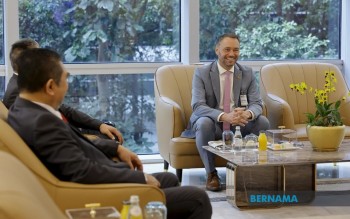
Belgium's government is increasingly bullish on the prospects of a free trade agreement with Malaysia, viewing the Malaysia-European Union pact as a transformative opportunity to deepen commercial ties and stimulate job creation across both economies. During a working visit to Kuala Lumpur, Deputy Prime Minister and Foreign Affairs Minister Maxime Prévot underscored the strategic importance his country places on completing the MEUFTA, signalling that the deal ranks among the EU's immediate policy priorities.
The completion of the MEUFTA would represent a significant milestone in Malaysia-EU relations, removing tariff barriers and regulatory obstacles that currently constrain bilateral commerce. Prévot emphasized that the agreement goes beyond mere economic mechanics; it is designed to foster deeper integration between Malaysia and the European bloc by facilitating increased cross-border exchange of goods and services. The arrangement would also create a more predictable trading environment for businesses on both sides, reducing uncertainty and encouraging long-term investment commitments.
Negotiations on the framework are advancing at a measured pace, with officials from both parties targeting completion within the next several months or by the end of next year. This timeline suggests active momentum in discussions, though the complexity of harmonizing regulatory standards between a Southeast Asian nation and a 27-member economic union indicates that finalising technical details will require sustained diplomatic effort. The target window reflects a shared commitment to moving beyond preliminary talks into the substantive phase of deal closure.
Belgium's own economic model underscores why the country is so keen to expand markets. Despite a modest population of 11.77 million people, Belgium has developed into a highly export-dependent economy in which overseas sales account for approximately 85 per cent of gross domestic product. This structure makes access to growing Asian markets such as Malaysia strategically vital for Belgium's manufacturers, traders, and service providers. The nation effectively functions as a trading hub for Europe, and deepening connections with Malaysia would amplify its role in facilitating transatlantic and trans-regional commerce.
Existing trade flows between Malaysia and Belgium already demonstrate substantial commercial engagement. In 2025, bilateral commerce reached RM9.74 billion, with Malaysian exporters capturing the larger share at RM6.85 billion against Belgian imports of RM2.89 billion. This asymmetry suggests untapped potential on the Belgian side to increase shipments of European manufactured goods, chemicals, and premium products into the Malaysian market. A formal trade agreement would likely rebalance this relationship by reducing import barriers that currently limit European suppliers' competitiveness.
Belgian investment in Malaysia is also substantial and growing. As of 2025, the country had sponsored 67 approved projects worth RM5.1 billion in direct capital investment, with the portfolio expected to generate approximately 4,605 jobs across manufacturing, logistics, and technology sectors. These figures demonstrate that Belgium's commitment to Malaysia extends beyond trade in goods to include significant manufacturing presence and employment creation. The MEUFTA would provide regulatory certainty that could encourage further investment expansion among Belgian corporations seeking production and distribution bases in Southeast Asia.
Prévot's two-day visit marks his first time in Malaysia since taking office in February of the previous year, indicating that bilateral relations have been climbing the ladder of EU foreign policy priorities. His scheduled engagement with Deputy Prime Minister Datuk Seri Fadillah Yusof, who holds the Energy Transition and Water Transformation portfolio, signals that discussions will extend beyond traditional commerce into forward-looking sectors aligned with global sustainability objectives. The agenda encompasses renewable energy cooperation, rare earth elements sourcing, the halal industry, Malaysia-EU relations broadly, and contemporary regional security challenges.
The inclusion of renewable energy and rare earth elements in bilateral discussions reflects a broader European strategy to diversify supply chains away from over-concentration in China and to secure inputs essential for the green energy transition. Malaysia, as a significant producer of rare earth materials and a rapidly expanding renewable capacity, holds considerable leverage in these discussions. The Belgian government recognises that strategic cooperation in these sectors would benefit both parties: Malaysia gains access to European green technology and investment capital, while the EU reduces supply chain vulnerability in critical materials.
The halal industry represents another dimension of growing economic complementarity. Belgium, home to significant Muslim and Southeast Asian diaspora communities, has developed expertise in halal certification and halal-compliant manufacturing standards. Malaysia's position as a global halal standards setter and certification body creates natural synergies for collaboration on product development, market expansion, and regulatory harmonisation. This sector offers opportunities for smaller Belgian enterprises to participate in Malaysia's massive halal economy, currently valued at hundreds of billions of dollars globally.
From Malaysia's perspective, the MEUFTA offers access to a wealthy 27-nation bloc with over 440 million consumers and combined GDP exceeding 17 trillion euros. The agreement would lower tariffs on Malaysian palm oil, rubber, electronics, and automotive components—sectors that form the backbone of national exports. Equally important, Malaysian services providers in finance, technology, and business process outsourcing would gain competitive entry to European markets. The deal would cement Malaysia's position as an attractive investment location for European companies seeking Asian production and distribution facilities.
The timing of these negotiations carries geopolitical significance. Rising trade tensions between major economic blocs and shifting global supply chains have prompted countries worldwide to lock in bilateral agreements that provide preferential access and regulatory predictability. For Malaysia, completing a comprehensive agreement with the EU would diversify its trading relationships and reduce dependency on any single market or trading bloc. It would also strengthen Malaysia's negotiating position in other multilateral arrangements by demonstrating its appeal as a trading partner to developed economies.
Implementation of the MEUFTA would require both sides to undertake domestic legislative processes and administrative preparations to align customs procedures, standards testing, and dispute resolution mechanisms. This groundwork, while substantial, has become routine for most developed economies engaged in modern trade agreements. The real challenge lies in managing sensitive sectors—agriculture and certain protected industries in Europe, and automotive or electronics in Malaysia—where vested interests may resist tariff reductions.
Looking ahead, successful conclusion of the MEUFTA would establish a template for deeper Malaysia-EU cooperation in emerging areas such as digital trade, intellectual property protection, labour standards, and environmental commitments. Such agreements increasingly include provisions addressing cross-cutting issues beyond pure commerce, reflecting evolving expectations that trade should advance broader development and governance objectives. For Belgium and Malaysia alike, the free trade agreement represents not merely a transaction but a strategic partnership framework for the coming decades of intensifying economic integration.

