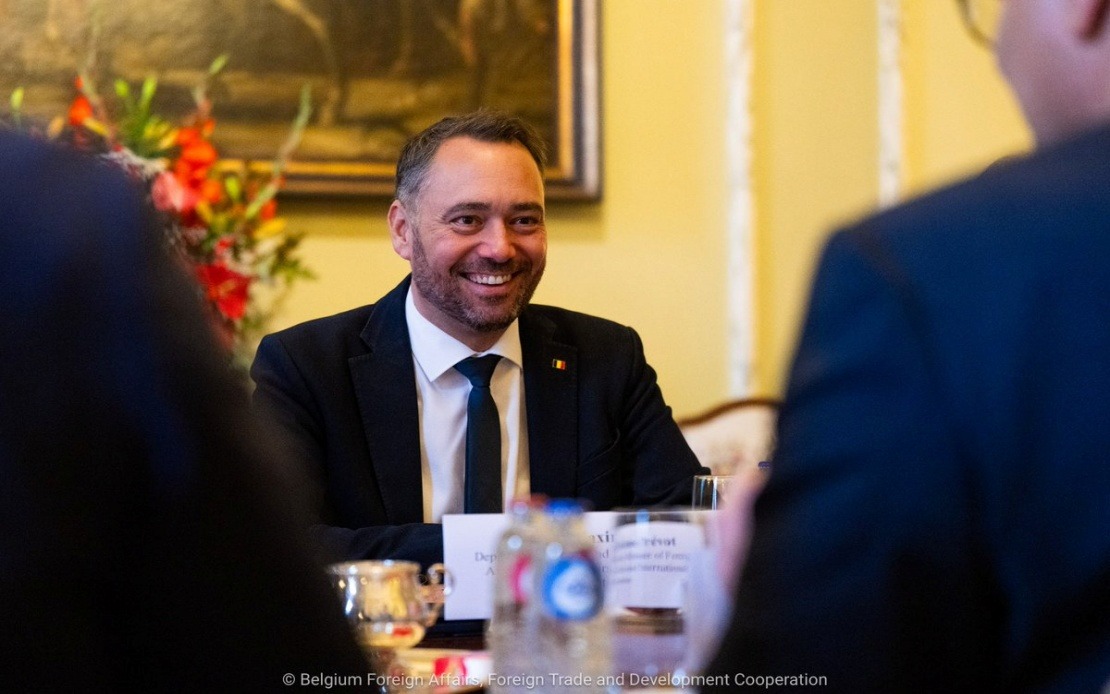
Belgium's Deputy Prime Minister and Foreign Minister Maxime Prévot is set to arrive in Malaysia this Thursday for a two-day working visit focused on deepening bilateral cooperation in clean energy transition, critical minerals and the halal industry. The trip represents Prévot's inaugural visit to Malaysia since assuming his dual ministerial portfolio in February 2025, signalling the European nation's strategic interest in engaging with Southeast Asia on emerging economic priorities.
The Belgian minister's itinerary includes a substantive meeting on July 2 with Malaysia's Deputy Prime Minister Datuk Seri Fadillah Yusof, who holds the energy transition and water transformation portfolio. This alignment of portfolios underscores both countries' commitment to advancing sustainable development agendas. Officials from the Malaysian Foreign Ministry indicated that the discussions will examine the full spectrum of bilateral relations whilst identifying expanded cooperation frameworks, with particular emphasis on the renewable energy sector where Malaysia has positioned itself as a regional hub.
Renewable energy cooperation carries strategic weight for both nations. Malaysia has ambitious targets for expanding solar, wind and hydroelectric capacity as part of its pathway to carbon neutrality, whilst Belgium, constrained by limited natural resources, seeks to secure supply chains for critical materials and collaborate on clean technology innovation. The renewable energy discourse will likely encompass technology transfer, investment opportunities and joint research initiatives that could benefit Malaysian industries transitioning away from fossil fuel dependency.
The rare earth elements dimension reflects broader European concerns about supply chain vulnerability. Belgium, as a significant hub in the global rare earth processing and manufacturing ecosystem, has incentive to establish stable sourcing arrangements with Malaysia, which holds substantial mineral reserves. For Malaysia, this represents an opportunity to capture greater value from resource extraction through downstream processing partnerships and technical expertise development, moving beyond traditional commodity export models.
Malaysia's prominence in global halal certification and production also features prominently in the visit agenda. The halal economy has become increasingly important to European businesses seeking market access in Muslim-majority regions across Asia and Africa. Belgian enterprises, particularly in pharmaceuticals, cosmetics and food processing, view deeper engagement with Malaysia's sophisticated halal frameworks as instrumental to their expansion strategies in these territories.
The broader Malaysia-European Union relationship context shapes this bilateral engagement. As tensions between Western democracies and non-aligned nations persist, the European Union actively cultivates partnerships with Southeast Asian countries that balance geopolitical interests. Belgium's visit signals European intent to engage Malaysia not merely on governance or values-based issues, but on concrete economic cooperation that delivers mutual benefit, thereby strengthening long-term diplomatic relationships.
Beyond official state visits, Prévot's schedule encompasses a ministerial address at the 39th Asia-Pacific Roundtable, an influential think tank forum convened by the Institute of Strategic and International Studies (ISIS) Malaysia. This platform allows the Belgian minister to articulate European perspectives on regional security, economic integration and climate action to an audience of policymakers, academics and business leaders across the Indo-Pacific. His participation elevates the visibility of Belgium's strategic role and may catalyse broader multilateral dialogue on issues transcending bilateral relations.
An audience with Sultan Nazrin Muizzuddin Shah, the Sultan of Perak, adds ceremonial weight to Prévot's visit whilst reflecting protocol befitting a senior European minister. Such engagements demonstrate respect for Malaysia's constitutional monarchy and facilitate informal diplomatic channels that complement official government discussions. The Perak sultanate, historically significant in Malaysian politics and governance, provides additional legitimacy to bilateral engagement.
Commercial foundations undergird this diplomatic engagement. Bilateral trade between Malaysia and Belgium reached RM9.74 billion in 2025, with Malaysian exports constituting RM6.85 billion against imports valued at RM2.89 billion. This trade imbalance reflects Malaysia's traditional strength in manufacturing and natural resources exports. Investment data reveals 67 projects with Belgian participation approved in Malaysia, representing RM5.1 billion in cumulative investment and expected job creation exceeding 4,600 positions. These figures demonstrate substantial European confidence in the Malaysian market, though they also indicate opportunities for further economic deepening through the cooperation frameworks discussed during Prévot's visit.
For Malaysian policymakers, this visit represents an opportunity to position the nation as an attractive partner for European capital and technology in clean energy and critical minerals sectors. As global supply chains restructure amid geopolitical fragmentation, Malaysia's geographic location, institutional capacity and resource endowments provide competitive advantages for companies seeking alternatives to existing suppliers. The discussions initiated during Prévot's visit may yield concrete projects in renewable energy infrastructure, rare earth processing facilities or halal certification hubs that generate employment and technology transfer.
The timing of this engagement holds significance within Malaysia's broader diplomatic calendar. As the nation navigates complex relationships with major powers whilst pursuing development objectives, cultivating balanced partnerships with economically advanced European nations supports policy autonomy. Belgium's engagement reflects a European strategy acknowledging that sustained influence in Asia requires sustained economic and technical engagement rather than occasional political pressure.
Moving forward, the bilateral dialogue initiated through Prévot's visit may crystallise into formal cooperation agreements addressing specific sectors. Joint ventures in renewable energy projects, collaborative research on critical mineral processing or mutual recognition frameworks for halal certification could emerge from ministerial discussions. Such arrangements would deepen institutional linkages between Malaysian and Belgian enterprises, creating sustained channels for knowledge exchange and commercial activity that extend beyond diplomatic cycles.
This visit also occurs within the context of Malaysia's Energy Transition and Water Transformation agenda, a priority that Datuk Seri Fadillah Yusof has positioned centrally within government policy. Belgian expertise in managing energy transitions within densely populated, industrial economies offers valuable lessons for Malaysia, where balancing economic growth with environmental sustainability presents complex policy challenges. European experience in renewable energy integration, grid modernisation and industrial decarbonisation could inform Malaysian strategic planning during the forthcoming decade.

