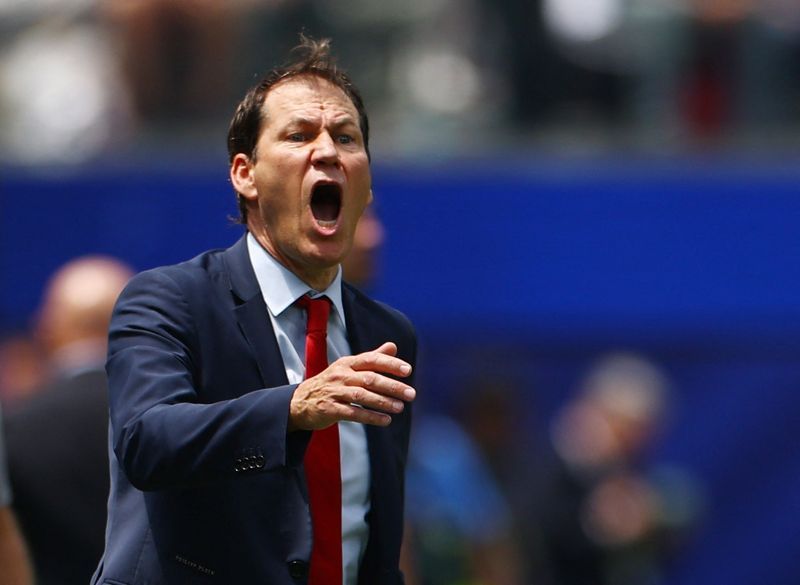
Belgium football manager Rudi Garcia finds himself defending one of the most controversial tactical decisions of the World Cup after removing first-choice goalkeeper Thibaut Courtois during Friday's quarter-final clash against Spain, a match the team ultimately lost 2-1. The substitution has ignited a firestorm of criticism in Belgian media and among football analysts, coming at a time when Garcia's overall tenure is already under close examination ahead of his contract review at month's end.
The circumstances surrounding Courtois's withdrawal during the 71st minute have amplified the controversy. The Real Madrid custodian indicated he felt capable of continuing despite experiencing some discomfort in his leg, yet Garcia made the unilateral decision to bring him off the pitch. This assertion of managerial authority proved costly when replacement goalkeeper Senne Lammens faltered just minutes later, spilling a low strike from Pau Cubarsi in the 86th minute, an error that allowed Mikel Merino to convert and seal Spain's passage to the semi-finals.
Belgian football commentator Peter Vandenbempt articulated the depth of frustration felt across the nation's sporting media landscape. Speaking on Belgian radio, Vandenbempt questioned the logic of removing one of global football's finest goalkeepers during such a critical match purely because his long-range passing capability was compromised. The critic suggested that Courtois himself possessed sufficient knowledge of his own physical condition and capabilities to make an informed judgment about his fitness level, implying that Garcia's decision represented an overcorrection based on rigid ideological principles rather than pragmatic match management.
Garcia, for his part, articulated a clear and consistent philosophy regarding player availability. The 62-year-old Frenchman reiterated his long-standing position that throughout the tournament, only athletes meeting the 100 percent fitness threshold would be deployed in competitive action. He further explained that Belgium's tactical approach in midfield had been predicated on Courtois's distribution abilities, with long passes intended to reach forwards Charles De Ketelaere and Romelu Lukaku. By Garcia's reasoning, maintaining the goalkeeper's long-term physical integrity justified the substitution, making injury prevention preferable to short-term tactical advantage.
The manager's record leading into this quarter-final had been respectable if not exceptional. Appointed at the beginning of 2025, Garcia inherited a team demoralized by the previous tenure of Domenico Tedesco, widely characterized as creating a toxic and soulless atmosphere within the squad. Over his 20 international matches, Garcia compiled 12 victories, six draws, and two defeats, meeting the federation's initial objective of securing Nations League top-tier status and qualifying for the World Cup. Reaching the tournament's final eight represented the achievement of his stated targets.
Yet the pathway to the quarter-finals had been unconvincing, suggesting underlying vulnerabilities in either tactical execution or squad quality. Belgium scraped through their group stage, drawing with Egypt and Iran before defeating New Zealand to top the section. Their knockout stage encounter against Senegal saw Belgium trail 2-0 before mounting an improbable comeback, though analysts remained divided on whether Garcia's substitution of key attacking players deserved credit for the revival or whether the opposition's defensive deficiencies proved decisive. This pattern of inconsistency raised legitimate questions about tactical stability and in-game management.
Countering these concerns, Garcia can identify genuine accomplishments within the tournament structure. Belgium's 4-1 demolition of co-hosts the United States demonstrated attacking potency against quality opposition, while the manager successfully integrated emerging talents including midfielder Nicolas Raskin and forward Nathan Ngoy, both of whom delivered impressive performances throughout the competition. These positive elements suggest potential for future development if Garcia remains in the position.
The broader context for Belgian football involves significant generational transition. The retirement of long-serving veterans has created both opportunity and challenge as the federation attempts to construct a competitive unit capable of contending for the 2028 European Championship. This longer-term perspective will likely influence the federation's assessment of whether Garcia possesses the tactical acumen and man-management capabilities necessary to guide this rebuilding project successfully.
Federation officials now face a consequential decision regarding Garcia's continuation in the role. The narrow defeat to Spain, compounded by the controversy surrounding the Courtois substitution, has cast doubt on his capacity to navigate high-pressure situations with optimal decision-making. Multiple observers have questioned his tactical approaches, specific substitution timing, and broader management philosophy, concerns that extend beyond this single match. Whether the federation views Garcia as a transitional figure enabling short-term stabilization or as the architect of a long-term competitive project will determine the outcome of forthcoming contract negotiations.

