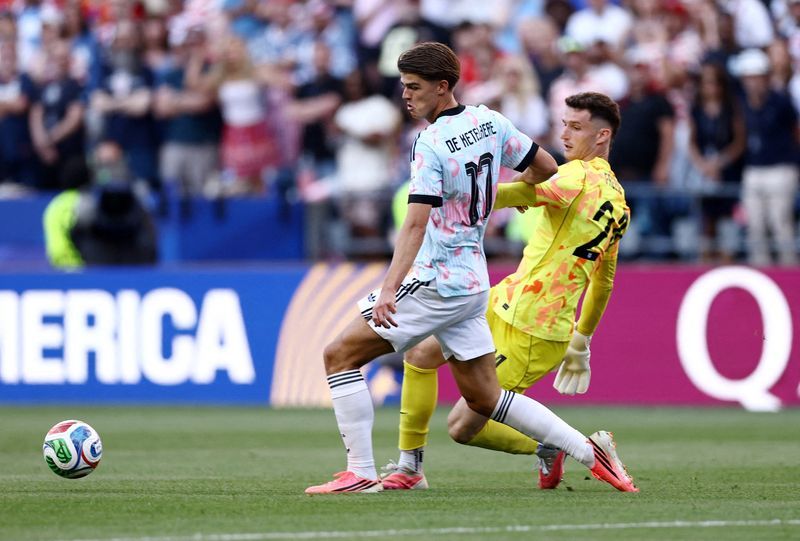
Belgium has discovered an unexpectedly potent formula for success at the World Cup after dismantling co-hosts the United States 4-1 on Monday, though the unconventional approach required sidelining several of the squad's most celebrated performers. Coach Rudi Garcia's willingness to overturn established team hierarchies and prioritise tactical cohesion over individual reputation has revitalised a campaign that appeared to be heading towards an embarrassingly early exit just days earlier.
The turnaround stands in stark contrast to Belgium's troubled opening phase of the tournament. After drawing their first two matches, the team faced genuine elimination prospects and only advanced from their group courtesy of a comprehensive 5-1 victory over New Zealand. Their survival against Senegal in the knockout round proved even more precarious, with the Belgians requiring a late penalty in extra time after trailing by two goals with merely five minutes remaining in regular play. Garcia's team appeared vulnerable and disorganised, raising serious questions about their ability to compete at the highest level.
The wholesale changes introduced for the round-of-16 clash in Seattle represented a dramatic departure from convention. Kevin De Bruyne, long regarded as Belgium's lynchpin and creative heartbeat, was relegated to the bench and did not even take the field during the encounter. Alongside him, forward Romelu Lukaku and winger Jeremy Doku were also excluded from the starting formation. The decision to omit such established names prompted significant scrutiny and scepticism, yet Garcia's reasoning proved thoroughly vindicated by the eventual outcome.
Garcia replaced these departing stars with Nicolas Raskin, Amadou Onana and Dodi Lukebakio, while repositioning Charles De Ketelaere into a central attacking role. The reconfiguration immediately bore fruit, with De Ketelaere scoring twice during the opening forty-five minutes and establishing complete Belgian dominance over proceedings. The new structure functioned with remarkable efficiency, transforming Belgium into a cohesive unit rather than a collection of individual talents attempting to impose themselves upon matches.
Central to Belgium's superiority was the aggressive repositioning of captain Youri Tielemans in midfield, who repeatedly pushed forward to win contested second-ball situations and orchestrate rapid possession recovery. This energised approach created structural imbalances that left the American defence, already appearing passive and overwhelmed, increasingly exposed and fragmented. Belgium's effective utilisation of wide spaces compounded the hosts' difficulties, exploiting the static positioning and brittle organisation that characterised the USA's defensive approach.
Garcia has since explained that his selection decisions reflected observable training-ground performance and the specific tactical requirements of confronting the American side. The coach stated his certainty regarding the lineup materialised only hours before kickoff, though his strategic vision remained crystalline throughout preparation. "We wanted to take control of the game from the start," Garcia remarked, adding that the original contingency plan involved introducing De Bruyne should circumstances demand his intervention. Once Belgium established their commanding position, however, such tactical adjustments became superfluous.
The premature withdrawal of Onana through a knee injury during the first half presented an unexpected challenge to Garcia's carefully constructed system. Rather than destabilising the team, the setback prompted a seamless transition, with Hans Vanaken assuming responsibility for protective midfield duties in front of the three-defender formation. Vanaken's subsequent contribution—he scored during the match—proved particularly pleasing to Garcia, who acknowledged the emotional significance of witnessing a thirty-three-year-old international add his name to the World Cup scoresheet after periods of inconsistent selection for the national team.
Garcia had faced considerable domestic criticism during Belgium's faltering group-stage campaign, with observers questioning his tactical acumen and team management. The comfortable demolition of the USA, producing Belgium's most convincing and cohesive performance throughout the tournament, substantially vindicated his approach and demonstrated strategic flexibility that transcends rigid adherence to established squad hierarchies. The Belgian Football Association and supporters now perceive genuine championship prospects materialising rather than merely hoping for salvageable outcomes.
Belgium's trajectory has shifted dramatically following their successful recalibration. The team now enters Friday's quarter-final clash against Spain in Los Angeles with substantially elevated confidence and momentum. Where anxiety and uncertainty characterised recent performances, the dominant victory over the Americans has injected psychological resilience and tactical conviction into the squad. Spanish opponents must now confront a rejuvenated Belgian team that has established a winning template and demonstrated the capacity to overcome adversity through innovative thinking and collective commitment.
The implications of Belgium's newfound approach extend beyond immediate tournament implications. Garcia has implicitly challenged conventional wisdom regarding dependence upon celebrated names and established reputations, suggesting instead that cohesive tactical frameworks and balanced squad contribution generate superior outcomes. This philosophy carries particular resonance for international football, where squad depth and systematic organisation frequently prove decisive in determining ultimate success. Belgium's renaissance, achieved through strategic boldness rather than predictable star-dependency, provides a compelling alternative model for approaching modern international competition.
As Belgium contemplates their quarter-final encounter with Spain, Rudi Garcia's willingness to implement radical changes has fundamentally altered the tournament narrative. What appeared a doomed campaign now represents genuine World Cup contention, underpinned not by the magnificence of individual talents but by the effectiveness of tactical architecture and collective discipline. De Bruyne, Lukaku and Doku await potential reinstatement, yet their benching has accomplished something arguably more valuable than their continued prominence: it has restored belief that Belgium possesses the strategic intelligence and adaptability required to navigate international football's highest-pressure environment.

