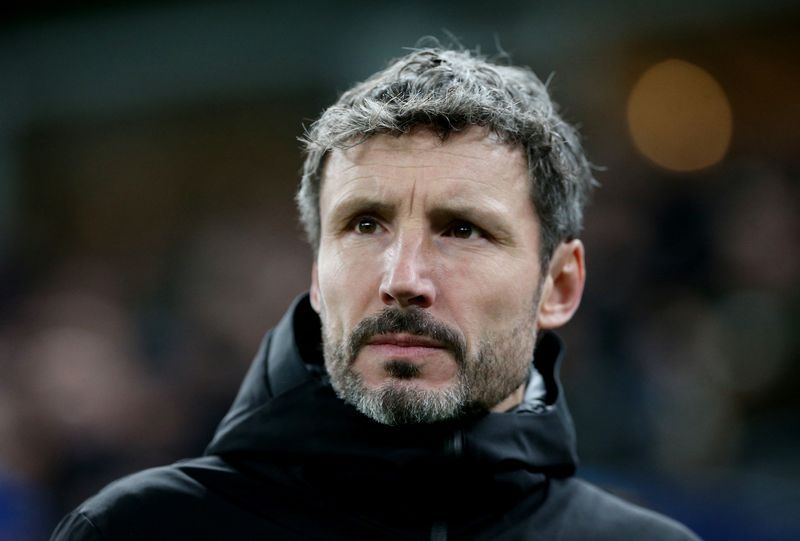
Mark van Bommel has wasted no time signalling his full dedication to Belgium's national football programme, making clear in his inaugural press conference that he did not pause to consider the possibility of eventually leading his native Netherlands. Speaking in Brussels on Friday, the 49-year-old former defender insisted the Belgian opportunity represented precisely the sort of role he had been seeking, regardless of other potential openings in the international football landscape.
The timing of Van Bommel's appointment carries particular intrigue given the Netherlands' ongoing search for a permanent manager following their World Cup exit. That the accomplished tactician—who spent his playing career at elite clubs including Barcelona, Bayern Munich and AC Milan, and represented the Dutch at the 2010 World Cup final—would immediately dismiss such speculation underscores his genuine enthusiasm for the Belgian position. His directness on the matter suggests a coach who has made a deliberate choice rather than settled for a secondary option.
Van Bommel replaced Rudi Garcia, whose contract was not renewed after Belgium's quarter-final elimination at the World Cup. The transition occurred rapidly, with Van Bommel's appointment announced late last month and his first formal engagement with the media following swiftly. He articulated a philosophy centred on ambition and winning, acknowledging the privilege of leading a nation while maintaining realistic expectations about the competitive landscape facing any international team.
The new coach's perspective on national team management reflects his experience across both elite club and international football. He characterised the role as fundamentally different from club management, though he expressed confidence that the specific challenge aligns with his strengths and ambitions. His willingness to embrace this transition at this stage of his career indicates someone genuinely energised by the opportunity to work with Belgium's considerable pool of talent, rather than viewing the position as a stepping stone.
Van Bommel acknowledged the temptation that major international positions can represent for ambitious coaches, noting that he has received numerous attractive offers in recent years. However, none had possessed the compelling combination of factors that the Belgium opportunity presented. He emphasised that the speed with which events progressed, combined with Belgium's stature as a genuine contending nation, created a unique convergence of circumstances that prompted his immediate acceptance.
His discussion of winning strategies reveals a nuanced understanding of international football's complexities. Van Bommel explicitly cautioned against the sort of unbridled optimism sometimes associated with major nations' preparations, noting that the Netherlands often announce championship ambitions that may not account for the numerous variables affecting outcomes. Rather than guarantee success in the upcoming European Championship or other tournaments, he positioned himself as committed to achieving the best possible results whilst acknowledging the inherent uncertainties of competitive sport.
Belgium's immediate focus involves Nations League competition, with Van Bommel's debut scheduled for September 25 against Italy in Rome. The fixture represents the opening engagement of an intensive international window spanning September and October, during which the Red Devils will also face Turkey twice and France once. These contests will provide early indicators of how successfully Van Bommel integrates his tactical approach and establish momentum heading toward subsequent major tournaments.
A significant early challenge for the new coach involves persuading goalkeeper Thibaut Courtois to continue his international career. The Real Madrid shot-stopper indicated after the World Cup that he intended to step back from national team duties, citing the need for rest and recovery. Van Bommel's measured response to repeated questioning about Courtois revealed a coach willing to respect individual circumstances whilst remaining open to dialogue. He suggested that conversations with Courtois would proceed without premature judgement, acknowledging that the goalkeeper's perspective might evolve once he completes his physical rehabilitation and resumes full training.
Van Bommel's approach to player management extends beyond individual negotiations. His appointment suggests Belgian football authorities recognised the need for a fresh tactical framework and renewed energy within the squad following their World Cup disappointment. The choice of a coach with significant experience at top European clubs indicates Belgium's ambition to compete at the highest level despite the advancing age of several key players, particularly in defence and midfield.
The Belgian context presents both opportunities and challenges for Van Bommel's tenure. The nation possesses exceptional attacking talent and has demonstrated capability at major tournaments, reaching the World Cup semi-final in 2018. However, questions persist about defensive solidity and the team's ability to overcome the physical and mental demands of extended competitions. Van Bommel's appointment signals confidence that experienced tactical innovation and fresh leadership can revitalise a squad that, while talented, has underperformed relative to expectations.
Van Bommel's rejection of the Netherlands speculation also reflects broader patterns in international football management. The Dutch position, whilst prestigious, represents an uncertain prospect given the country's recent coaching transitions and the considerable expectations accompanying any Netherlands appointment. Belgium, conversely, presents a defined challenge with realistic immediate objectives through the Nations League and tangible tournament opportunities. This distinction likely influenced Van Bommel's decision-making.
Looking forward, Van Bommel's success will depend on his ability to restore confidence within the Belgian squad whilst implementing coherent tactical principles across multiple competitions. His first weeks in charge will establish whether his enthusiasm translates into meaningful improvements in performance and results. The Nations League fixtures provide an appropriate proving ground for a new manager, offering competitive matches without the maximum pressure of knockout competition.

