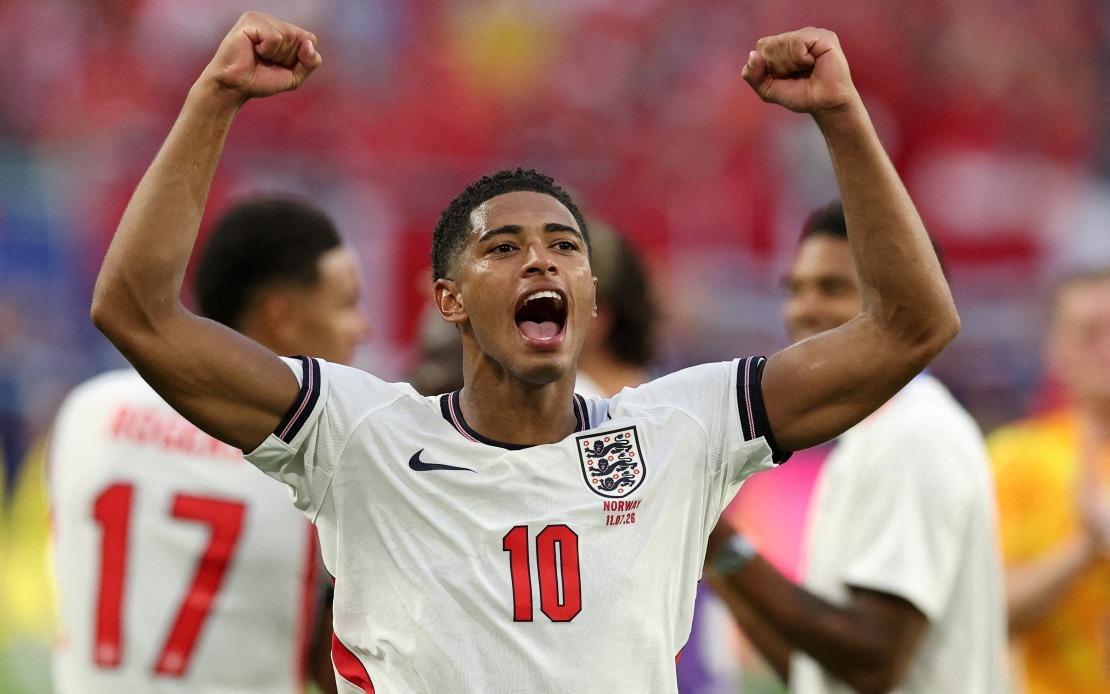
England's passage to the 2026 FIFA World Cup semi-finals came courtesy of Jude Bellingham's clinical finishing, as the Real Madrid midfielder's double propelled Thomas Tuchel's team past a resilient Norway side 2-1 after extra time in their quarter-final encounter at Miami Stadium. The comeback victory extends England's hopes of capturing their first world championship since winning on home soil in 1966, leaving them requiring just two more victories to end a nearly six-decade drought.
Norway's early dominance proved decisive when Andreas Schjelderup opened the scoring in the 36th minute, firing past England goalkeeper Jordan Pickford with an accomplished finish that suggested the Scandinavian outfit might upset the tournament's form. The strike appeared to unsettle England's rhythm during the opening exchanges, placing additional burden on Tuchel's tactical adjustments and exposing potential vulnerabilities that could have been exploited further.
Yet Bellingham's intervention before the interval restored equilibrium. The 21-year-old reacted with characteristic sharpness to Anthony Gordon's incisive pass, crafting space within the penalty area to dispatch a composed low strike that levelled proceedings and proved crucial to England's subsequent momentum. This equaliser demonstrated England's capacity to respond under pressure, a trait that would define their evening.
A critical moment unfolded in the 53rd minute when Norway's Erling Haaland nearly restored his nation's advantage, meeting Julian Ryerson's cross with a powerful downward header that demanded exceptional goalkeeping from Pickford, who successfully diverted the effort aside. Two minutes subsequently, confusion erupted when Torbjorn Heggem capitalized on England's defensive negligence to fire home, only for Video Assistant Referee intervention to nullify the goal after Haaland's handball contact on Elliot Anderson was deemed a deliberate foul in the build-up.
The VAR decision represented a turning point, denying Norway what would have been a crucial cushion and maintaining England's ability to progress despite the match remaining deadlocked after 90 minutes. Norway's frustration mounted as they pursued a winning goal through conventional play, forcing the encounter into the additional 30 minutes that would ultimately determine the winner.
Bellingham again proved decisive when capturing the loose ball following Morgan Rogers' powerful attempt from distance that Orjan Nyland could merely parry rather than secure cleanly. Reacting swiftly, the midfielder converted from close range in the 93rd minute, completing his two-goal contribution and sending England into the semi-finals where they will confront either Argentina or Switzerland, depending on the outcome of that concurrent quarter-final.
England's advancement marks only their second semi-final appearance in World Cup history, their previous journey to this stage occurring at the 2018 Russian tournament. The achievement carries profound significance for a nation with a rich footballing heritage but limited World Cup success at the grandest level, making the remaining two victories in this edition carry substantial symbolic and historical weight.
Norway, despite exiting the competition, accomplished something remarkable for the football tradition across Scandinavia. Their quarter-final appearance represents their finest-ever World Cup campaign, surpassing the previous benchmarks of reaching the round of 16 in 1938 and returning to the tournament stage during France 1998. This progression, regardless of the final outcome, signifies emerging competitiveness from Norway's national programme and establishes expectations for future tournaments.
For Southeast Asian observers monitoring England's trajectory, the semi-final berth demonstrates the continued dominance of established European and South American powers within the World Cup structure. The competitive quality displayed at this stage of the tournament reinforces how extensively the gap remains between the elite nations and developing football programmes across the region, offering insight into the standards required for Asian nations to meaningfully compete on football's ultimate stage.
England's journey towards potential glory continues through the semi-final round, where either the defending champions Argentina or Switzerland awaits. With two victories separating them from a second world title, Tuchel's side now occupies familiar territory—teams in World Cup semi-finals invariably carry heightened expectation, particularly for nations with England's resources and historical aspirations. The stage has been set for what promises considerable drama across the remaining matches.

