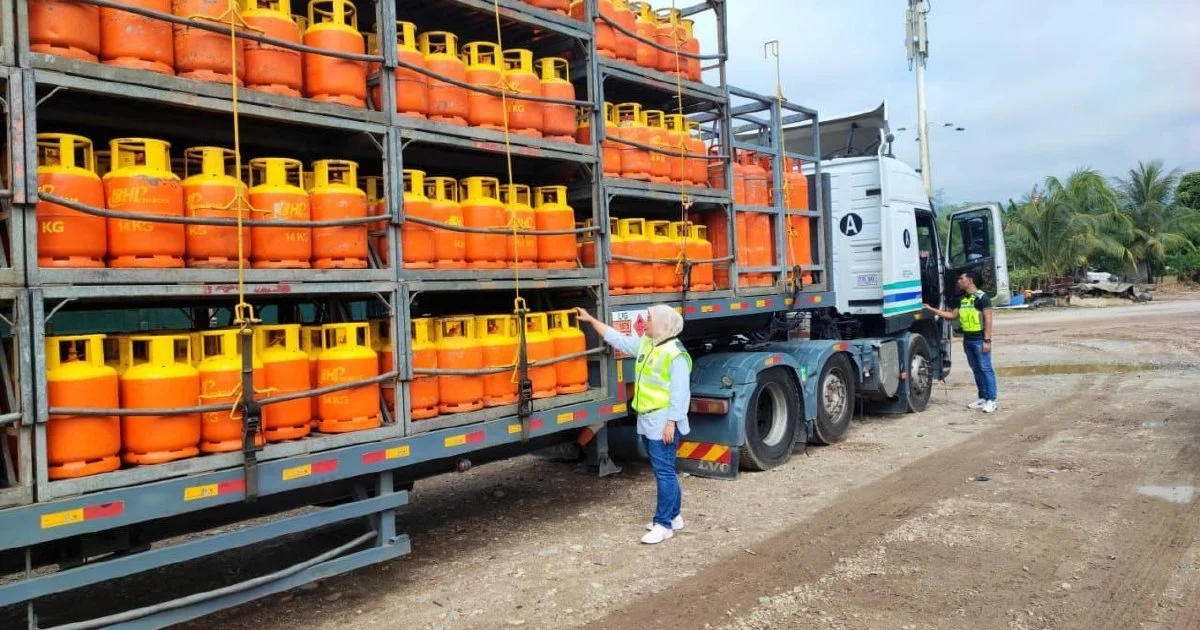
A high-value haul of liquefied petroleum gas cylinders has prompted a major enforcement operation in Bentong, with authorities discovering thousands of LPG tanks worth RM405,000 concealed within a fenced storage facility. The raid, which targeted the secured compound, resulted in the seizure of cylinders that were being held on a trailer, pointing to an organised operation involving the storage and likely distribution of cooking fuel outside normal regulatory channels.
The discovery represents a significant breach in the supply chain for one of Malaysia's most essential household commodities. Liquefied petroleum gas serves millions of Malaysian households for cooking, heating, and other domestic purposes, making the integrity of its distribution network a matter of public safety and consumer protection. When substantial quantities move through unauthorised channels, they bypass critical safety inspections, quality assurance protocols, and tax obligations that legitimate suppliers must observe.
Bentong, located in Pahang's eastern district, has increasingly become a focus for enforcement activities targeting smuggled goods and illicit commerce. The town's geography and proximity to larger commercial centres make it both a transit point and temporary storage location for contraband items. The identification of this particular facility suggests that enforcement intelligence networks have grown more effective at pinpointing storage locations where large quantities of restricted or untaxed goods accumulate before being distributed to secondary markets.
The fenced nature of the compound indicates deliberate attempts to conceal the operation from casual observation, yet the concentration of RM405,000 worth of inventory on a single location and trailer suggests either a major distribution hub or a consolidation point before dispersal to multiple retailers and end-users. Such quantities typically serve numerous outlets, implying that the disruption of this cache represents only one node within a potentially larger network of unlicensed supply.
Liquefied petroleum gas supply falls under strict regulation in Malaysia through various enforcement agencies responsible for energy security, consumer safety, and revenue collection. Unauthorised cylinders circumvent mandatory safety certifications, proper valve maintenance, and regular inspections that prevent leaks and explosions. These informal supplies also deprive the government of excise duties and allow unscrupulous operators to undercut legitimate suppliers, distorting the market and incentivising continued smuggling.
For Malaysian consumers, purchases from informal channels often represent attractive cost savings, sometimes offered as much as 20 to 30 percent below official prices. However, these bargains come with hidden risks including faulty cylinders that have never undergone safety testing, incomplete or fraudulent documentation, and zero recourse if the product proves defective or dangerous. The Bentong seizure underscores why enforcement agencies emphasise purchasing LPG exclusively from authorised dealers displaying official verification marks.
The timing and location of this raid reflect broader patterns in Malaysia's fight against organised smuggling networks. Enforcement bodies have become increasingly data-driven in identifying high-probability locations, employing intelligence gathering and community reports to narrow their search parameters. The success of this operation may encourage similar actions across other Pahang districts and neighbouring states where comparable underground supply operations are suspected to exist.
From a supply chain perspective, the confiscation removes a significant quantity of cylinders from the informal market, at least temporarily creating scarcity that may force some consumers toward legitimate suppliers. However, enforcement officials acknowledge that dismantling these networks requires sustained pressure, cooperation among multiple agencies, and intelligence-led targeting rather than sporadic raids. A single discovery, however valuable, rarely dismantles entire distribution ecosystems that have developed deep roots in local communities.
The RM405,000 valuation represents the wholesale cost of the seized inventory, likely acquired through smuggling networks operating across Malaysia's borders or through siphoning legitimate stocks meant for authorised channels. Tracing the origin of these cylinders and identifying the individuals orchestrating their distribution will be crucial for understanding the structure and scale of the broader operation. Such investigations often reveal surprising connections between seemingly disconnected smuggling cases.
Industry observers note that LPG smuggling flourishes partly due to the substantial price differential between Malaysian domestic rates and those in neighbouring countries. This creates powerful economic incentives for organised operators to move product across porous borders, refurbish cylinders with minimal identification, and distribute them through informal networks in towns like Bentong that offer convenient locations and established buyer networks.
The enforcement action sends a message to consumers about the importance of verification before purchase, though awareness campaigns have had mixed success in deterring price-conscious buyers. Meanwhile, authorities signal their capacity to identify and disrupt illicit supply operations, though the persistence of such discoveries suggests these operations continue to regenerate faster than enforcement can eliminate them. The Bentong raid thus represents both a victory for consumer safety and a reminder of the ongoing challenge facing regulators.
Government agencies are expected to press forward with investigations into who owned the facility, who managed the cache, and which networks received shipments from this location. Such follow-up work often proves more valuable than the seizure itself, as it can unravel wider smuggling organisations and prevent future accumulation of similar quantities. For now, RM405,000 worth of unlicensed LPG cylinders will no longer enter the Malaysian market through unauthorised channels.

