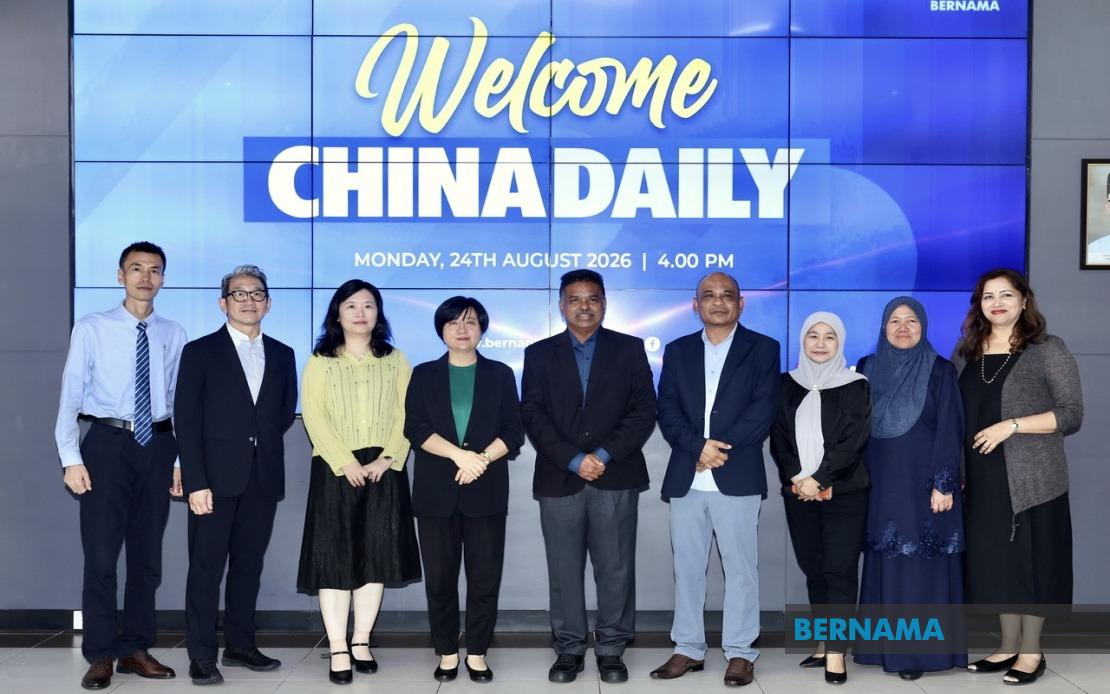
Malaysia's national news agency Bernama and China Daily are charting an expanded partnership that extends beyond traditional news sharing into professional development and cultural engagement. The collaboration framework emerged during a visit by China Daily Asia-Pacific Editor-in-Chief Lu Haoting to Bernama's Kuala Lumpur headquarters, where both organisations outlined their vision for deeper integration across multiple facets of media operations and personnel development.
The scope of potential cooperation encompasses several interconnected areas. Lu emphasised that journalist exchanges would enable media professionals from both organisations to gain firsthand exposure to different editorial approaches, reporting methodologies, and newsroom practices. Such personnel movements have become commonplace among international news agencies seeking to elevate reporting standards and foster cross-cultural understanding among their staff. Training programmes represent another pillar, with both sides recognising that upskilling journalists in contemporary news gathering, digital storytelling, and multimedia production would benefit their respective organisations and the broader Southeast Asian media landscape.
Lu's delegation, which included China Daily Asia-Pacific Assistant Editor-in-Chief Sheila Shi, Business Development Director Kenrick Lee, and Kuala Lumpur Bureau Chief Peng Chao, carried significant institutional weight. Their presence signalled China Daily's commitment to the Malaysia partnership at a senior level, indicating this is not a peripheral initiative but rather central to the international news organisation's regional strategy. The formal structure of the visit—complete with a delegation of specialists across editorial, business, and bureau management—demonstrated that this cooperation involves substantive operational planning rather than merely symbolic gesture.
Bernama's leadership responded positively, with Editor-in-Chief Arul Rajoo Durar Raj and his senior team engaging substantively on implementation pathways. Notably, Arul Rajoo highlighted existing precedents for collaborative projects, including joint documentary productions with Chinese media organisations and longstanding content exchange arrangements. These precedents provide a foundation upon which to build more ambitious initiatives, suggesting that both institutions possess institutional familiarity and established working relationships that reduce friction in expanding cooperation.
One significant innovation in the proposed partnership involves venturing beyond media production into business forums and cultural activities. This expansion reflects a broader global trend where news organisations function as platforms for fostering international understanding rather than merely disseminating information. By hosting joint business forums, both agencies position themselves as conveners within their respective markets, potentially attracting corporate sponsorships and enhancing their relevance to business communities across Malaysia and the broader Asia-Pacific region.
For Malaysian readers and policymakers, this partnership carries strategic implications. China Daily's Asia-Pacific Bureau functions as a comprehensive monitoring and reporting apparatus covering political developments, economic trends, social movements, and cultural shifts across the region. By deepening ties with Bernama, China Daily gains insight into Malaysian perspectives and access to local reporting infrastructure, while Bernama simultaneously gains exposure to international news standards and potentially, broader distribution channels for Malaysian stories to Chinese and international audiences.
The timing of this cooperation announcement reflects the broader trajectory of Malaysia-China relations. Both nations maintain longstanding economic and diplomatic ties, and media cooperation has historically accompanied periods of closer bilateral engagement. News organisations frequently serve as soft power instruments, and deeper media partnerships enable both governments to ensure their narratives receive sympathetic treatment and contextual framing in international reporting.
From a professional standpoint, journalist exchanges between Bernama and China Daily Asia-Pacific would expose Malaysian journalists to China Daily's sophisticated digital infrastructure, data journalism capabilities, and international newsgathering networks. Conversely, Chinese journalists embedded within Bernama operations would develop deeper understanding of Malaysian media culture, editorial standards, and the regulatory environment governing Malaysian journalism. Such reciprocal exposure typically generates lasting professional relationships and informal information-sharing networks that outlast formal institutional arrangements.
The proposed training initiatives merit particular attention. Media training partnerships have proliferated in Southeast Asia over the past decade, with numerous international organisations competing to shape journalistic practice. Bernama's participation in training initiatives alongside China Daily positions the agency as a hub for professional development within the region, potentially attracting journalists from other Southeast Asian nations seeking to upgrade their capabilities in digital media production, fact-checking methodologies, and multimedia storytelling.
Cultural activities represent perhaps the least scrutinised but potentially most consequential aspect of the proposed cooperation. When news organisations host cultural forums, exhibitions, and educational events, they subtly influence how international audiences perceive partner nations. Joint Bernama-China Daily cultural initiatives could shape how Malaysia and China are portrayed to regional audiences, potentially softening perceptions and building affinity between populations across the media exposure these activities generate.
The partnership also reflects China Daily's strategic positioning within Southeast Asia. As an English-language publication with international circulation, China Daily Asia-Pacific operates within a highly competitive regional media landscape where The Straits Times, Bangkok Post, and Philippine Daily Inquirer wield significant influence. Deepening ties with national news agencies like Bernama provides China Daily with credibility enhancement and local partnership legitimacy that standalone reporting operations struggle to achieve.
Moving forward, implementation will prove critical. Successful media partnerships require clear governance structures, funding mechanisms, and performance metrics. Both organisations will need to establish regular coordination mechanisms, define journalist exchange parameters, and ensure that training programmes address demonstrable professional development gaps rather than serving primarily as relationship-building exercises.
The broader significance of this Bernama-China Daily cooperation lies in its illustration of how Southeast Asian media organisations are increasingly embedded within international news networks rather than operating autonomously. For Malaysian stakeholders—from government officials to civil society observers to business leaders—understanding these media relationships proves essential to comprehending how Malaysian developments receive coverage, interpretation, and framing within regional and international news ecosystems.

