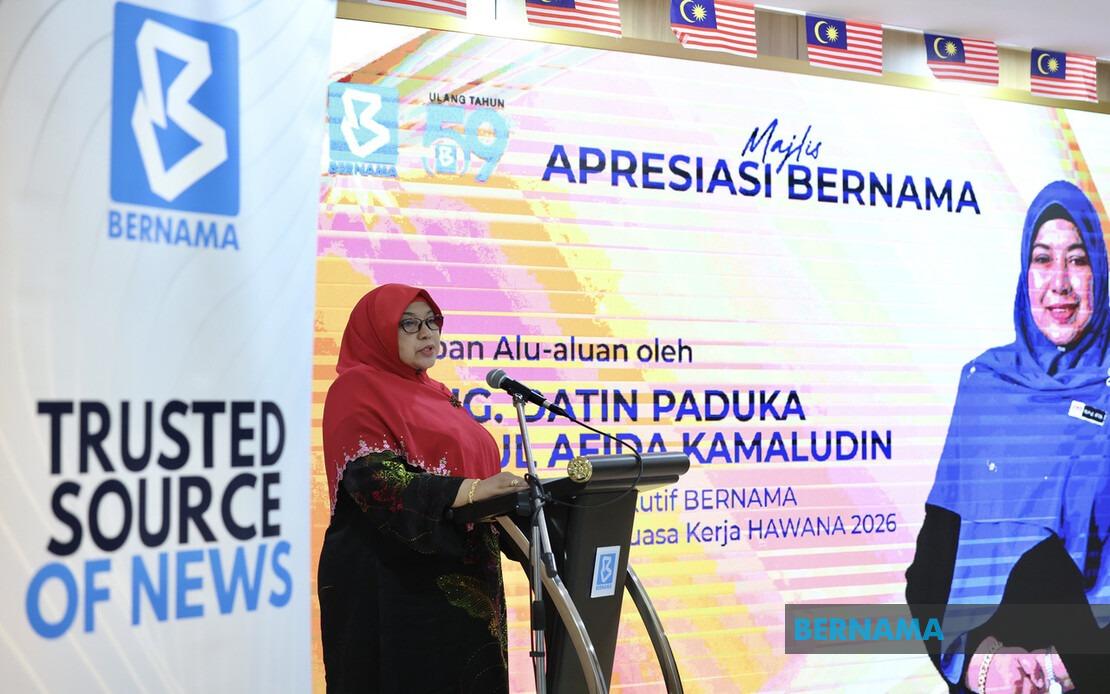
Malaysia's national news agency is doubling down on its mission to cultivate patriotic sentiment among Malaysians as the country heads towards its National Day celebrations. Bernama, operating under the Ministry of Communications, has positioned itself as a key institutional player in amplifying the nation's patriotic messaging during National Month. The agency's commitment reflects broader government efforts to strengthen national consciousness and unity through coordinated public campaigns and grassroots participation.
Datin Paduka Nur-ul Afida Kamaludin, Bernama's chief executive officer, outlined the agency's comprehensive approach during the Bernama Appreciation Ceremony at Wisma Bernama in Kuala Lumpur. She emphasised that Bernama's responsibility extends beyond traditional news dissemination to actively supporting and promoting initiatives launched by the Communications Ministry. This expanded mandate positions the agency as both a conduit for official messaging and an institutional champion of government programmes aimed at deepening national pride.
The agency's strategy encompasses multiple engagement levels, from internal workforce mobilisation to public outreach. Nur-ul Afida highlighted how Bernama has already decorated its headquarters with the Jalur Gemilang following the Prime Minister's launch of National Month in Ipoh, signalling institutional commitment to the campaign. This visible show of support serves dual purposes: demonstrating government agency compliance with national initiatives while creating a workplace environment conducive to patriotic sentiment among staff members.
Central to Bernama's National Month campaign is the "Satu Rumah, Satu Jalur Gemilang" initiative, which encourages employees to display the national flag at their homes. This household-level engagement strategy attempts to translate institutional patriotism into personal domestic spaces, creating a cascading effect where government employees become ambassadors for national pride within their own families and communities. The approach recognises that patriotic sentiment gains traction when integrated into everyday life rather than confined to official ceremonies.
The Bernama Appreciation Ceremony itself functioned as a platform for launching and institutionalising these initiatives. Nur-ul Afida distributed the Jalur Gemilang to representatives from Bernama's major departments in a symbolic gesture designed to signal the importance of the campaign throughout the agency's operational structure. This ceremonial dimension underscores how government communications strategies in Malaysia often blend pragmatic messaging with symbolic gestures intended to reinforce national identity.
Complementing the flag-flying campaign, the event also introduced the National Day theme song composed by singer Faizal Tahir. Music represents a particularly effective medium for propagating patriotic messaging, as it reaches audiences emotionally and memorably. By pairing the visual symbol of the Jalur Gemilang with an original composition, Bernama is creating a multisensory patriotic experience that extends beyond conventional news reporting into cultural production and entertainment.
Nur-ul Afida acknowledged the logistical challenge of assembling Bernama's entire workforce at headquarters and characterised the integrated approach as a strategic solution. By combining multiple initiatives into a single comprehensive ceremony, the agency maximised staff participation while consolidating its National Month messaging. This efficiency-driven approach reflects institutional realities in large government organisations where coordinated engagement requires careful planning and streamlined execution.
For Malaysian readers and Southeast Asian observers, Bernama's campaign illustrates how government communications agencies in the region deploy coordinated messaging strategies to reinforce national identity during culturally significant periods. The approach demonstrates that institutional patriotism in Malaysia operates at multiple registers simultaneously—organisational compliance, workforce engagement, public messaging, and cultural production all converge in campaigns like this. Bernama's role as a state news agency gives its patriotic initiatives particular weight, as they reflect not merely corporate sentiment but government-endorsed messaging distributed through official channels.
The timing of these initiatives matters within Malaysia's political calendar. National Day represents a moment when political unity is foregrounded and societal cohesion is emphasised, making it an opportune period for government agencies to reinforce patriotic narratives. Bernama's positioning of itself as an active participant in these celebrations rather than a passive observer highlights how state institutions leverage strategic moments to strengthen national consciousness. The agency's explicit alignment of its communications mission with patriotic objectives suggests that information dissemination in Malaysia's institutional context increasingly emphasises nation-building alongside traditional news functions.
The household-level deployment of the Jalur Gemilang carries particular significance in Malaysian context, where residential neighbourhoods often display the flag during festive occasions and commemorative periods. By formalising this practice through the "Satu Rumah, Satu Jalur Gemilang" slogan, Bernama attempts to establish flag-flying as a normalised expression of patriotism extending beyond official holidays. This cultural strategy aims to embed national symbols more deeply into everyday Malaysian domestic practice, creating visible landscapes of patriotism throughout residential areas.
Moreover, Bernama's initiative reflects the broader Southeast Asian pattern of state agencies actively participating in national identity construction. In a region characterised by diverse ethnic, religious, and cultural compositions, official patriotic campaigns serve important functions in articulating overarching national frameworks. Bernama's role in this process—amplifying official messaging while engaging internal stakeholders and the general public—demonstrates how contemporary governance in Malaysia integrates communications strategy with nation-building objectives.
The agency's approach also touches on the evolving relationship between traditional news institutions and modern patriotic campaigns. As mainstream media's role in national consciousness-building faces competition from digital platforms and diverse information sources, state news agencies like Bernama assert their institutional relevance by positioning themselves as guardians of patriotic messaging and national identity. This strategic repositioning ensures their continued significance in an increasingly fragmented media landscape.

