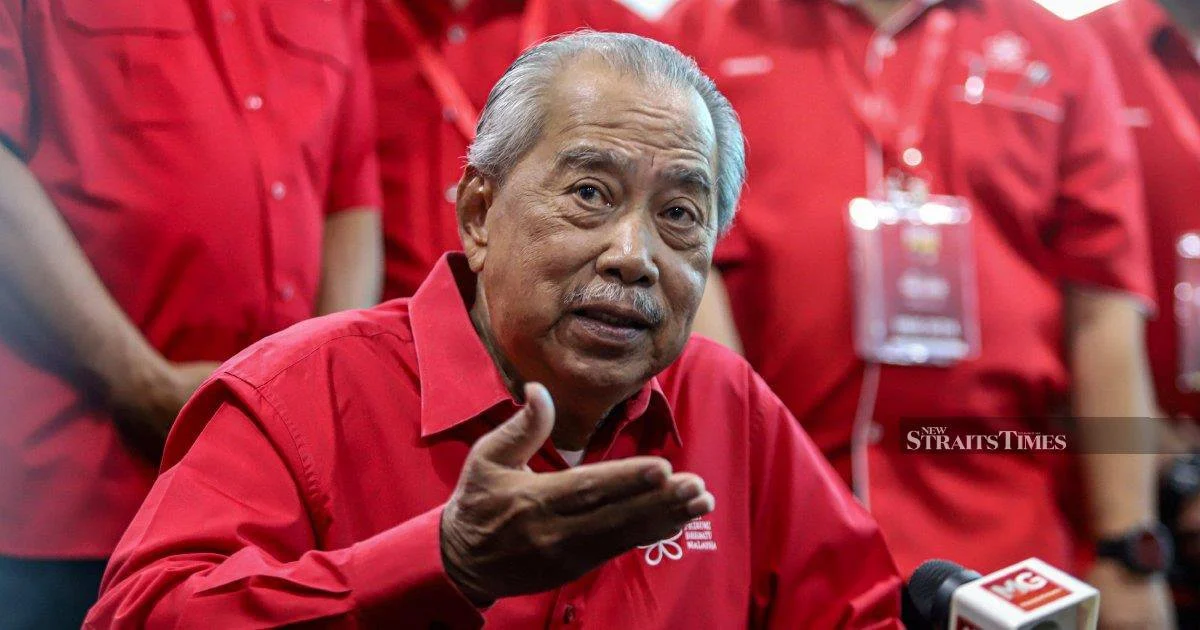
The simmering tensions within Malaysia's opposition alliance have erupted into public recriminations, with Bersatu expressing disappointment at Pas' unilateral approach to negotiations with Barisan Nasional ahead of the Negri Sembilan state election. The move underscores growing fault lines within Perikatan Nasional, a coalition that has struggled to maintain cohesion since its formation, and raises questions about whether the political partnership can withstand pressure from individual component parties pursuing separate agendas.
Bersatu's criticism reflects a broader pattern of discord plaguing PN, which united ostensibly to present a united front against Pakatan Harapan's governing coalition. Instead, the alliance has become a venue for competing interests and unilateral decision-making, with member parties frequently pursuing their own political calculus rather than collective strategy. The controversy surrounding Pas' decision to engage BN directly without coordinating with fellow coalition partners suggests that personal political survival and regional electoral considerations are increasingly overriding any commitment to PN solidarity.
For Malaysian observers, the public airing of such divisions carries particular significance. Coalition politics have long been central to Malaysia's political architecture, and when alliances fracture along ideological or strategic lines, they often reflect deeper questions about governance, representation, and the nature of electoral competition. Bersatu's decision to voice its concerns openly, rather than managing disagreements behind closed doors, indicates that the coalition's internal problems have become too acute to ignore or suppress.
The Negri Sembilan state election provides an immediate backdrop for this conflict. As an incumbent BN stronghold with significant political importance, the contest matters not only to state-level interests but also to the broader calculation of which coalition can claim electoral momentum heading into future national competitions. Pas' apparent willingness to negotiate directly with BN without PN input suggests the Islamist party may be considering electoral arrangements that prioritise its own seat count over coalition-wide strategy, a calculation that could fundamentally reshape the political landscape if replicated across multiple states.
Pas' approach also reflects internal pressures within the party itself. As Malaysia's largest explicitly Islamist party, Pas has traditionally positioned itself as ideologically distinct from secular-nationalist components within PN. The possibility of negotiating directly with BN, which includes non-Muslim and secular-leaning parties, demonstrates how electoral pragmatism can override doctrinal positioning when state-level power is at stake. This flexibility exposes the tension between Pas' conservative religious base and its willingness to cooperate with politically expedient partners.
Bersatu's public criticism carries additional weight given its own complicated political history. The party emerged from dissidents within the United Malays National Organisation, BN's dominant component, and has positioned itself as a reformist alternative capable of working across coalition lines. By vocally opposing Pas' unilateral negotiating approach, Bersatu attempts to establish itself as the coalition member most committed to collective decision-making and formal process, a positioning that could enhance its appeal to both internal PN members and external observers concerned about coalition stability.
The incident also highlights the structural vulnerability of PN as a political entity. Unlike established coalitions with decades of institutional development, formal dispute resolution mechanisms, and settled understandings about resource distribution, PN remains relatively nascent and lacking such stabilising infrastructure. When disagreements emerge—as they inevitably do in any multi-party alliance—there are few mechanisms to resolve them short of public confrontation or threatened withdrawal. This institutional deficit makes PN particularly prone to the kind of public acrimony now on display.
For Malaysian readers, these developments matter because coalition stability directly affects government effectiveness and electoral predictability. A fragmented PN unable to coordinate strategy or maintain discipline may find itself unable to present credible alternative governance to voters, potentially strengthening Pakatan Harapan's position or encouraging further realignment. Conversely, if PN successfully navigates this crisis and reestablishes internal discipline, it could emerge as a formidable challenger claiming to represent diverse Malaysian constituencies unified around concrete governance priorities rather than personality-driven politics.
The Negri Sembilan contest will serve as a crucial test case. If Pas pursues independent negotiations with BN despite Bersatu's objections, PN's unity will face a direct challenge and voters will observe how the coalition responds to internal rebellion. If Pas reverses course and embraces a collective PN approach, it might signal a recommitment to coalition discipline. Either outcome will carry implications extending well beyond the state level, influencing how PN positions itself for future electoral contests and whether component parties view the coalition as a mechanism for strengthening their individual prospects or constraining them in favour of collective advancement.
These tensions also reflect broader trends in Malaysian politics toward greater volatility and coalition fluidity. The emergence of multiple viable coalitions competing for electoral support has made alliance discipline harder to enforce, as parties increasingly calculate whether remaining within an established structure serves their interests better than exploring alternatives. In this context, Bersatu's expressed regret over Pas' autonomy represents not merely a procedural complaint but a deeper anxiety about whether PN can survive as a coherent political force or whether it will devolve into a loose arrangement of competing individual interests.

