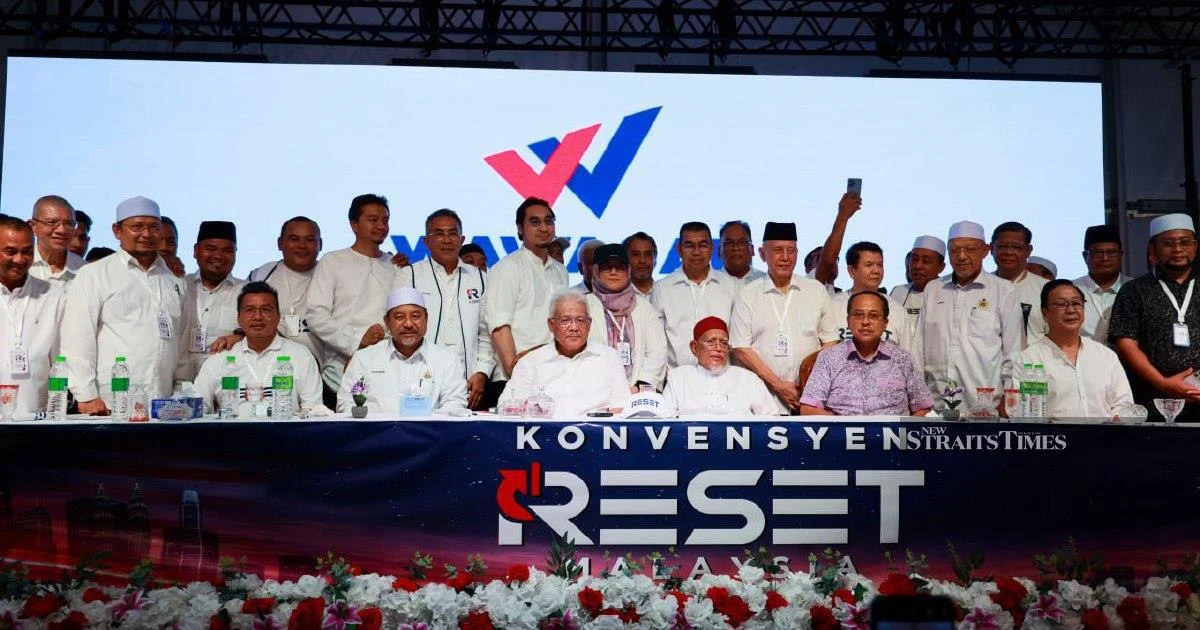
The Perikatan Nasional coalition experienced a significant upheaval when Bersatu challenged the legitimacy of the PN Supreme Council's emergency session held Monday night, throwing the stability of Malaysia's opposition alliance into question and exposing deep procedural disagreements at the highest levels of the political partnership.
The contentious meeting, convened at short notice by PN chairman Muhyiddin Yassin, resulted in the admission of the newly formed Wawasan party into the coalition—a decision that Bersatu contends was rushed through without proper consultation or adherence to established protocols. The timing and manner of the emergency convocation have become the focal point of an escalating dispute that threatens to undermine the cohesion PN has cultivated since its formation as an alternative political force to the Pakatan Harapan government.
Bersatu's objections centre on whether PN's chairman possessed the constitutional authority to unilaterally summon an emergency session without giving coalition members adequate notice or obtaining their prior consent. In coalition politics, such procedural matters are rarely trivial—they reflect broader questions about power distribution and whether the chairman wields executive prerogatives that override collective decision-making mechanisms. The party appears to be asserting that the decision violated established bylaws governing how PN conducts major policy deliberations.
Wawasan, a political entity that has recently emerged onto Malaysia's political landscape, sought to join PN as a bloc, presumably bringing with it certain parliamentary seats or organisational capacity that the coalition leadership deemed strategically valuable. However, the accelerated nature of the admission process has sparked concerns among PN constituent parties about whether adequate due diligence was conducted and whether such significant coalition decisions should require broader consensus rather than being determined by emergency protocols.
For Malaysian observers of coalition politics, this episode illustrates a recurring tension within opposition alliances: the need for decisive leadership versus the imperative to maintain inclusive decision-making processes that respect all member parties' interests. When coalitions operate effectively, they balance these competing demands through transparent procedures that member parties trust. PN's current difficulties suggest those mechanisms may be breaking down under pressure.
The dispute also reflects deeper anxieties within PN itself. Since the coalition's inception, questions have persisted about whether it represents a genuine political movement or primarily a vehicle for particular leaders' political ambitions. Bersatu's challenge to the chairman's unilateral action taps into these fundamental questions about institutional legitimacy and whether PN can maintain internal discipline while respecting democratic principles among its constituent parties.
Bersatu's position carries particular weight within PN's architecture. As a substantial party within the coalition with its own parliamentary representation, Bersatu's concerns cannot be dismissed as peripheral complaints. If the coalition chairman is perceived as bypassing proper procedures to advance decisions that don't enjoy consensus support, other parties may similarly feel emboldened to circumvent normal channels when pursuing their own priorities, potentially triggering a cascade of procedural violations that erode institutional norms.
The Wawasan admission decision itself carries implications beyond PN's internal governance. It signals the coalition's strategy of expanding its parliamentary strength and broadening its political appeal by incorporating new political entities. Yet the manner in which this expansion occurred—through what Bersatu characterises as a unilateral executive action—raises questions about whether this growth strategy reflects genuine party consensus or represents decisions imposed from the top down.
For Malaysia's broader political ecosystem, PN's internal struggles matter significantly. As the primary opposition coalition to Pakatan Harapan and the government, PN's stability and internal cohesion directly affect whether viable alternatives to the current administration can effectively function. A coalition plagued by procedural disputes and leadership legitimacy questions may struggle to present itself as a competent alternative capable of governing the nation.
The incident also underscores how coalition politics in Malaysia operate differently from single-party governance. Coalition partners must constantly negotiate competing interests and procedural fairness, making transparency and predictability essential to survival. When emergency procedures are invoked too frequently or appear to serve leadership preferences rather than genuine coalition needs, trust erodes rapidly among member parties.
Moving forward, PN faces a critical juncture. The coalition may need to undertake a comprehensive review of its decision-making procedures to ensure that emergency protocols cannot be weaponised for partisan purposes while still allowing the flexibility necessary for modern coalition governance. Without such clarification, further disputes appear inevitable, particularly as PN members reassess their commitment to a coalition framework that may not adequately protect their interests or respect established conventions.
Bersatu's challenge represents more than routine intra-coalition disagreement—it signals that PN's internal structures may require recalibration if the coalition is to maintain its political viability as a genuine alternative force in Malaysian politics. The coming weeks will likely determine whether PN can navigate this crisis through dialogue and procedural reform or whether the schism deepens into something more structurally damaging to the opposition coalition's long-term prospects.