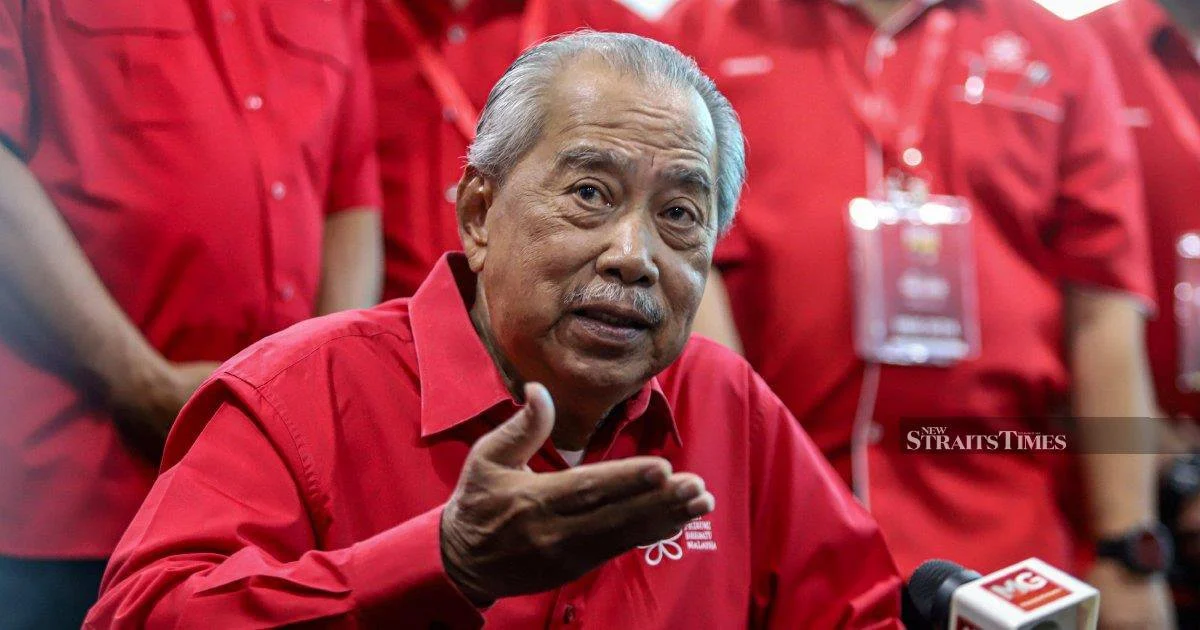
Party president Tan Sri Muhyiddin Yassin has moved to quell growing uncertainty surrounding the Perikatan Nasional (PN) coalition, declaring that Bersatu will maintain its partnership with the opposition bloc indefinitely. The statement comes as rumours have swirled regarding potential realignments within Malaysia's fractious political landscape, with various factions exploring different strategic options.
Muhyiddin's reassurance about Bersatu's position within PN carries significant weight given the party's foundational role in the coalition's establishment. As a key figure in Malaysian politics with considerable influence over party cadre, his public commitment serves to stabilise internal party morale while sending clear signals to potential allies and rivals about PN's structural integrity. The declaration reflects Bersatu's calculation that remaining within the opposition coalition offers the party greater political leverage than pursuing independent trajectories.
The timing of Muhyiddin's statement proves strategically important, arriving during a period when Malaysian politics has become increasingly fluid. Coalition dynamics that appeared settled months earlier have become subject to renewed scrutiny, as various political actors assess opportunities and vulnerabilities created by shifting electoral calculus and demographic changes across different states. Bersatu's formal commitment to PN thus represents an attempt to create stability within an inherently unstable political environment.
Within the broader Malaysian context, PN has emerged as the primary opposition grouping challenging the Pakatan Harapan-led federal government. The coalition comprises diverse political parties representing different ideological perspectives and regional strongholds, creating natural tensions regarding resource allocation, candidate selection, and policy direction. Muhyiddin's intervention seeks to paper over these internal disagreements by emphasising the coalition's permanence and unity of purpose.
Bersatu's position within PN reflects the party's political journey since its emergence in 2016. Initially formed by individuals dissatisfied with existing political arrangements, Bersatu has oscillated between collaboration with different coalitional partners while attempting to establish itself as an indispensable force in Malaysian politics. The party's commitment to PN represents a bet that its interests are best served through coalition rather than through mergers or defections to competing blocs.
The opposition coalition landscape in Malaysia has historically proven volatile, with parties frequently reassessing their alignment strategies based on calculations of electoral viability and ministerial opportunities. Muhyiddin's statement therefore contains an implicit warning to party members and allied politicians that Bersatu will not entertain suggestions of coalition-switching despite any short-term electoral setbacks or internal grievances. Such public commitments serve important disciplinary functions within party structures, signalling that leadership has foreclosed certain options.
Regional implications of Bersatu's coalition permanence extend beyond party-level politics. Should PN maintain cohesion and Bersatu remain fully committed, the bloc possesses sufficient parliamentary representation to constitute a credible alternative government platform. This affects how other political players calculate their positions and whether they might explore overtures toward different coalitional arrangements. The stability Muhyiddin promises thus shapes the broader political opportunity structure available to all major players.
Public declarations of permanent coalition commitment, however, often mask underlying contingencies and exit clauses. Political parties regularly maintain rhetorical positions that emphasise loyalty while retaining pragmatic flexibility regarding actual moves. The distinction between Muhyiddin's formal statement and the operational reality of coalition dynamics should not be overlooked, particularly given the historical pattern of Malaysian political parties pivoting swiftly when circumstances warrant.
For Malaysian readers observing national politics, Muhyiddin's reassurance about PN's stability addresses genuine concerns about governmental legitimacy and predictability. Coalition collapse scenarios create uncertainty affecting investor confidence, policy continuity, and administrative effectiveness. By reaffirming coalition permanence, Bersatu leadership attempts to assure stakeholders that the political landscape will retain sufficient structure to enable normal governmental functions despite ongoing rivalry between major blocs.
The statement also reflects calculations regarding the next election cycle and how PN might position itself competitively. Rather than appear defensive or faction-prone, the coalition's largest parties prefer projecting unity and forward momentum. Muhyiddin's declaration contributes to this narrative-building, suggesting PN has resolved internal questions and stands ready to present voters with a coherent alternative to the incumbent government. Whether such declarations correlate with actual organisational capacity remains a separate analytical question.
Looking forward, sustained coalition effectiveness will depend on whether Bersatu and allied parties can translate rhetorical commitment into concrete collaborative achievements at federal and state levels. Programmatic coherence, equitable resource distribution among coalition partners, and coordinated opposition messaging all prove essential for translating formal political partnerships into genuine governing alternatives. Muhyiddin's statement provides the baseline commitment upon which such efforts must build.
%22%2F%3E%3C%2Fpattern%3E%3C%2Fdefs%3E%3Crect%20width%3D%22100%25%22%20height%3D%22100%25%22%20fill%3D%22url(%23ph4hqahg)%22%2F%3E%3Crect%20width%3D%22100%25%22%20height%3D%22100%25%22%20fill%3D%22url(%23ph4hqahp)%22%2F%3E%3Ctext%20x%3D%2250%25%22%20y%3D%2250%25%22%20text-anchor%3D%22middle%22%20dominant-baseline%3D%22central%22%20fill%3D%22rgba(255%2C255%2C255%2C0.95)%22%20font-family%3D%22Georgia%2C%20'Times%20New%20Roman'%2C%20serif%22%20font-weight%3D%22700%22%20font-size%3D%22272%22%20letter-spacing%3D%22-0.02em%22%3ETrump%3C%2Ftext%3E%3C%2Fsvg%3E)
%22%2F%3E%3C%2Fpattern%3E%3C%2Fdefs%3E%3Crect%20width%3D%22100%25%22%20height%3D%22100%25%22%20fill%3D%22url(%23ph3mmkqg)%22%2F%3E%3Crect%20width%3D%22100%25%22%20height%3D%22100%25%22%20fill%3D%22url(%23ph3mmkqp)%22%2F%3E%3Ctext%20x%3D%2250%25%22%20y%3D%2250%25%22%20text-anchor%3D%22middle%22%20dominant-baseline%3D%22central%22%20fill%3D%22rgba(255%2C255%2C255%2C0.95)%22%20font-family%3D%22Georgia%2C%20'Times%20New%20Roman'%2C%20serif%22%20font-weight%3D%22700%22%20font-size%3D%22320%22%20letter-spacing%3D%22-0.02em%22%3EIran%3C%2Ftext%3E%3C%2Fsvg%3E)