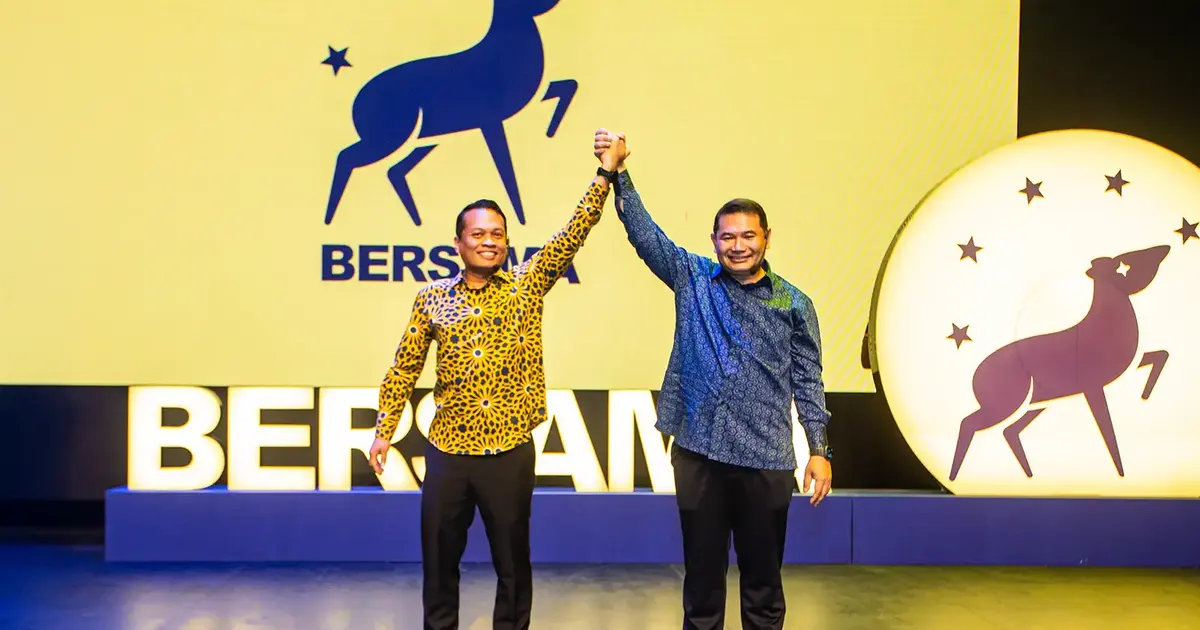
Bersama is drawing considerable enthusiasm from retired senior civil servants eager to contest in the forthcoming state elections in Johor and Negeri Sembilan, according to party leader Rafizi Ramli. The positive response from this demographic suggests the newly formed political entity is successfully positioning itself as an alternative vehicle for experienced governance professionals seeking electoral entry.
The recruitment of former bureaucrats represents a significant strategic development for Bersama, as it taps into a pool of candidates with established administrative credentials and institutional knowledge. Unlike politicians who have built their careers through electoral competition, retired civil service personnel bring technical expertise and operational experience from their tenure in government ministries and agencies. This cadre typically possesses deep familiarity with state-level governance machinery, policy implementation challenges, and inter-agency coordination mechanisms.
For the Johor state election specifically, such candidates could prove particularly valuable given the state's economic significance and the complexity of managing its large bureaucratic apparatus. Johor's position as a major manufacturing and logistics hub means candidates with civil service backgrounds would understand the regulatory environment affecting business operations and infrastructure development. Similarly, Negeri Sembilan's smaller size and administrative structure might benefit from candidates versed in state-level administrative procedures and resource management.
The appeal of Bersama to this particular candidate pool likely reflects broader frustrations within Malaysia's public service sector. Many retired senior officials may view electoral politics as an opportunity to influence policy directions they believe should have been prioritised during their careers. Additionally, the party's positioning as a newer political force without the baggage of long-established factions could attract those seeking to build something different from conventional political structures.
Rafizi's characterisation of the response as "encouraging" suggests Bersama anticipated this level of interest and has likely structured its candidate selection process to accommodate experienced professionals. The party appears to recognise that bringing credible administrative figures into electoral contests enhances its platform's credibility, particularly among voters sceptical of career politicians. This approach acknowledges a market for candidates perceived as competent technocrats rather than purely partisan operatives.
However, the transition from civil service to electoral politics carries inherent challenges. Retired bureaucrats accustomed to working within established institutional hierarchies may struggle with the partisan nature of electoral campaigning and the expectation to mobilise grassroots support. Additionally, their lack of existing electoral machinery or community networks could disadvantage them against candidates from established parties with entrenched ground organisations.
For Malaysian voters, the presence of former civil servants in electoral contests introduces an interesting dynamic. These candidates typically command respect based on their previous institutional roles but lack the political capital or personal followings that career politicians have cultivated. This makes them neither inherently advantageous nor disadvantageous—their electoral viability depends substantially on local political conditions, opponent quality, and their ability to connect with communities beyond their administrative pedigree.
The timing of Bersama's recruitment drive coincides with Malaysia's relatively fluid political landscape, where traditional party alignments have fragmented and voters increasingly evaluate candidates on performance metrics rather than purely party loyalty. This environment creates space for candidates who can position themselves as alternatives to entrenched political establishments. Former civil servants naturally fit this narrative if they can authentically communicate a commitment to practical, evidence-based governance rather than factional politics.
Regionally, Bersama's strategy of pursuing experienced administrators reflects broader trends across Southeast Asia, where political newcomers and reform-oriented parties frequently target retired military officers, bureaucrats, and technocrats as candidate material. Thailand, Indonesia, and the Philippines have all witnessed similar recruitment patterns, though with varying degrees of electoral success. Whether such candidates can successfully translate administrative experience into political effectiveness remains an open question that Malaysian elections will help answer.
For Johor and Negeri Sembilan specifically, the presence of retired civil servants among Bersama's candidate slate could raise the overall quality of policy discourse, assuming these individuals engage substantively with local issues during campaigns. Conversely, if candidates rely excessively on their administrative credentials without developing concrete plans addressing state-specific concerns, voters may perceive them as out-of-touch elites seeking purely personal advancement through electoral office.
The development also has implications for how Malaysia's civil service perceives electoral engagement. If significant numbers of retired senior officials successfully transition into elected office through Bersama, it could normalise post-retirement political participation and potentially shift perceptions about the boundary between neutral administration and partisan politics. This normalisation carries both democratic benefits—drawing on diverse expertise—and potential risks if active civil service personnel begin viewing electoral politics as inevitable career progression.
Ultimately, Bersama's ability to harness retired civil servants' interest depends on whether the party can provide these candidates with effective organisational support and realistic pathways to victory. Merely attracting interested candidates proves insufficient without corresponding capacity to execute competitive campaigns and mobilise voters. The coming state elections will reveal whether the party's recruitment efforts translate into meaningful electoral gains.