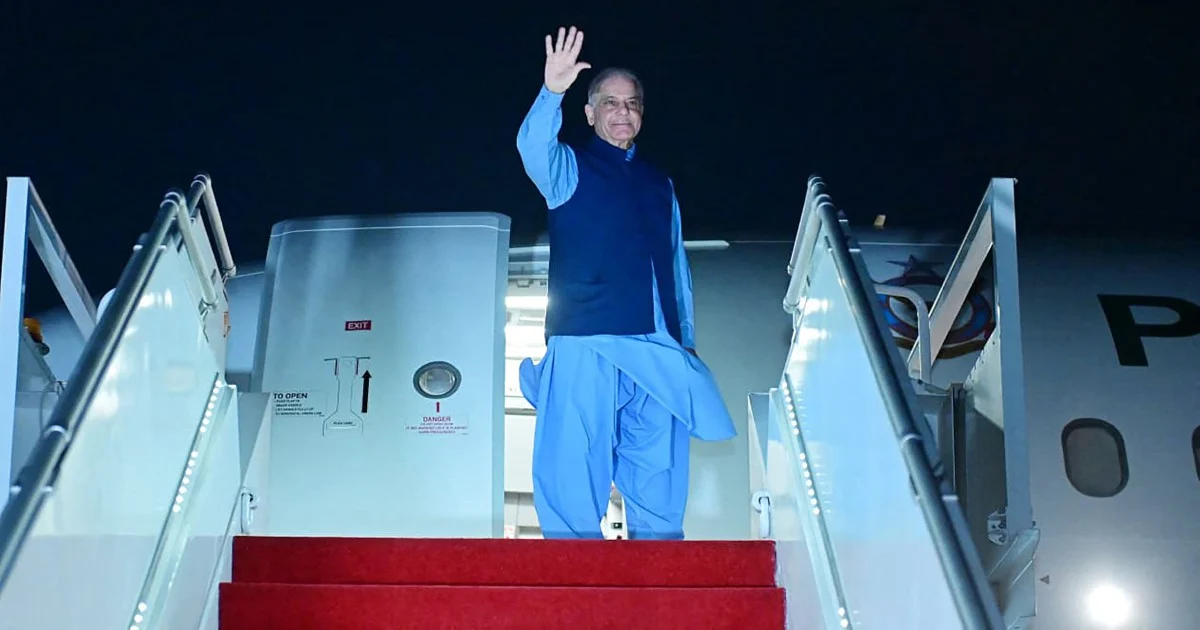
Pakistan's Prime Minister Shehbaz Sharif touched down in Switzerland on Sunday morning, marking a significant diplomatic move as he positions himself at the centre of high-stakes negotiations between the United States and Iran. The arrival underscores Pakistan's continued efforts to play a stabilizing role in global affairs despite domestic economic challenges that have dominated his administration's agenda in recent months.
The technical-level discussions between Washington and Tehran represent a critical juncture in efforts to defuse escalating tensions that have threatened regional stability. These talks, hosted on neutral Swiss ground, aim to establish pathways for dialogue on nuclear and security matters that have remained contentious flashpoints between the two nations. The involvement of a Pakistani premier signals the importance that South Asian powers attach to Middle Eastern affairs, where geopolitical interests intersect significantly with regional security dynamics.
Pakistan's participation in these diplomatic endeavours reflects its strategic position as a bridge between different regional and international stakeholders. As an Islamic republic with historical ties to both Gulf monarchies and Iran, Islamabad has consistently sought to balance its relationships while advocating for de-escalation across the Islamic world. Shehbaz Sharif's presence at the Switzerland talks demonstrates that Pakistan sees diplomatic engagement as preferable to military posturing, a position increasingly relevant given the fragility of regional peace.
The timing of these discussions carries weight, coming at a period when Middle Eastern tensions have periodically erupted into military confrontations affecting global energy markets and international security. Technical-level negotiations often precede broader diplomatic breakthroughs by establishing common ground on procedural and substantive matters. By hosting such talks in Switzerland, a country with long-standing diplomatic neutrality, both the US and Iran signal their willingness to engage without the domestic political pressures that might constrain negotiations conducted in their respective capitals.
For Pakistan, engagement in this diplomatic process offers multiple benefits. First, reducing tensions between Washington and Tehran protects Pakistani interests in the region, where instability can spill across borders and destabilize its own western frontier. Second, demonstrating its value as a mediator and diplomatic actor enhances Pakistan's international standing, particularly as it seeks to strengthen economic partnerships and secure external financing for its development agenda. Third, preventing escalation in the Middle East helps safeguard the welfare of Pakistan's diaspora communities and protects trade routes critical to the nation's economic survival.
The technical discussions themselves are expected to address fundamental issues including nuclear programme verification, sanctions relief timelines, and security assurances that both parties require to move forward. Such lower-level talks often work through detailed mechanisms and procedural frameworks that higher-level political discussions cannot easily navigate. Pakistani involvement could facilitate indirect communication between delegations and help identify areas of potential compromise that might otherwise remain obscured by political rhetoric.
Regionally, Pakistan's role in these discussions resonates with other South Asian nations, particularly those with significant Middle Eastern economic ties and populations. The message conveyed through Shehbaz Sharif's participation is that South Asian nations refuse to accept Middle Eastern instability as inevitable, instead positioning themselves as active participants in regional conflict resolution. This approach contrasts with historical periods when South Asian capitals remained peripheral to Middle Eastern diplomatic processes.
The diplomatic initiative also comes at a moment when Pakistan itself faces significant economic pressures, having recently completed International Monetary Fund programmes and seeking to stabilize its macroeconomic situation. International diplomatic engagements of this calibre can enhance a nation's soft power and credibility among international partners, potentially creating goodwill that translates into economic and development cooperation. For Shehbaz Sharif's government, demonstrating leadership on global issues helps counterbalance domestic economic difficulties and projects an image of responsible statecraft.
The success or failure of these technical discussions may have indirect but meaningful implications for Pakistan's own security environment. A genuine thawing of US-Iran relations would likely reduce proxy tensions across the region, decrease military spending driven by security concerns, and create space for development-focused initiatives. Conversely, any breakdown in talks could lead to renewed military posturing that destabilizes Pakistan's western approaches and diverts already scarce resources toward security imperatives.
Looking ahead, how Pakistan leverages this diplomatic involvement will be telling. If Islamabad successfully facilitates productive exchanges between US and Iranian delegations, it could establish itself as a trusted intermediary on other regional issues. Such positioning would enhance its diplomatic capital considerably, opening doors for greater influence on issues ranging from Afghanistan's future to broader regional economic cooperation. The Switzerland talks thus represent more than a singular diplomatic exercise; they constitute a broader statement about Pakistan's aspirations in global affairs.
%22%2F%3E%3C%2Fpattern%3E%3C%2Fdefs%3E%3Crect%20width%3D%22100%25%22%20height%3D%22100%25%22%20fill%3D%22url(%23phpuesg)%22%2F%3E%3Crect%20width%3D%22100%25%22%20height%3D%22100%25%22%20fill%3D%22url(%23phpuesp)%22%2F%3E%3Ctext%20x%3D%2250%25%22%20y%3D%2250%25%22%20text-anchor%3D%22middle%22%20dominant-baseline%3D%22central%22%20fill%3D%22rgba(255%2C255%2C255%2C0.95)%22%20font-family%3D%22Georgia%2C%20'Times%20New%20Roman'%2C%20serif%22%20font-weight%3D%22700%22%20font-size%3D%22226%22%20letter-spacing%3D%22-0.02em%22%3EHamzah%3C%2Ftext%3E%3C%2Fsvg%3E)