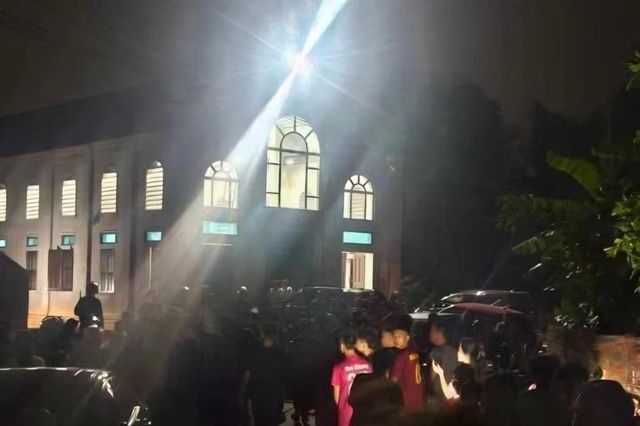
A domestic violence tragedy in northern Vietnam has left four people dead following a murder-suicide in Bac Ninh Province's Viet Yen Ward on Sunday, June 21, according to authorities. The incident underscores the ongoing threat posed by intimate partner violence across Southeast Asia, where such cases often escalate from disputes to fatal outcomes with limited intervention mechanisms in place. Provincial police confirmed the deaths of a 31-year-old woman identified as N.T.N., her biological children aged ten and six, and the perpetrator, 36-year-old Nguyen Van Tuyen from Bac Lung Commune, in what authorities describe as a relationship-motivated homicide.
Investigators determined that the violence erupted following a dispute between the adult couple within the Bai Bang residential quarter, an area that serves a significant population in the Viet Yen administrative zone. According to preliminary findings, Tuyen allegedly deployed a knife as the weapon during the assault, indicating both premeditation and the ready availability of lethal implements within the household setting. The attack claimed the lives of N.T.N., her son N.H.P. who was ten years old, and her daughter N.B.B. who was six years old. The rapid escalation from verbal conflict to lethal violence mirrors patterns observed in domestic homicide cases throughout the region, where relationship breakdowns frequently transform into tragedies affecting entire family units.
Beyond the four confirmed fatalities, the incident also claimed a fifth victim when N.T.N.'s eleven-year-old adopted sister, identified as N.B.N., sustained serious injuries during the attack. The child was immediately transported to Viet Yen General Hospital for emergency treatment following the incident, with her medical status and prognosis not immediately disclosed by authorities. Her survival and recovery represent a critical focal point for both medical personnel and investigators, as she may provide crucial testimony regarding the sequence of events and the circumstances that triggered the violence.
The rapid police response demonstrates the standard protocol activated when such serious incidents come to public attention. Local residents immediately contacted law enforcement upon discovering evidence of the attack, prompting swift deployment of investigators from the provincial Police Investigation Agency. Teams from the Criminal Police Division of Viet Yen Ward arrived at the scene and collaborated with provincial counterparts to secure the location and begin preliminary evidence collection. This multi-agency coordination is typical of how Vietnamese authorities address homicide investigations involving multiple fatalities.
Forensic and crime scene examination work has commenced as part of the formal investigation process, with authorities committing to conduct thorough technical analysis of physical evidence recovered from the residential location. Such examinations typically include documentation of the scene, analysis of weapon forensics, and collection of biological evidence that may illuminate the sequence and nature of the violence. These investigative procedures will proceed according to Vietnamese criminal law protocols and will likely extend over weeks as forensic laboratories process materials and investigators gather witness statements from neighbours and other community members.
The tragedy reflects broader concerns about domestic violence prevalence in Vietnam and throughout Southeast Asia, where underreporting remains endemic and protective mechanisms remain underdeveloped compared to many developed nations. Women and children in the region face significant vulnerability within intimate relationships, with access to shelters, counselling services, and legal remedies often limited by cultural attitudes, economic constraints, and institutional capacity. The involvement of young children in this incident—being killed in their own home during what should be a safe domestic environment—highlights the secondary victimisation experienced by dependents caught in relationships marked by violence and control.
For Malaysian observers, such cases serve as stark reminders of the cross-regional nature of intimate partner violence and the common vulnerabilities affecting families across Southeast Asia. Domestic homicides in Malaysia, while statistically tracked through the Royal Malaysia Police, similarly demonstrate how relationship disputes can rapidly escalate to fatal consequences. The involvement of children in this Vietnamese case particularly resonates, as Malaysian child welfare advocates have long warned about the collateral impact of domestic violence on young dependents who witness or become entangled in parental conflicts.
The investigation into this case will likely expand beyond the immediate circumstances to examine whether prior incidents of violence were documented, whether any protective orders or warnings existed within community records, and whether intervention opportunities were missed. Vietnamese authorities are expected to interview family members, neighbours, and individuals with knowledge of the couple's relationship to establish a comprehensive timeline. Such investigations frequently reveal patterns of escalating control, threats, and violence that preceded the fatal episode, providing valuable information for public health approaches to prevention.
This incident joins a troubling global pattern of femicide and family homicides linked to intimate partner relationships. Research across Asian societies indicates that relationship dissolution—or attempts to dissolve relationships—represent particularly high-risk periods for lethal violence, as perpetrators may resort to extreme measures rather than accept separation. The presence of children in such relationships appears to intensify rather than moderate violence risk, contrary to assumptions that parental responsibilities might inhibit aggression. Understanding these dynamics remains critical for developing effective prevention strategies, training frontline responders, and supporting survivors in communities throughout Southeast Asia.