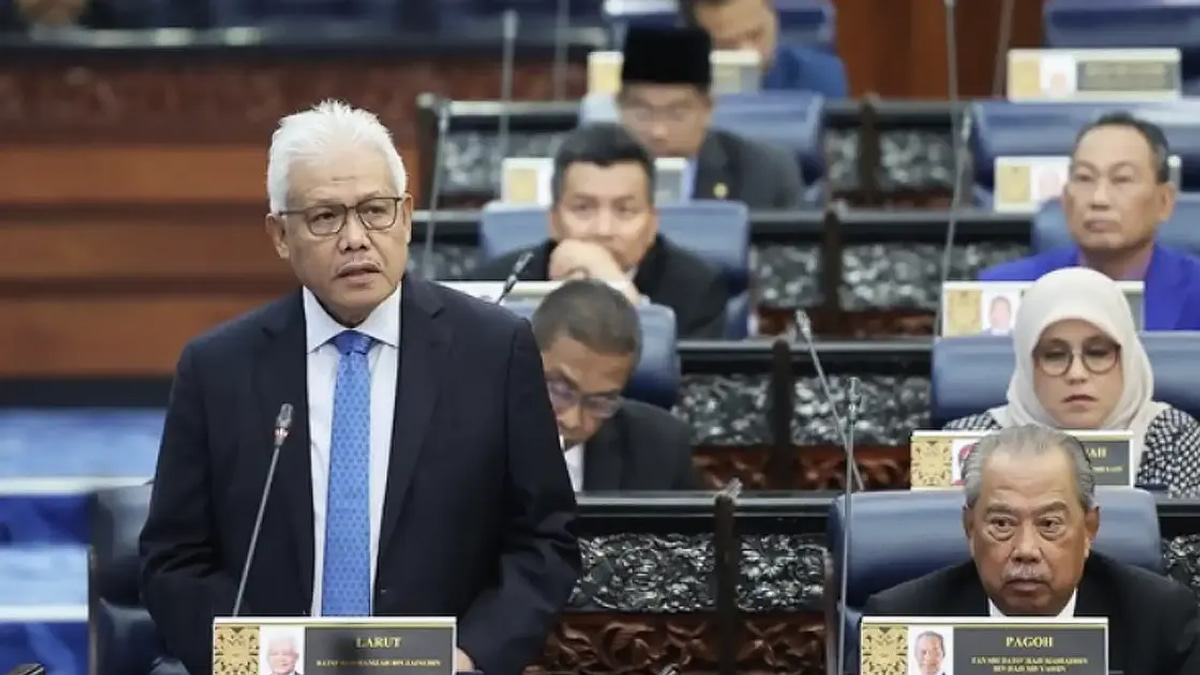
PKR's Rafizi Ramli has revealed that leading figures from both Pakatan Harapan and Umno are actively seeking to participate in what appears to be a broader coalition framework known as Bersama, marking a significant development in Malaysia's fluid political terrain. The disclosure suggests growing momentum behind efforts to establish a wider parliamentary grouping that could reshape the country's governing structure and cross-party dynamics.
The interest from senior politicians across both major blocs underscores the evolving nature of Malaysian politics, where traditional fault lines between government and opposition have become increasingly permeable. Rather than operating as separate, antagonistic entities, elements within both Pakatan Harapan and Umno appear willing to explore collaborative arrangements that transcend conventional political boundaries. This reflects broader trends observable in recent years, where pragmatic governance considerations often supersede ideological positioning.
Rafizi's comments carry particular weight given his position within PKR and his visibility as a political strategist. His confirmation that multiple leaders from diverse political backgrounds are knocking on the door for Bersama membership suggests the initiative enjoys considerable appeal across Malaysia's political spectrum. The initiative's attractiveness likely stems from its positioning as an alternative to the binary framing that has dominated recent discourse, offering participants a platform for cooperation without requiring the complete subordination of individual party interests.
For Umno specifically, exploration of the Bersama framework may represent an attempt to recalibrate its political positioning as the party continues navigating post-2018 recalibration. Having oscillated between opposition and government configurations in recent years, senior Umno figures may view Bersama as a vehicle for maintaining influence and relevance regardless of eventual coalition outcomes. This flexibility reflects the party's pragmatic approach to ensuring its survival within Malaysia's competitive political environment.
Pakatan Harapan's participation signals the coalition's openness to configurations beyond its current membership structure. As the government-leading coalition, Harapan's engagement with Bersama could indicate plans to consolidate support, diversify its parliamentary backing, or prepare contingency arrangements for different political scenarios. The coalition has previously proven willing to engage with partners outside its formal structure, suggesting such flexibility is embedded in its operational approach.
The emergence of Bersama as a focal point for political realignment gains significance within Malaysia's parliamentary context, where coalition mathematics fundamentally determine governance capacity. A successful Bersama framework could alter the parliamentary balance considerably, depending on which politicians ultimately join and how they coordinate their voting behaviour on critical matters. This has immediate implications for government stability and policy implementation across diverse areas including economic management, budgeting, and legislative priorities.
Geographically and demographically, the composition of Bersama could prove consequential for Malaysian politics. If the initiative attracts significant representation from rural constituencies, urban centres, or specific ethnic or religious communities, its policy preferences and priorities may diverge meaningfully from existing parliamentary dynamics. Such shifts could influence resource allocation, development priorities, and the articulation of national interests in ways that affect both current and future electoral landscapes.
Regionally, Malaysia's political configurations attract attention from neighbouring governments and regional analysts monitoring Southeast Asia's democratic developments. Any significant realignment involving established parties like Umno and Pakatan Harapan carries implications for how Malaysia positions itself within regional forums, trade arrangements, and diplomatic relationships. Countries maintaining bilateral interests with Malaysia typically monitor such developments closely.
The timing of this disclosure intersects with broader conversations about parliamentary effectiveness and political accountability. If major political figures believe existing structures inadequately serve their interests or their constituencies' needs, their pursuit of alternative arrangements reflects underlying pressures within the system. Whether Bersama successfully addresses these pressures will partly determine whether it remains a marginal phenomenon or genuinely repositions Malaysian politics.
The practical mechanics of implementing Bersama—including party whip arrangements, leadership structures, funding mechanisms, and dispute resolution procedures—remain largely unspecified in public discourse. These technical dimensions will prove crucial to determining whether the initiative can sustain cohesion across participants with potentially divergent long-term objectives. History suggests that Malaysian political coalitions face continuous centripetal pressures that require sustained management.
Looking forward, the success or failure of Bersama likely hinges on whether it can offer tangible benefits to participating politicians and, by extension, their constituents. Politicians typically commit to new arrangements when they perceive concrete advantages—whether electoral, legislative, or in terms of constituent service delivery. If Bersama can credibly deliver such benefits across its membership, it may establish itself as a durable feature of Malaysian politics. Conversely, if it devolves into performative posturing without meaningful substance, membership enthusiasm will likely dissipate.
For Malaysian voters and taxpayers, the proliferation of political frameworks and realignment initiatives underscores both the dynamism and unpredictability of contemporary politics. Greater transparency regarding which politicians are pursuing Bersama membership, their stated rationales, and their commitments to specific policy platforms would better equip citizens to evaluate these developments. Informed democratic participation ultimately depends on clarity about political actors' intentions and their accountability for promises made during coalition negotiations.
%22%2F%3E%3C%2Fpattern%3E%3C%2Fdefs%3E%3Crect%20width%3D%22100%25%22%20height%3D%22100%25%22%20fill%3D%22url(%23ph5jfj1g)%22%2F%3E%3Crect%20width%3D%22100%25%22%20height%3D%22100%25%22%20fill%3D%22url(%23ph5jfj1p)%22%2F%3E%3Ctext%20x%3D%2250%25%22%20y%3D%2250%25%22%20text-anchor%3D%22middle%22%20dominant-baseline%3D%22central%22%20fill%3D%22rgba(255%2C255%2C255%2C0.95)%22%20font-family%3D%22Georgia%2C%20'Times%20New%20Roman'%2C%20serif%22%20font-weight%3D%22700%22%20font-size%3D%22272%22%20letter-spacing%3D%22-0.02em%22%3EHeavy%3C%2Ftext%3E%3C%2Fsvg%3E)