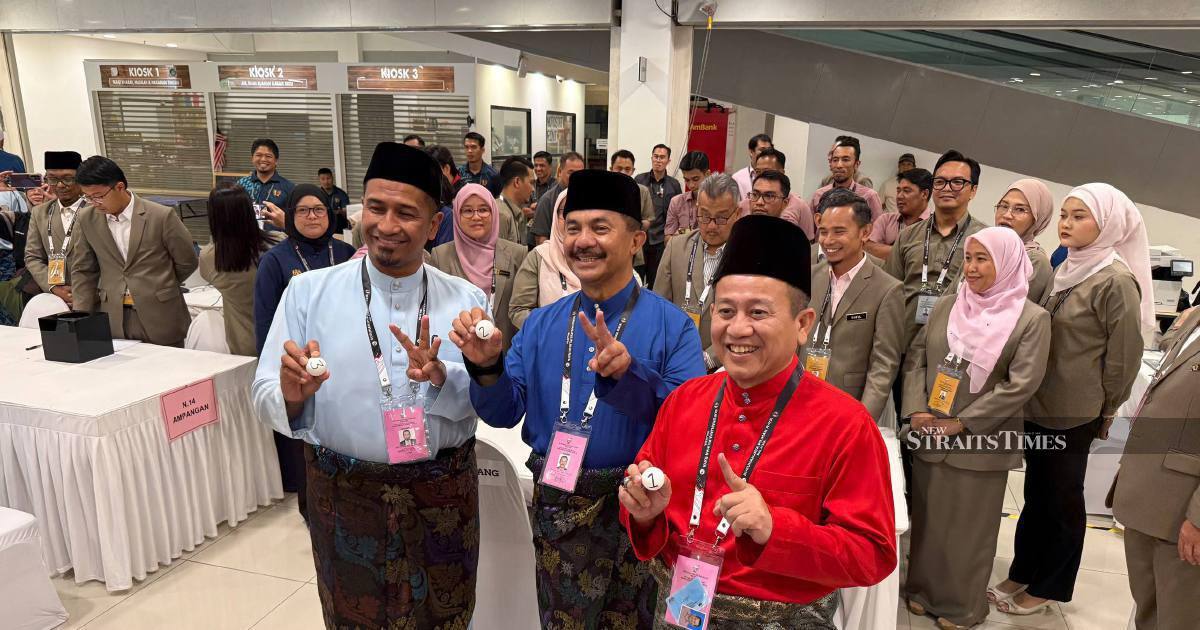
Bersatu's decision to field candidates across 24 constituencies in the forthcoming Negri Sembilan election marks a significant strategic pivot, offering state voters a distinct political option that stands apart from the established Pakatan Harapan and Barisan Nasional-Perikatan Nasional partnership arrangements. The party leadership has framed this independent approach as a deliberate move to broaden electoral choice in a state where voter sentiment has grown increasingly fragmented and where traditional coalition dynamics may no longer fully capture public preferences.
The move reflects broader currents within Malaysian politics, where mid-sized parties increasingly seek to leverage their position as potential kingmakers rather than subordinate coalition partners. By contesting substantially across Negri Sembilan, Bersatu positions itself to negotiate from a position of relative strength in any post-election coalition discussions, rather than accepting pre-determined seat allocations that alliance partners might dictate. This strategy has proven effective for other regional and national players who have used independent campaigns to enhance their bargaining power in subsequent coalition talks.
Negri Sembilan presents particular strategic value for Bersatu's independent campaign. The state's relatively compact geography and manageable number of constituencies—24 seats contested independently still represents substantial presence—allows the party to concentrate resources and messaging in ways that might prove difficult across larger states. The state's mixed urban-rural composition also mirrors broader demographic patterns across Malaysia, potentially providing valuable data on the party's appeal to different voter segments ahead of the next general election.
The timing of this declaration carries implications for the Pakatan Harapan coalition, which has dominated federal politics since 2018 and traditionally expected support from parties like Bersatu. The independent stance signals that Bersatu is no longer content with subsidiary roles or limited seat allocations within broader alliances. This development may prompt PH leadership to reconsider how it structures future electoral agreements, particularly with parties that command significant grassroots machinery and urban support bases.
Simultaneously, the decision presents a challenge to the Barisan Nasional-Perikatan Nasional understanding, which has consolidated much of the Malay-Muslim vote since the 2022 general election. By offering voters a third pathway that emphasizes neither PH's secular multi-ethnic framework nor BN-PN's Malay-centric positioning, Bersatu may fragment the opposition vote in ways that complicate predictive analysis for the election outcome. Political observers will scrutinize whether Bersatu's independent campaign attracts disaffected voters from both major blocs or primarily cannibalizes support from its former allies.
For Negri Sembilan voters, the proliferation of political choices carries both advantages and complications. Multiple viable candidates across different party banners may encourage greater electoral engagement and force parties to articulate more specific policy platforms tailored to state-level concerns rather than recycling national narratives. Conversely, the fragmentation could produce outcomes where no single coalition commands overwhelming voter mandate, potentially creating instability in state government formation or leading to minority administrations dependent on independent assemblymen for stability.
The party's pitch to Negri Sembilan voters emphasizes that neither existing coalition fully serves the state's interests, a refrain that has gained traction in various Malaysian states where localized grievances diverge from national political priorities. Bersatu's messaging likely emphasizes its Bumiputera-focused policies and Islamic governance commitments while positioning itself as less beholden to the institutional interests that shape PH and BN-PN configurations. This framing attempts to occupy the political middle ground without sacrificing coherence around the party's core identity.
Historically, Negri Sembilan has demonstrated significant ticket-splitting behaviour, with voters supporting different coalitions at federal and state levels. The state's political complexity, shaped by its unique constitutional arrangements and relatively compact elite networks, creates conditions where independent campaigns or third forces can gain traction. Bersatu's move capitalizes on this established pattern and tests whether voters view the party as sufficiently distinct from its previous alliance partners to merit independent consideration.
The broader context involves ongoing realignment within Malaysian politics, where established coalitions face pressure from parties seeking autonomy and influence. Bersatu's independent campaign in Negri Sembilan represents a microcosm of these tensions—between coalition stability and party ambition, between national political frameworks and state-level electoral dynamics, and between institutional consolidation and the emergence of new political configurations. The election results will provide important signals about whether Malaysian voters remain committed to traditional coalition structures or whether they increasingly favour parties that preserve independence to negotiate outcomes reflecting local priorities.
Observers will closely monitor whether Bersatu's Negri Sembilan strategy becomes a template for other state elections and whether successful independent positioning in the state translates into renewed demands for electoral reform and power-sharing arrangements at the national level. The election thus extends beyond immediate state political outcomes to reveal evolving voter preferences regarding party autonomy, coalition governance, and the desirability of political alternatives within Malaysia's two-bloc system.

