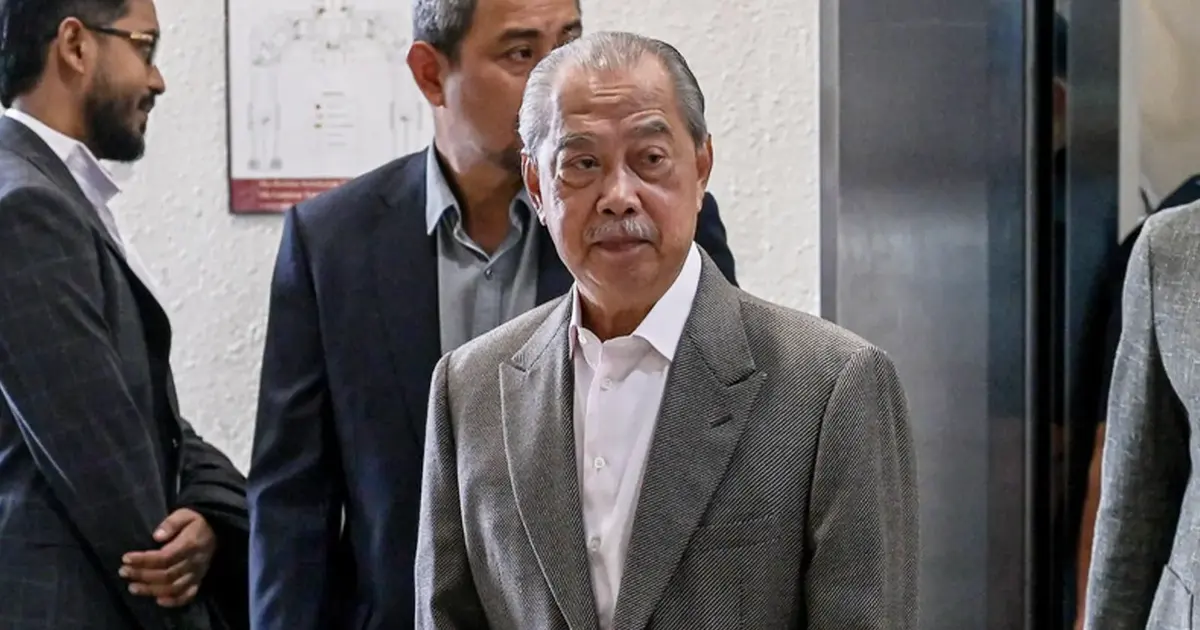
Questions about the extent of former Bersatu chairman Muhyiddin Yassin's authority within the party have surfaced during ongoing High Court proceedings, with the Democratic Action Party pressing the question of whether he functioned as little more than a figurehead. The inquiry centres on the party's internal governance structures and how financial decisions were made during a critical period of Malaysian politics.
Zulhelmi Zaulkafly, who holds the position of financial officer within Bersatu, provided testimony before the High Court addressing the mechanisms through which the party administered its monetary resources. His evidence touched on a fundamental aspect of the party's operations—specifically, whether decision-making authority regarding finances was concentrated in the hands of a single individual or distributed across multiple office holders and committees.
The testimony delivered by Zulhelmi suggested a more decentralised approach to financial governance. According to his account, no individual party member possessed sole or exclusive command over Bersatu's financial affairs. This statement carries significant implications for understanding the party's internal power dynamics and raises questions about how authority was actually distributed among leadership figures during the period in question.
For Malaysian readers following party politics, this inquiry reflects broader tensions within Bersatu that have characterised the party since its formation. The party, which emerged from internal divisions within UMNO and eventually became a coalition partner in various government arrangements, has experienced considerable turbulence. Understanding the distribution of power within its hierarchy becomes relevant when examining how major political decisions were made and who bore responsibility for them.
The Democratic Action Party's line of questioning appears designed to establish whether certain decisions or actions attributed to party leadership were genuinely authoritative or merely rubber-stamped by figurehead officials. This distinction matters considerably in Malaysian political contexts, where formal positions do not always align with actual decision-making power. The examination of Bersatu's financial controls may shed light on internal power struggles that have defined the party's trajectory.
The testimony regarding financial governance structures is part of a larger examination of Bersatu's operational mechanisms. How a political party manages its finances often reflects and reveals its internal organisational reality. If decision-making authority regarding funds was genuinely dispersed rather than concentrated, this would suggest a different leadership dynamic than commonly assumed by outside observers.
The implications of this inquiry extend beyond mere internal party matters. Political parties in Malaysia serve as crucial mechanisms for distributing patronage, resources, and political influence. The way Bersatu's finances were controlled during Muhyiddin's tenure as chairman potentially affected not only party members but also the broader political landscape. Coalition arrangements, policy direction, and political alliances can all be influenced by internal power structures within constituent parties.
For readers in Southeast Asia observing Malaysian politics, such proceedings highlight how legal frameworks and institutional mechanisms can reveal hidden aspects of political organisations. High Court testimony often surfaces information that party officials might prefer to keep confidential. The willingness of courts to examine party structures reflects evolving standards of accountability and transparency in Malaysian politics, even as significant opacity persists in many areas.
The financial officer's testimony suggesting distributed authority rather than centralised control could indicate either genuine democratic practice within the party or alternatively, a situation where authority was fragmented among competing factions. Understanding which interpretation applies requires considering additional context about Bersatu's operational history and the relationships between key office holders during the relevant period.
The questions raised by the Democratic Action Party suggest scepticism about whether Muhyiddin exercised meaningful authority as party chairman. If substantiated, evidence that he functioned primarily as a rubber stamp would fundamentally alter perceptions of his role in major party decisions. This becomes particularly relevant given Muhyiddin's subsequent political prominence and his positions in various Malaysian governments.
Bersatu's financial governance structure, as revealed through court proceedings, demonstrates how political party organisation intersects with broader questions of accountability and institutional legitimacy. Malaysian voters and political observers increasingly expect transparency regarding how political organisations function internally and make decisions. The High Court testimony provides rare direct evidence about such mechanisms, even as full details of power distribution remain subject to interpretation.
The ongoing examination of Bersatu's financial controls represents one element of broader scrutiny of Malaysian political parties' internal structures and decision-making processes. As Malaysian politics continues to evolve, with shifting coalitions and changing party dynamics, understanding how individual parties actually operate internally becomes increasingly important for assessing political developments and predicting future movements.
The testimony delivered in the High Court provides a window into these previously obscure aspects of party operations. Whether Muhyiddin wielded genuine authority or functioned primarily as a figurehead within Bersatu ultimately depends on evidence beyond financial control alone. However, the financial officer's account that no individual held exclusive authority over party resources suggests a more complex internal power structure than simplified narratives of party leadership might suggest.

