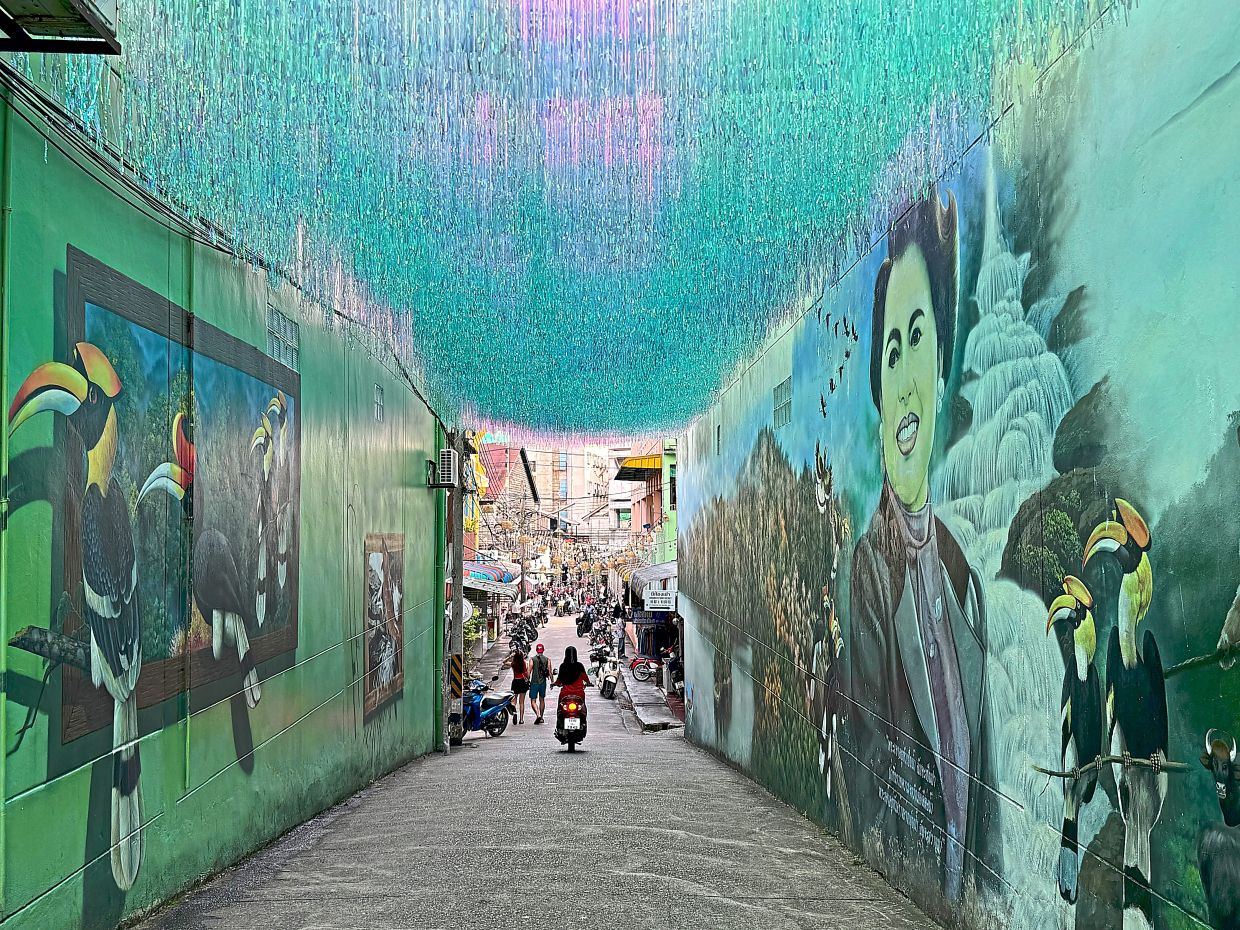
Betong, a modest township nestled near the Malaysian-Thai frontier, has emerged as an unexpectedly rewarding destination for regional road trippers, offering visitors a distinctive blend of quirky local symbols, layered historical significance, and scenic mountain terrain that defies the sleepy border-town stereotype. Situated roughly 380 kilometres from Kuala Lumpur, the five-hour drive from Malaysia's capital has made Betong an accessible weekend escape for those seeking something beyond conventional tourist circuits. Yet what sets this destination apart is not any single landmark but rather the confluence of peculiar attractions and genuine community heritage that rewards unstructured exploration and casual encounters with locals willing to share their town's unusual stories.
The most immediately striking symbol of Betong's identity manifests in the oversized poultry sculptures scattered throughout town—a phenomenon that initially seemed like mere roadside kitsch until local shop owners explained the deeper cultural significance. The Betong chicken represents a distinct local breed that has become synonymous with the town's identity and commercial reputation. This regional pride has transformed culinary offerings across Betong into a chicken-centric gastronomic landscape, where variations ranging from crispy chicken rice to chicken porridge dominate menus regardless of establishment. The dual giant chicken statues adorning the town have transcended their original purpose as decorative elements to become iconic markers of place identity, drawing photographers and social media documentation that inadvertently promotes the township to digital audiences far beyond traditional tourism marketing.
One of Betong's most cinematically impressive attractions materializes after sunset, when the Mongkollit Tunnel undergoes a dramatic transformation into an illuminated subterranean spectacle. Thailand's inaugural mountain tunnel, constructed in 2001 according to the Tourism Authority of Thailand, would ordinarily register as unremarkable infrastructure were it not for evening lighting installations that render the passage in vivid blue hues. The tunnel's pedestrian walkways become filled with visitors during evening hours, creating spontaneous social spaces where documentation and contemplation occur simultaneously. This everyday infrastructure repurposed as evening entertainment exemplifies how modest public investment in atmospheric enhancement can elevate functional engineering into experiential attractions that cost travellers nothing beyond petrol and parking.
Moreso significant than Betong's whimsical surface attractions lies the Piyamit Tunnel, a 1-kilometre subterranean complex situated approximately 15 kilometres from town that documents a consequential but often overlooked chapter of regional political history. Originally excavated during the late 1970s, the tunnel functioned as a clandestine base for the Communist Party of Malaya during insurgent operations spanning decades. The facility served simultaneously as air raid shelter, supply depot, and tactical escape route, with multiple original entrances and exits strategically positioned to permit fighters dispersal across surrounding jungle terrain. Many of these passages have been sealed for contemporary safety protocols, yet the remaining sections preserve the spatial logic of guerrilla resistance operations that shaped regional geopolitics throughout the Cold War era.
The visitor experience at Piyamit unfolds methodically, beginning with a 15-minute covered walkway descent before accessing the tunnel proper. Upon arrival, staff direct visitors toward the modest Piyamit Histories Museum, where photographic documentation and physical artefacts construct narrative coherence around the lives of communist cadres who inhabited the surrounding forest environment. The museum functions as necessary interpretive infrastructure, transforming potentially obscure architectural spaces into historically legible landscapes. Within the tunnel itself, visitors encounter preserved dormitory chambers, conference rooms where strategic meetings occurred, and communication facilities where radio operators maintained contact with dispersed units. Perhaps most intriguingly, an outdoor cooking area survives outside the main tunnel entrance, featuring specially engineered stoves designed to channel charcoal smoke underground, rendering the camp invisible to aerial reconnaissance and enemy ground patrols seeking thermal signatures.
For visitors seeking deeper contextual understanding of this historical period and its aftermath, the Chulabhorn Phatthana Village 9 located in Mae Wat approximately 120 kilometres distant offers continuation of this narrative arc. Established to resettle former communist party members following insurgency conclusion, the village has evolved into a cultural heritage site where visitors encounter lived experiences of political transition and post-conflict rehabilitation. This spatial progression from active guerrilla base to heritage museum to resettlement community encapsulates the geographic and temporal complexity of regional political history that conventional tourism rarely acknowledges.
Beyond historical tourism, Betong's physical layout actively facilitates pedestrian exploration, particularly within the old town precincts where most noteworthy attractions cluster within reasonable walking distance. The township's compact walkability contrasts sharply with sprawling automotive-dependent Thai destinations, rendering vehicle-based tourism paradoxically frustrating due to chronic parking scarcity. Local residents employ a practical colour-coded kerb system—black and white designating permissible parking, red and white indicating prohibition—that communicates enforcement protocols intuitively without signage. Visitors choosing accommodation along Route 410, designated the Pattani-Betong Highway, position themselves within a 160-kilometre scenic corridor that has acquired cult status among regional motorcycle enthusiasts drawn by steep elevation changes and technical cornering through mountainous terrain.
Route 410's recreational reputation has spawned entrepreneurial activity, notably the Betong Route 410 retail establishment catering specifically to motorcycle culture through merchandise including customised Thai-style vehicle identification stickers. Proximate to these motorcycle-oriented commercial spaces stands Wat Phutiwhat (alternatively transliterated as Wat Phuttha Thiwat), a temple complex anchored by an imposing bronze Buddha statue positioned at the entrance to command vistas across the town. The site maintains Buddha relics within its religious architecture and functions as both devotional space and viewpoint. Optimal visitation timing occurs during early morning hours before congregating crowds transform the compound into congested zones that diminish contemplative possibility.
Betong's repertoire of surprises extends to municipal infrastructure repurposed as tourist attraction, specifically two oversized mailboxes that have acquired landmark status through their exceptional dimensions and historical antecedence. The original 3.2-metre-tall mailbox positioned near Betong Clock Tower dates to 1924 and originally incorporated built-in loudspeaker technology employed to broadcast governmental announcements throughout the community. Despite technological obsolescence and the existence of contemporary communication infrastructure, this postal artifact continues receiving mail from nostalgic senders and functions as material testimony to early twentieth-century technological ambitions. A 9-metre-tall replicant subsequently constructed outside the City Convention Hall along Sukyang Road explicitly targets tourism documentation and social media circulation, acknowledging contemporary visitor motivations for photographic evidence of scale-anomalous objects.
The collective experience of exploring Betong derives considerable value from minimalist planning and acceptance of serendipitous discovery, precisely the approach undertaken by visitors lacking comprehensive itineraries beyond accommodation reservation and selective landmark targeting. This deliberately unstructured methodology permits casual conversations with local business proprietors, unplanned detours down secondary streets, and spontaneous encounters with community members willing to contextualize attractions through personal narrative and cultural explanation. For Malaysian travellers accustomed to domestic attractions and seeking proximate international experiences without substantial temporal investment, Betong presents viable alternative to overexploited tourist destinations, offering instead genuine interaction with border community culture, layered historical significance spanning Cold War insurgency through contemporary heritage preservation, and the peculiar charm of townships that celebrate distinctive local identity through oversized chicken monuments and colossal mailboxes.

