A fundamental assumption about honeybee biology—that a special diet alone determines whether a larva becomes a queen or a common worker—has been overturned by research showing that the physical structure of the chamber where development occurs plays an equally critical role. The discovery, led by Kai Wang of the Institute of Apicultural Research at the Chinese Academy of Agricultural Sciences and published in Nature, reveals that worker bees construct what amounts to a sophisticated biological incubator tailored specifically for royal development, challenging what scientists had long treated as settled science.
All honeybee larvae begin life identically, emerging from ordinary fertilised eggs without inherent distinction. The transformation of a single larva into a queen—and thus the sole reproductive individual in a colony of tens of thousands—has long puzzled researchers. The prevailing explanation held that worker bees simply fed selected larvae a nutrient-dense secretion called royal jelly, while other larvae received inferior nutrition, thereby determining their caste. This straightforward mechanistic model dominated thinking for decades, but Wang's team uncovered evidence suggesting the story was incomplete.
Honeybee colonies construct three distinct types of chambers within their wax combs. Most cells are regular hexagonal structures used either for food storage or rearing worker and drone larvae. Separate from these, colonies build a third chamber type that physically resembles hanging peanut shells, extending downward from the comb structure. Beekeepers have long observed these distinctive chambers as harbingers of swarming or queen replacement, but they were generally regarded as passive containers whose primary function was simply to hold developing larvae.
The research fundamentally recasts the role of these chambers, demonstrating they function as actively engineered environments. The wax from which queen cells are constructed possesses distinct physical and chemical properties compared to ordinary worker-cell wax. Most notably, this royal wax is noticeably softer and melts at a considerably higher temperature than standard wax, and it releases a chemically distinct volatile profile—essentially a different olfactory signature. The researchers propose that these properties work in concert to influence larval development in ways that pure nutrition cannot achieve independently.
The softer walls of royal chambers may provide expanding larvae with sufficient space for growth, while the chemical compounds released by the wax could function as hormonal triggers or developmental signals that redirect the larva's growth trajectory toward queenship. To test this hypothesis, Wang's team exposed larvae to royal jelly but housed them in standard worker-cell wax. The results proved striking: these larvae showed markedly stunted queen development and experienced substantially elevated mortality rates, indicating that the sensory experience of the wax environment—both its texture and chemical composition—appears essential for successful royal development.
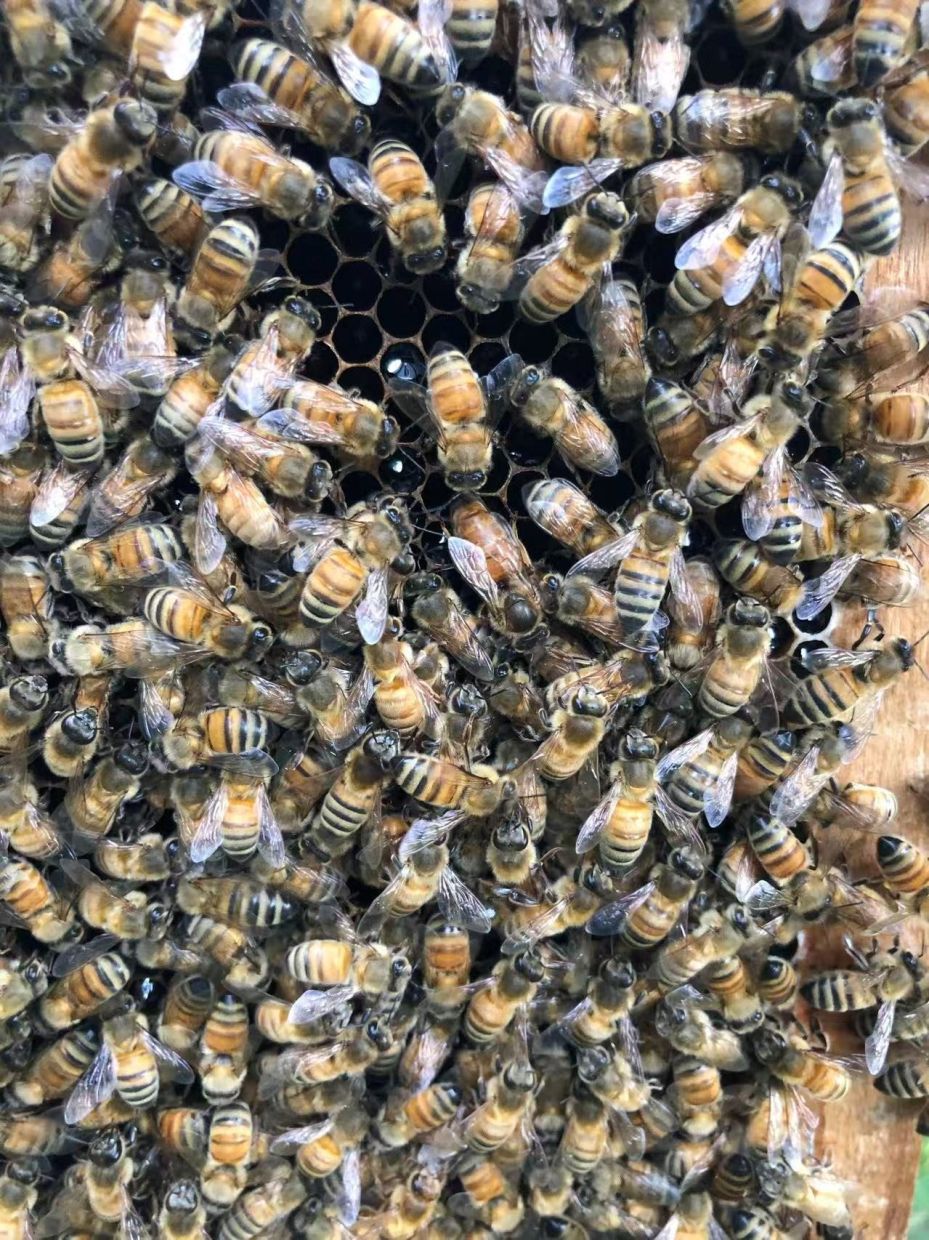
Producing these specialised royal chambers demands extraordinary effort from the worker bees who construct them. The researchers discovered that bees engaged in building queen cells maintain unusually elevated body temperatures, with their thoraxes heating to above 39 degrees Celsius—roughly 102 degrees Fahrenheit—essentially sustaining a fever-like state. This physiological mobilisation serves a crucial function: the elevated heat allows these workers to process and shape the high-melting-point wax into the precise form required for royal chambers. Wang characterises this process memorably, describing these workers as "tiny living furnaces" wholly dedicated to their construction work.
Yet the commitment to building these chambers does not represent a permanent specialisation. The researchers found that the bees performing this demanding work are ordinary, developmentally flexible young workers undertaking a temporary task during colony emergencies. Their bodies undergo short-term shifts in gene expression that facilitate their capacity to process wax at high temperatures, but these changes remain temporary and reversible. Remarkably, while engaged in this intensive construction work, these same bees continue performing routine hive duties such as food distribution and cell inspection, earning Wang's description of them as "the ultimate multitaskers."
For Wang, the most striking aspect of the discovery was not the specific mechanisms involved but rather how fundamentally it challenges what he terms a "deeply rooted dogma." For generations, scientists accepted nutritional determinism—the notion that royal jelly represents the sole secret to queen development—as essentially settled truth. The new evidence reveals this understanding as incomplete, suggesting that environmental factors wield equal or perhaps even greater influence than dietary factors in steering larval development toward queenship.
The current research, however, stops short of identifying the precise molecular mechanisms at work. Wang's next objective is to identify the specific "molecular switch" that communicates to developing larvae's genetic machinery their destined role as queen. This switch may involve a particular chemical compound released by the wax, a specific textural sensation, or more likely a combination of signals that together convince the larva's biology to follow the royal developmental pathway.
The implications extend beyond honeybees to the broader ecology of social insects. Wang suggests that similar principles may govern development in termites and wasps, where the constructed environment of mounds or paper nests may communicate developmental signals to inhabitants. The intricate wax structures built by stingless bees—species native to tropical regions including parts of Southeast Asia—may harbour comparable secrets about how architectural design influences caste determination and colony organisation.
From a practical standpoint, these findings carry immediate relevance for beekeeping industries globally. Healthy queen production stands central to modern apiculture, and the continued vitality of managed colonies depends fundamentally on maintaining robust, genetically sound queens. As beekeepers across the United States and internationally report substantial colony losses, understanding how colonies naturally produce high-quality queens becomes increasingly urgent. Boris Baer, a professor of pollinator health at the University of California, Riverside and co-leader of the study, emphasises that improved understanding of natural queen development could enable beekeepers to breed and maintain more resilient bee populations.
The economic stakes are substantial. Managed honeybees pollinate more than 80 major agricultural crops globally, making colony health a concern extending far beyond beekeeping communities to encompass food security and agricultural productivity. As environmental pressures mount and bee populations face mounting stressors, the capacity to support healthier queens and more robust colonies takes on heightened importance for food systems worldwide.
Ultimately, Wang's research frames the honeybee colony not merely as an assemblage of individuals but as a superorganism—a collective entity wherein thousands of workers coordinate their actions to transform an ordinary larva into the creature who will become their mother and the biological centre of their shared existence. The finding encapsulates a broader truth about colony life: while nutrition matters, the total environment in which development unfolds proves equally transformative. As Wang reflects on the implications, the metaphor captures the essence: "Eating well is important, but living in the perfect home is what truly changes your destiny."