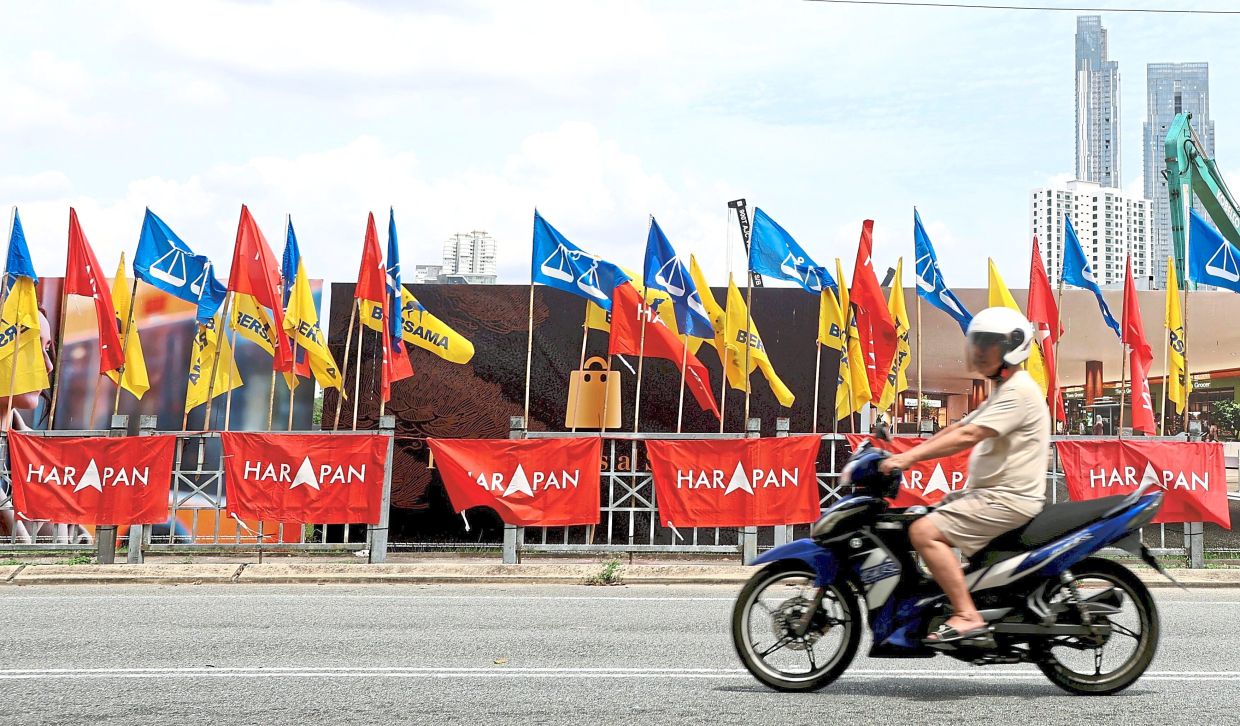
The Negri Sembilan state election has dominated political discourse, with stakeholders fixating on the 36 seats needed for outright control of the State Legislative Assembly, and the 29 seats required for a commanding two-thirds majority. Yet amid this familiar electoral arithmetic lies a number that arguably deserves greater consideration: 65—a potential retirement age that could reshape how Malaysia responds to its evolving demographic, economic and technological landscape.
Electoral outcomes undoubtedly matter. A decisive mandate, particularly if Barisan Nasional secures a complete sweep against Pakatan with Perikatan Nasional backing, would signal effective governance coalitions. However, retirement policy wields influence over a far longer horizon. While elections recur every few years, pension and retirement frameworks fundamentally shape the financial security of millions of Malaysians across entire decades, affecting decisions about savings, healthcare, housing and family support structures that ripple through society.
The economic disruptions of recent years have created compelling reasons to revisit retirement assumptions. From 2020 to 2024, Malaysian households systematically depleted savings reserves as businesses teetered on the brink of collapse and countless civil servants and private-sector workers abandoned carefully constructed financial plans. Even as the immediate health crisis faded, recovery proved elusive. The economy did not snap back to pre-pandemic trajectories. Instead, 2025 brought fresh volatility through maritime tensions in the Strait of Hormuz, driving energy prices sharply higher and cascading through transportation and food costs. Southeast Asian households, already weakened by earlier disruptions, faced renewed inflationary pressures precisely when they were attempting to rebuild eroded savings. These cumulative shocks have fundamentally altered how Malaysians contemplate their working years and retirement security.
Negri Sembilan occupies a particularly instructive position in this debate. The state embodies a distinctive balance between traditional institutions and contemporary economic aspirations. Its strategic location relative to Kuala Lumpur, Putrajaya and the sprawling Klang Valley means residents frequently commute to regional employment hubs, work in professional capacities, or maintain deep economic connections with Malaysia's primary growth engines. Simultaneously, Negri Sembilan retains robust community networks where multiple generations commonly provide mutual support. This social architecture makes retirement policy far more than mere bureaucratic procedure—it directly affects how extended families coordinate resources and responsibilities across age groups.
The working-age population reaching their late fifties today represents a generation that has endured repeated crises entirely beyond individual control. This cohort survived the Asian Financial Crisis of 1997-1998, absorbed the shocks of the Global Financial Crisis in 2008-2009, navigated the unprecedented disruptions of Covid-19, and now contends with lingering geopolitical instability. Career trajectories have been repeatedly interrupted and derailed by forces no individual could have anticipated or prevented. Against this backdrop, asking whether such workers should have the opportunity—framed as genuine choice rather than compulsion—to remain economically active until 65 represents a legitimate and necessary policy conversation. This demographic has already demonstrated remarkable resilience; extending retirement age could acknowledge that resilience while providing financial breathing room.
The emergence of artificial intelligence introduces another critical dimension to this discussion. Conventional assumptions suggest automation inevitably displaces older workers, yet the opposite may prove increasingly true. As routine, task-based work becomes automated, organisations will place rising premiums on precisely those capabilities that accumulate over decades: institutional memory, sound judgment, mentoring capacity, and ethical reasoning. Technological disruption creates organisational need for experienced professionals who can navigate complexity and guide younger staff through transformation. Rather than viewing mature workers as obstacles to progress, companies may find them invaluable anchors during periods of rapid change.
Younger Malaysians entering the workforce confront unprecedented uncertainty of a different character. Generation Z faces constantly shifting skill requirements, compressed employment cycles, and intensifying competition from digital systems. Rather than positioning older and younger workers as competitors, many families could benefit from continued employment among parents and grandparents, which provides tangible financial stability and intergenerational knowledge transfer while younger household members adapt to technological and economic flux. This reframing transforms retirement policy from a zero-sum generational contest into an opportunity for cooperative resilience.
Intergenerational collaboration could become one of Malaysia's distinctive competitive advantages. Experienced professionals mentoring junior colleagues while simultaneously building their own digital literacy creates a labour market far more adaptive and resilient than one imposing artificial age-based separation. Such collaboration strengthens institutional continuity while accelerating the technological competency of both cohorts. Neither generation faces the challenge alone; instead, accumulated experience meets emerging skills in complementary ways.
From strictly fiscal perspectives, extending working lives generates demonstrable benefits. Workers remaining economically productive continue paying taxes, building retirement savings, and consuming goods and services—actions that expand the government's revenue base while reducing immediate pressure on pension systems and social assistance programmes. This creates fiscal space for genuinely targeted support to those unable to work due to disability, severe health conditions, or occupations involving physically demanding labour. The aggregate effect strengthens national finances without requiring cuts to existing support systems.
Crucially, this argument does not advocate mandatory retirement at 65. Rather, policy should centre on genuine flexibility. Malaysians in physically demanding occupations—construction, agriculture, manufacturing—may rationally prefer earlier retirement. Conversely, professionals, academics, healthcare practitioners, engineers, educators and administrative experts may wish to continue contributing if they maintain good health and productivity. Retirement policy should accommodate both aspirations rather than imposing uniform timelines that ignore occupational realities.
This flexibility cannot emerge from single-party governance alone. Effective retirement policy redesign demands sustained bipartisan dialogue, consultation with employer associations, labour unions, professional organisations, religious authorities and community leaders. Negri Sembilan's upcoming political landscape offers an opportunity for whoever holds power to initiate such cross-party conversations. The 36 seats determining government control matter for immediate administrative authority. Yet the age-65 conversation matters for the lives of millions across the coming decades, affecting their dignity, security and family relationships in ways far deeper than electoral cycles typically reach.

