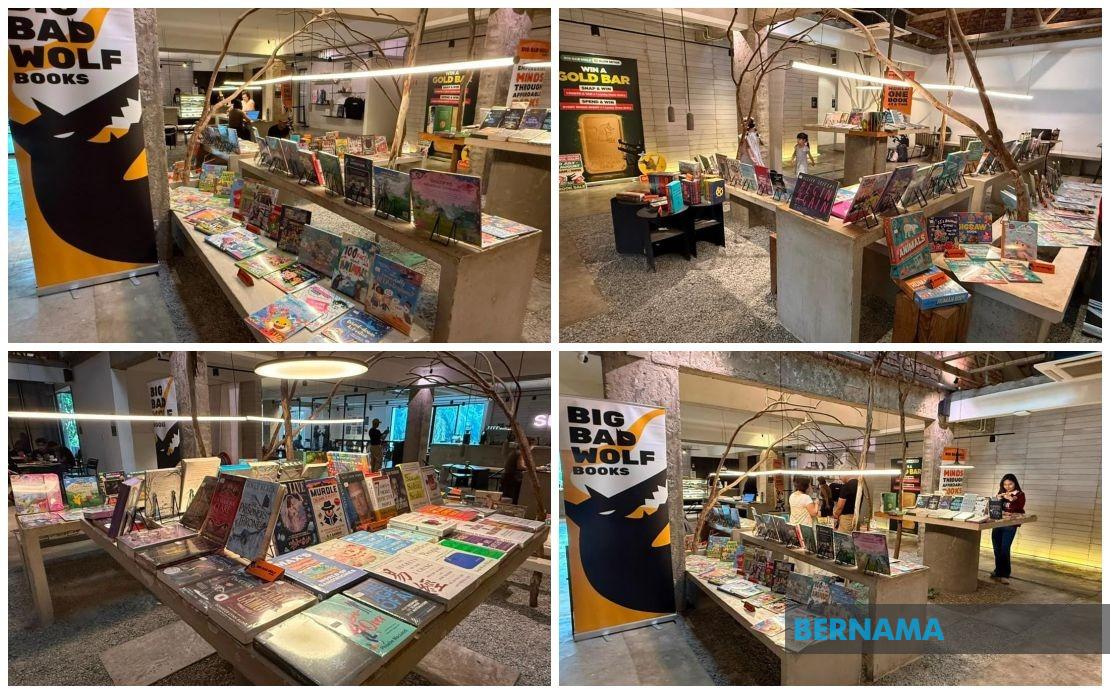
Malaysia's largest book fair, Big Bad Wolf Books, is preparing for its return to Alor Setar next month, marking another chapter in the retailer's ongoing mission to democratize access to reading materials across the country. The event will run from July 30 through August 9 at the Sultan Abdul Halim Stadium, operating daily from 10 am to 10 pm with no admission charges to attract maximum participation from the local Kedah community.
A significant portion of this year's inventory will consist of previously unavailable titles, with organisers indicating that 40 per cent of the stock represents new offerings. This strategic refresh is designed to sustain visitor interest and ensure that repeat attendees discover fresh material, whilst simultaneously broadening the diversity of subjects and genres available to consumers in the northern region. The initiative reflects a deliberate business strategy to maintain momentum for the brand whilst addressing evolving reader preferences across different demographics.
Chloe Lim Sooi Yee, speaking on behalf of the organising team, framed the fair as more than a commercial venture. She positioned it as part of a broader effort to cultivate reading habits among Kedah residents and to establish a sustainable literacy movement that aligns with the state's educational and cultural development. This messaging underscores how commercial retail events can simultaneously serve public interest objectives, particularly in communities where access to diverse reading materials may be limited compared to larger urban centres.
A particularly noteworthy addition to this year's event is the debut of a specialised collection of 'Little Ummah' Islamic children's books in Kedah. The arrival of this curated selection represents an effort to serve the reading preferences and values of Kedah's predominantly Muslim population, demonstrating how the fair tailors its offerings to reflect local cultural and religious contexts. By bringing these titles to the region for the first time, organisers acknowledge the importance of inclusive representation in children's literature and the role such materials play in early childhood literacy development.
The scale of the operation underscores why Big Bad Wolf Books has earned its reputation as Malaysia's largest book fair. Approximately one million volumes will be available during the 11-day run, a staggering inventory that requires sophisticated logistics and supply chain management. This abundance creates an environment where browsing becomes an experiential activity—visitors can spend hours exploring sections unlikely to find such depth in conventional bookstores, particularly in secondary cities like Alor Setar.
Pricing remains a cornerstone of the Big Bad Wolf Books value proposition. Entry-level volumes begin at RM3, whilst discounts reaching as high as 95 per cent are applied across various titles. These prices transform book purchasing from an aspirational luxury into an accessible commodity, which carries particular significance in a Malaysian context where educational inequality and income disparities can constrain access to quality reading materials. The pricing strategy has proven instrumental in the brand's popularity across different socioeconomic segments.
The organisers are implementing targeted initiatives to drive attendance among specific audiences. Students and teachers qualify for an additional five per cent discount on purchases of three or more books, a direct incentive recognising the educational sector's role in fostering lifelong readers. Furthermore, Big Bad Wolf Books representatives plan to conduct outreach visits to schools throughout the Alor Setar area, building awareness ahead of the event's opening and establishing direct relationships with institutions that shape young people's attitudes toward reading and learning.
Engagement incentives extend to the retail experience itself through promotional campaigns offering tangible rewards. A 'spend and win' initiative and a 'snap and win' programme both provide participants with opportunities to win 10-gramme gold bars, adding a gamification element that converts the act of purchasing books into a participatory contest. These campaigns serve dual purposes: they generate excitement and social media buzz around the event whilst rewarding consumer participation in measurable ways.
The attendance target of 35,000 visitors across the 11-day period reveals ambitious expectations for foot traffic in Alor Setar. This projection requires sustained marketing efforts and depends on the fair's reputation having reached a critical mass of awareness in Kedah and nearby states. Success would validate the viability of expanding Big Bad Wolf Books operations beyond major metropolitan areas and demonstrate genuine demand for such events in secondary cities across Malaysia.
For Malaysian readers and educators in Kedah, the event represents a rare opportunity to access the breadth and depth of inventory typically concentrated in Kuala Lumpur or Penang. The fair addresses a genuine gap in the region's retail landscape, where small independent bookstores and chain retailers often carry more limited selections constrained by space and inventory costs. By bringing this volume of books to Alor Setar, the event effectively redistributes access to knowledge and entertainment across the country's geography.
The broader significance of initiatives like Big Bad Wolf Books extends beyond immediate commercial interests. Such events contribute to building reading cultures in communities where habit formation and access remain challenging. In an era when digital entertainment dominates leisure time, particularly among younger audiences, physical book fairs serve a cultural purpose by creating social occasions around reading and reinforcing the value of print literature within broader community consciousness.

