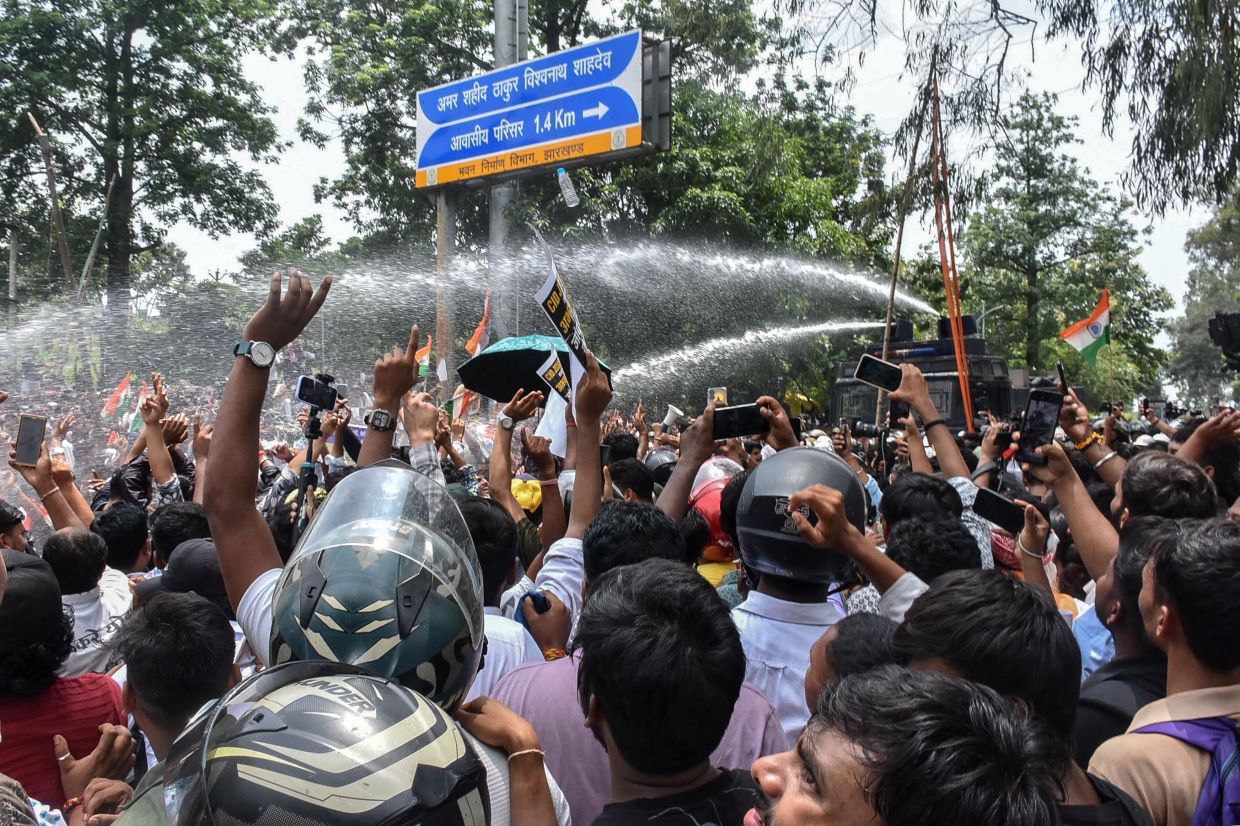
Prime Minister Narendra Modi's Bharatiya Janata Party has publicly questioned the authenticity of the Cockroach Janta Party's activism, accusing the pressure group of failing to sustain its engagement with student movements once they shifted beyond the national capital. BJP spokesperson Keya Ghosh levelled the criticism on Tuesday, characterising the activist collective as a "mute spectator" in the escalating unrest across Jharkhand, a mineral-rich eastern state where students have mobilised against alleged recruitment examination irregularities.
The allegation reflects growing political tensions surrounding youth-led activism in India and raises questions about the true motivations behind protest movements. The Cockroach Janta Party rose to prominence last month when it helped coordinate demonstrations at New Delhi's Jantar Mantar, where students protested systemic failures in competitive examinations. That movement succeeded in forcing the resignation of Education Minister Dharmendra Pradhan, a significant political victory that underscored the group's organisational capacity and public mobilisation potential. However, Ghosh argued that the group's subsequent silence on Jharkhand suggested its New Delhi campaign was strategically designed primarily to undermine the Modi administration rather than reflect genuine commitment to student grievances.
The timing of Ghosh's remarks carries political weight given the composition of Jharkhand's state government. The state is governed by a coalition led by the Jharkhand Mukti Morcha that includes the Indian National Congress, with the BJP operating as the principal opposition force in the state assembly. By questioning why national-level opposition leaders and sympathetic activist groups have not mobilised around Jharkhand's students with the same intensity, the BJP appears to be highlighting what it views as selective outrage. Ghosh specifically challenged Congress figure Rahul Gandhi, asking pointedly why opposition leaders have not visited protest sites when the agitation affects a state governed by their coalition partners.
The Cockroach Janta Party's response to these accusations demonstrates the complexities of modern Indian activism. Founder Abhijeet Dipke has not remained entirely absent from the discourse surrounding Jharkhand's demonstrations. He publicly condemned the police deployment of water cannons and batons against students on Monday, characterising such actions as "cruel and inhuman" and drawing explicit parallels between state repression in New Delhi and in Jharkhand. This suggests the group maintains ideological consistency regarding protest rights and police conduct, even if its physical presence and organisational involvement in the eastern state has been less visible than in the capital.
On the ground in Jharkhand, the reality proves more nuanced than the BJP's portrayal suggests. According to local media accounts, select members of the Cockroach Janta Party who participated in New Delhi's demonstrations have travelled to the eastern state and integrated themselves into the ongoing agitation. Akshay Shinde, the group's national coordinator, told news agencies that these activists are actively contributing to the Jharkhand protests and have committed to remaining present until students' demands are fully addressed. This indicates that while the Cockroach Janta Party may not be leading the Jharkhand movement, individual members are demonstrating sustained engagement across multiple geographic theatres of student activism.
The fundamental distinction between the two protest movements helps contextualise the apparent difference in scale and visibility. The New Delhi demonstrations were largely coordinated by the Cockroach Janta Party, which functions as a structured pressure group with established media presence and organisational experience. The Jharkhand agitation, by contrast, has emerged organically from local students and job aspirants demanding a federal investigation into suspected irregularities in state recruitment examinations. This grassroots character means the Cockroach Janta Party functions as one supportive actor among many rather than the movement's principal architect, which naturally reduces its public visibility and perceived leadership role.
Rahul Gandhi's position in this dispute further complicates the political landscape. Despite having made critical statements condemning police force against protesting students in both locations, the Congress leader has not visited either protest site. His absence mirrors that of other national opposition figures, suggesting that some branches of India's opposition coalition may be exercising strategic restraint regarding direct involvement in student activism. Gandhi's argument that "students have a right to peaceful protest, and only dialogue can yield solutions" indicates rhetorical support without the political commitment of physical presence, a position that could itself be characterised as selective engagement.
The BJP's challenge to opposition groups and activist organisations reveals broader questions about the nature of political movements in contemporary India. The party appears to be suggesting that sustained, consistent activism across multiple sites and issues represents a measure of genuine commitment, whereas sporadic or selective engagement betrays instrumental motivations. This framing implicitly argues that if groups truly care about student welfare and educational reform, they should apply equal energy regardless of which state government faces criticism or which national-level figure might benefit politically from renewed agitation.
For Malaysia and Southeast Asian observers, these dynamics offer instructive parallels regarding student activism, government responsiveness, and the relationship between civil society movements and political opposition. The case demonstrates how pressure groups can achieve immediate policy victories—in this instance, a ministerial resignation—yet face questions about broader strategic coherence. It also illustrates the complexity of distinguishing between principled activism and instrumentalised protest in polarised political environments where most actors operate within competing ideological frameworks.
The Jharkhand protests themselves remain substantial and unresolved. Students continue demanding comprehensive investigations into alleged examination irregularities that they contend undermine meritocratic recruitment processes. Whether the Cockroach Janta Party's level of involvement ultimately proves material to the movement's outcome or its sustainability remains uncertain. What seems clear is that the BJP's accusatory framing of selective activism—though politically motivated—has exposed genuine tensions within India's opposition ecosystem regarding how national political actors should engage with decentralised student movements.
Moving forward, the Cockroach Janta Party and other activist groups face pressure to demonstrate ideological consistency and sustained commitment across geographical boundaries and political circumstances. Simultaneously, opposition political parties must navigate between supporting genuine grievances and avoiding perceptions of instrumentalising student suffering for partisan advantage. This balancing act, already challenging in India's complex federal structure, will likely remain a focal point of political contestation as student movements continue emerging across the country's diverse regional contexts.

