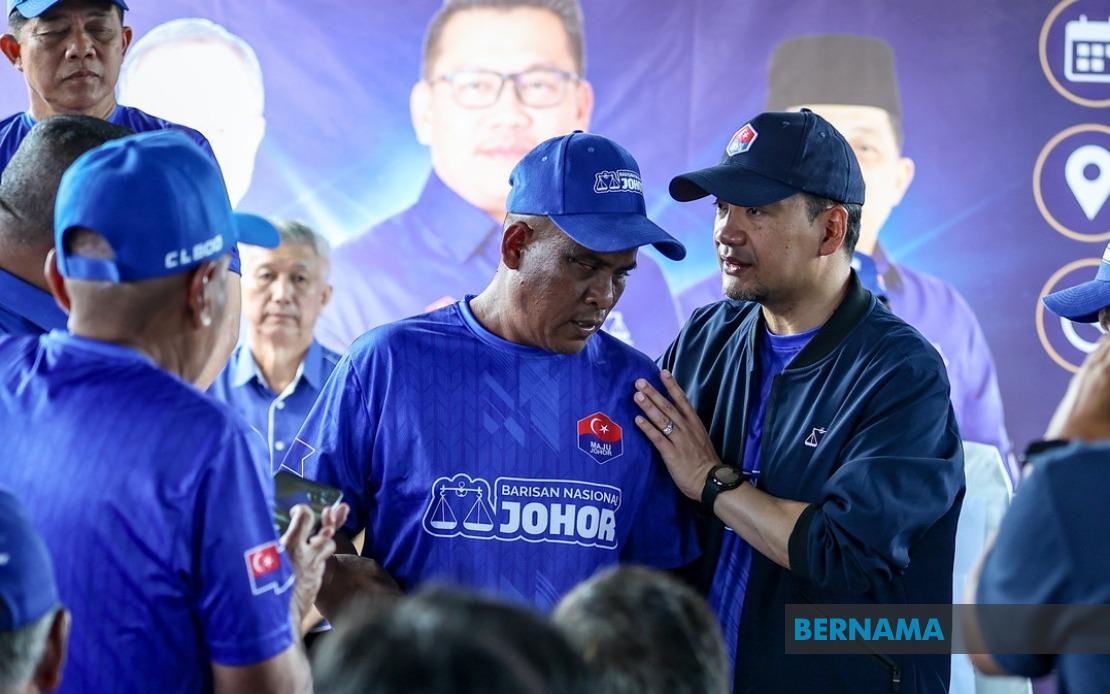
Mohd Hairol Leman, a 46-year-old resident of Kampung Sri Pantai in Senggarang, embodies a quiet determination that challenges conventional assumptions about civic participation among persons with disabilities. Blind from birth, he has consistently exercised his right to vote across multiple electoral cycles, most recently preparing to participate in the 16th Johor State Election scheduled for July 11. His unwavering commitment to the ballot box demonstrates that physical limitations need not prevent meaningful engagement with democratic processes, provided that adequate institutional support and accessibility measures are in place.
For nearly two decades, Mohd Hairol has maintained an unbroken voting record stretching back to the 2008 General Election. Rather than treating electoral participation as a burdensome obligation, he frames it as an essential responsibility that every citizen must discharge to influence the trajectory of their state and nation. This perspective, articulated with conviction during a briefing session for the Batu Pahat Barisan Nasional election machinery, reflects a deeper understanding of how individual votes collectively determine governance outcomes and policy directions that affect vulnerable populations most acutely.
The accessibility framework enabling Mohd Hairol's participation deserves particular attention from Malaysian policymakers and electoral administrators. The Election Commission provides officials who assist visually impaired voters in navigating the polling process, ensuring that blindness does not translate into disenfranchisement. This institutional accommodation represents a practical commitment to inclusive democracy, though questions remain about whether such support extends uniformly across all polling stations and whether additional measures—such as accessible voting technology or comprehensive voter education materials—might further enhance the experience of persons with visual disabilities during elections.
Mohd Hairol's engagement with the electoral system reflects his reliance on welfare support from multiple government agencies, including the Department of Social Welfare and the Johor State Islamic Religious Council's Baitulmal programme. These safety nets have enabled him to maintain residential stability and participate in civic life. His voting decisions are informed by appreciation for past leadership initiatives that have directed assistance toward economically disadvantaged and disabled citizens. In casting his ballot, he effectively evaluates whether successive administrations have sustained or expanded the social safety mechanisms upon which he depends.
The upcoming Johor State Election represents his sixth voting experience since 2008, a milestone that underscores both personal consistency and the frequency of electoral contests in Malaysia's dynamic political landscape. With 172 candidates competing for 56 State Legislative Assembly seats, the contest offers voters genuine choice across diverse platforms and leadership visions. For Mohd Hairol, as for many Malaysians navigating economic pressures and welfare access challenges, the election provides an opportunity to signal preferences regarding which political formations and leaders are most responsive to the needs of ordinary citizens.
The biographical details of Mohd Hairol's voting journey illuminate broader questions about democratic participation among persons with disabilities in Malaysia and Southeast Asia. Census and survey data on voter turnout disaggregated by disability status remain limited, making it difficult to assess whether visually impaired citizens participate at rates comparable to the general population. Anecdotal accounts like Mohd Hairol's suggest that motivation and institutional accommodation can overcome significant physical barriers, yet systemic barriers—including inadequate awareness of voting rights among disabled communities, insufficient training for election officials, and limited accessibility infrastructure—may suppress participation among other disabled voters who lack his determination or who encounter less accommodating electoral environments.
Mohd Hairol's emphasis on selecting leaders who genuinely serve vulnerable populations reflects a sophisticated understanding of electoral accountability. He is not voting merely to exercise an abstract right, but rather to influence the allocation of resources and the design of policies that directly affect his material welfare and dignity. This instrumental motivation—voting to secure tangible improvements in social protection and cost-of-living assistance—is widely shared among voters across Malaysia's socioeconomic spectrum, particularly during periods of inflation and fiscal constraint.
The Election Commission's provision of assistance to visually impaired voters aligns with Malaysia's international obligations under the United Nations Convention on the Rights of Persons with Disabilities, which the country has ratified. The convention explicitly guarantees that persons with disabilities have the right to participate in political and public life on an equal basis with others, including voting and participating in elections. Ensuring physical accessibility and procedural accommodation at polling stations represents a baseline obligation rather than an exceptional courtesy, though implementation quality varies significantly across Malaysian constituencies and state-level electoral administrations.
Looking ahead to July 11, Mohd Hairol's participation in the Johor State Election will add one voice to the collective determination of 56 legislative seats and the broader political direction of a state accounting for roughly one-fifth of Malaysia's population. His consistency as a voter, maintained despite sensory disability and dependence on welfare support, offers a quiet rebuttal to narratives suggesting that disabled citizens are passive recipients of state provision rather than active agents in democratic governance. For electoral administrators and policymakers, his example underscores the importance of removing barriers to participation while respecting the autonomy and agency of voters from all backgrounds.
The broader implication of Mohd Hairol's voting trajectory extends beyond individual civic engagement. It demonstrates that democratic systems function most legitimately and effectively when they incorporate voices and perspectives from across the entire population, including persons whose experiences with vulnerability and welfare dependency give them distinctive insights into the efficacy of government programmes and the responsiveness of elected representatives. As Malaysia continues to refine its electoral infrastructure and accessibility standards, the experiences of citizens like Mohd Hairol should inform policy design and implementation, ensuring that abstract guarantees of voting rights translate into genuine opportunity for all eligible citizens to participate meaningfully in shaping their political future.

