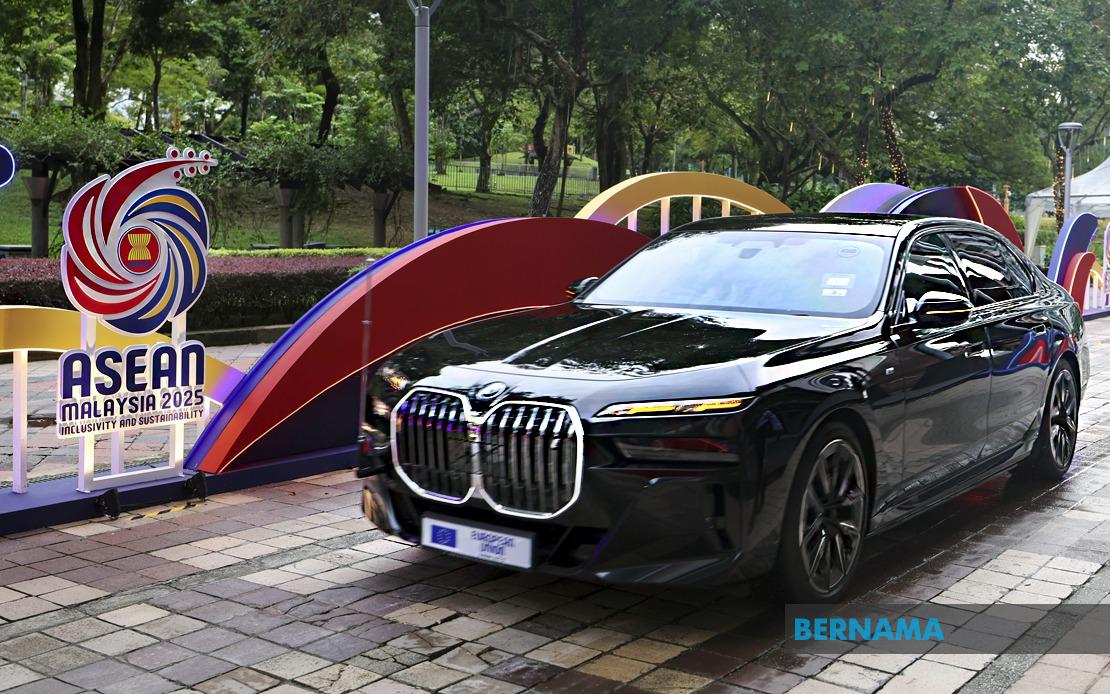
The Prime Minister's Department (JPM) has moved to address mounting public speculation about the luxury BMW vehicle recently spotted in the motorcade of Prime Minister Datuk Seri Anwar Ibrahim, clarifying that the car is an established government asset rather than a newly acquired purchase. In a statement released on July 6, JPM and the Ceremonial and International Conference Secretariat Division (BIUPA) confirmed that the vehicle has long been part of Malaysia's official government fleet, where it serves strategic diplomatic and security functions.
The motor pool asset in question falls under the direct supervision of BIUPA, an administrative body tasked with managing the logistical requirements for high-level state functions and international engagements. According to the department's official statement, this particular vehicle is earmarked specifically for supporting Malaysia's official state logistics operations, particularly those involving visits by foreign dignitaries of equivalent rank, such as presidents or prime ministers travelling to Malaysia on official state business.
The justification for this vehicle's existence within government holdings is rooted in sophisticated security architecture. Malaysia's sophisticated threat landscape, encompassing everything from conventional armed threats to emerging modern dangers, necessitates transport infrastructure that meets exacting protective standards. The BMW in question has been engineered to withstand an array of potential threats, including high-velocity ballistic impacts, explosive devices, and more contemporary security challenges such as drone-based attacks, all of which represent genuine concern for heads of state conducting official travel.
Regarding why the Prime Minister has been using this particular vehicle recently, JPM attributed the temporary deployment to routine maintenance requirements affecting Anwar's primary official transport. The Yang di-Pertuan Agong had previously gifted the Prime Minister's standard official vehicle, but this car is currently undergoing scheduled maintenance and servicing. During this period, security assessments conducted by the Royal Malaysian Police (PDRM) determined that utilising the specially configured BMW would be appropriate, providing uninterrupted protection whilst the primary vehicle undergoes its regular maintenance cycle.
The official clarification represents a direct response to a wave of speculation and allegations that had taken hold across Malaysian social media platforms in recent days. Without specifically addressing those claims in detail, JPM's statement implicitly sought to correct misconceptions about the provenance and purpose of the vehicle, emphasising that no new luxury acquisition had been made at public expense. This proactive communication strategy reflects the government's sensitivity to public perception regarding executive resource allocation, particularly surrounding high-profile purchases that might appear extravagant during economically challenging times.
The BMW situation also illustrates the complex security requirements inherent in protecting national leaders in Southeast Asia's increasingly volatile geopolitical environment. Malaysian authorities must balance the imperatives of personal safety for the nation's chief executive against public expectations of fiscal prudence and restraint in government spending. The existence of vehicles meeting such stringent protective standards represents a significant capital investment that, once made, represents a sunk cost regardless of utilisation frequency. JPM's explanation essentially reframes this vehicle not as a luxury indulgence but as essential national security infrastructure.
International diplomatic protocol establishes specific standards for hosting state visits, and visiting heads of state typically expect security arrangements commensurate with their domestic protection standards. By maintaining a fleet of internationally certified secure vehicles, Malaysia positions itself as a competent host nation capable of extending appropriate protection to foreign leaders. This infrastructure reflects not merely individual Prime Ministerial preference but a national commitment to meeting standards expected within the international community of nations.
The maintenance cycle affecting the primary official vehicle is itself noteworthy in the context of government asset management. Regular servicing and maintenance of sophisticated security vehicles is considerably more complex and resource-intensive than routine car maintenance, often requiring specialised technicians and extended downtime. The reliance on an alternative from the existing fleet during such maintenance represents efficient asset utilisation rather than profligacy.
For Malaysian observers concerned about government expenditure and executive privilege, the clarification carries implications beyond the immediate situation. It underscores that significant government assets often remain invisible until circumstances bring them into public view, at which point accountability mechanisms and transparency standards become relevant. The episode demonstrates both the mechanisms through which the government addresses public concerns and the degree to which high-level resource allocation attracts scrutiny in Malaysia's increasingly engaged public discourse surrounding political accountability.

