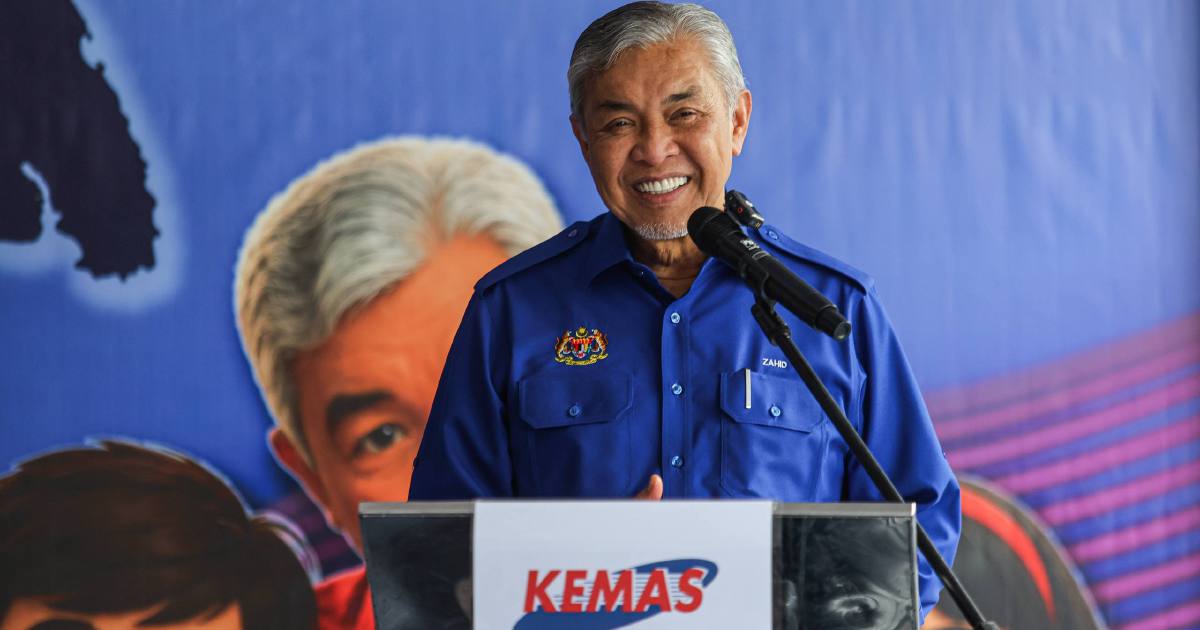
The competitive landscape of the Johor state election has not disrupted the operational dynamics between Barisan Nasional and Pakatan Harapan at the federal tier, where both coalitions continue to navigate their shared governance responsibilities. This declaration underscores the pragmatic compartmentalization that characterizes Malaysian politics, where state-level contests and federal administration operate within different frameworks despite overlapping political actors and constituencies.
The maintenance of productive federal-level relations between these two major political forces represents a significant development in the context of Malaysia's post-2018 political transformation. Since the 2022 general election that produced a fragmented parliament, both coalitions have necessarily engaged in cooperative governance to ensure institutional continuity and legislative functionality. This arrangement, while sometimes strained, has demonstrated sufficient resilience to weather campaign-season antagonisms at the state level.
For Malaysian observers and international analysts monitoring democratic stability in Southeast Asia, this capacity to separate electoral competition from governing pragmatism offers insights into institutional maturity. The ability of rival political camps to contest elections vigorously while maintaining functional federal partnerships speaks to the development of democratic norms that transcend personal rivalries or zero-sum ideological frameworks. In several regional democracies, such compartmentalization often collapses entirely during election periods, resulting in governmental paralysis or institutional dysfunction.
The Johor state election itself carries particular significance given the state's historical status as a BN stronghold and its demographic and economic importance within Malaysia. Competition in Johor touches on identity politics, developmental agendas, and regional influence within the federation. Yet the assertion that federal cooperation remains unaffected suggests that both coalitions recognize the costs of allowing electoral campaigns to destabilize critical federal operations, whether in security, economic management, or infrastructure development.
For Malaysian businesses and investors, this stability at the federal level provides continuity in policy implementation and regulatory certainty. When political coalitions at the federal level cannot cooperate effectively, economic policymaking often suffers from inconsistency, delayed approvals, and legislative gridlock. The apparent commitment to maintaining federal-level cooperation, regardless of state election outcomes, therefore carries tangible economic implications for sectors ranging from financial services to manufacturing and tourism.
The dynamics between BN and PH reflect the broader complexity of Malaysian federalism, where state governments and federal authorities must coordinate across potential political divides. Infrastructure projects, educational policies, and development initiatives frequently require synchronized action between state and federal levels. A breakdown in basic working relationships at the federal tier would inevitably cascade to affect these implementation mechanisms, creating friction that ultimately impacts ordinary Malaysians who depend on efficient public services.
Historically, Malaysian state elections have occasionally threatened federal stability, with victorious parties seeking to extract maximum advantage from changed state configurations. The positioning in Johor that federal ties remain robust appears calculated to signal maturity and prevent such destabilization, even as campaign rhetoric elsewhere may suggest otherwise. This distinction between public campaign positioning and operational relationships has become increasingly important as Malaysia navigates coalition politics.
Regional observers will note that Southeast Asia has witnessed several instances where electoral competition at state or provincial levels has fractured national coalitions entirely, producing governmental crises. The apparent resilience of BN-PH cooperation despite electoral competition in Johor therefore distinguishes Malaysia's experience and may provide lessons for neighboring democracies managing similar coalition arrangements. The region's political stability often depends on such capacity for functional separation between electoral and administrative spheres.
The statements emphasizing federal-level cooperation also carry implications for opposition parties operating outside the BN-PH framework. Any political realignment resulting from the Johor contest will occur within parameters set by the existing federal relationship. Third forces seeking to alter Malaysia's political configuration must account for the apparent solidity of BN-PH federal partnerships, which constrains the space available for alternative political formations to insert themselves into national governance.
Looking forward, the sustainability of this federal cooperation model will depend on several factors: the electoral outcomes in Johor and potential subsequent state contests, the performance of BN and PH in voter satisfaction, and the emergence of new policy challenges that might test the limits of coalition flexibility. Malaysia's economic performance, particularly as inflation and employment concerns affect household incomes across income groups, will influence whether federal cooperation can withstand mounting public pressure on either coalition partners to prioritize partisan advantage over cooperative governance.
The assertion of strong BN-PH federal ties during the Johor campaign season ultimately reflects calculated political messaging designed to project stability while maintaining electoral credibility. For the Malaysian electorate, such statements raise questions about where campaign promises diverge from post-election operational reality, and whether competitive positioning during elections translates into actual policy divergence once governing responsibilities resume. The test of such claims will emerge in the months following any electoral reshuffling in Johor and subsequent state contests.

