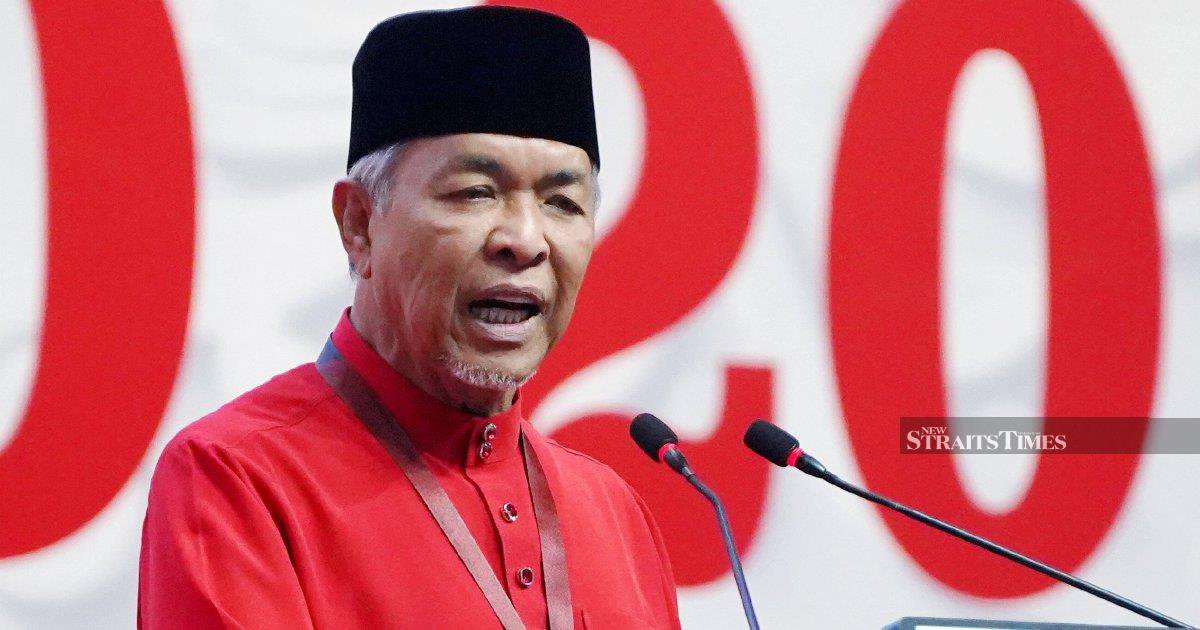
Barisan Nasional and Umno have adopted a hardline stance on accountability at Tabung Haji, with party leadership declaring they will not shield anyone found culpable in the unfolding investigation. BN chairman and Umno president Datuk Seri Dr Ahmad Zahid Hamidi made the declaration while speaking in Putrajaya, signalling that the political coalition will prioritise institutional integrity over internal party loyalty should the Royal Commission of Inquiry produce damaging findings.
The commitment reflects mounting pressure on Malaysia's political establishment to demonstrate serious intent in tackling governance failures at the pilgrim fund, which manages the savings of millions of Malaysian Muslims. The Tabung Haji scandal has attracted sustained public attention, with allegations spanning financial mismanagement, questionable investment decisions, and operational irregularities accumulating over multiple years. The government's decision to establish a formal RCI represents a recognition that the scale of concerns warrants independent judicial examination.
Zahid's pledge carries particular significance because Umno, the dominant partner within BN, has historically been closely associated with Tabung Haji's governance structures. Several senior party figures have held leadership positions at the fund, creating potential conflicts of interest that observers have highlighted. By committing upfront to accept the RCI's conclusions without qualification, BN leadership is attempting to preempt accusations of protecting allies or subordinates who may face exposure.
The Royal Commission mechanism itself represents a substantial investigative undertaking, designed to examine patterns of decision-making and institutional oversight at Tabung Haji. Such inquiries typically examine documentary evidence, interview key personnel, and assess whether individuals acted within their mandated authority. The findings, once published, carry significant moral and political weight even where criminal prosecution does not follow, as they establish an official record of institutional failings.
For Malaysian Muslims who have contributed to Tabung Haji savings accounts, the RCI process carries immediate practical implications. Fund performance has underperformed expectations during the period under review, and stakeholders remain anxious about whether mismanagement contributed to those outcomes. Public confidence in the institution depends substantially on transparent acknowledgement of problems and demonstrable corrective action. The commitment from BN to accept findings without compromise addresses those concerns at least rhetorically.
The pledge also carries implications for Malaysian political dynamics more broadly. In an environment where accusations of patronage and protective circles have eroded institutional credibility, political leaders face pressure to demonstrate that accountability applies equally regardless of rank or affiliation. By positioning BN as willing to hold its own members to account, Zahid seeks to distinguish his coalition from perceptions of self-dealing that have historically damaged public trust.
However, the effectiveness of such commitments ultimately depends on implementation. Previous inquiries into Malaysian institutional failures have sometimes produced recommendations that political leadership subsequently shelved or diluted. The gap between public pledges and actual follow-through represents a persistent vulnerability in Malaysia's governance landscape. Observers will scrutinise both the substance of the RCI's eventual conclusions and the government's response mechanisms.
The Tabung Haji situation also illuminates broader questions about oversight of Malaysia's statutory bodies and government-linked institutions. These entities manage substantial public resources yet often operate with limited parliamentary scrutiny and restricted transparency obligations. Structural reforms in accountability mechanisms may ultimately prove as important as action against individual wrongdoers, though such systemic changes typically attract less political attention.
Regionally, Malaysia's handling of the Tabung Haji inquiry will be watched by other Southeast Asian governments managing similar institutions. Many countries in the region operate pilgrimage funds, cooperative schemes, or state-managed savings vehicles that face comparable governance challenges. How Malaysia's political system responds to the RCI process may influence approaches elsewhere in Southeast Asia to institutional oversight and accountability.
Zahid's statement represents a necessary but preliminary step toward restoring confidence in Tabung Haji. The substantive test will arrive when the RCI publishes findings and Malaysian political leadership must choose between abstract commitment and concrete action. The outcome will carry consequences not only for the affected institution but for public perception of whether Malaysia's political system can genuinely prioritise institutional integrity over factional interests. For now, the commitment stands as a marker against which BN's subsequent conduct will be measured.

