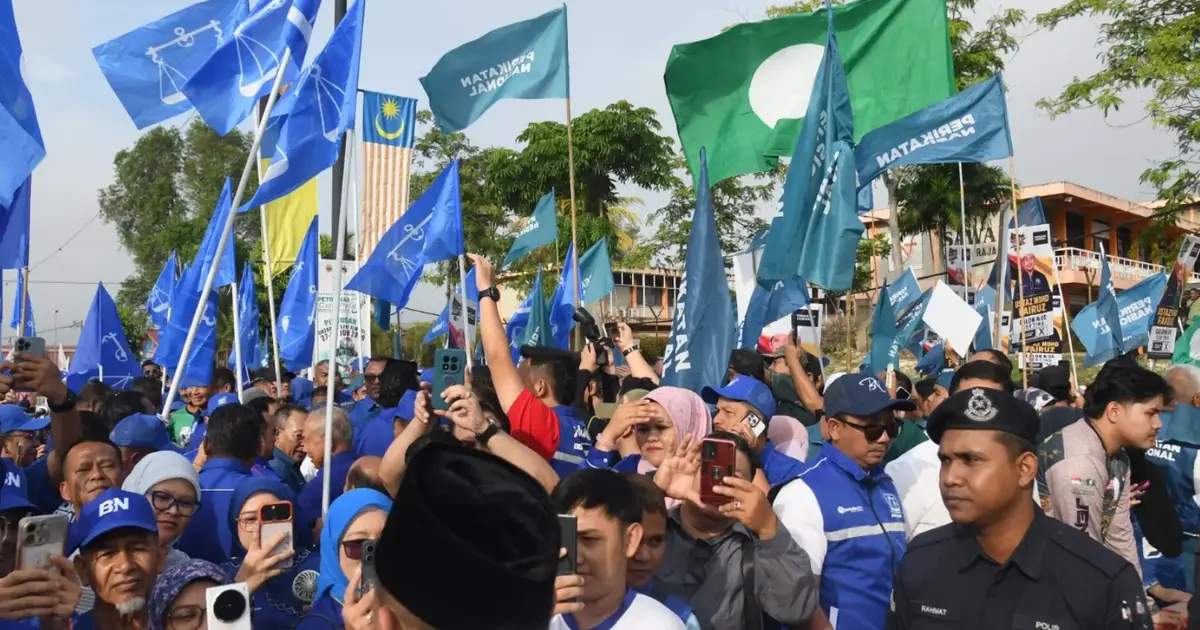
Political analyst Azmi Hassan has cast doubt on whether Barisan Nasional can serve as a meaningful ally to PAS in the party's push to wrest control of Selangor, arguing that the coalition lacks the structural capacity and electoral machinery that Bersatu previously provided to the Perikatan Nasional camp during the most recent state election cycle.
The assessment highlights a significant strategic vulnerability for PAS as it attempts to penetrate Malaysia's most economically developed state, where Selangor's incumbent Pakatan Harapan government has maintained a commanding political position. The political landscape in Selangor has traditionally favoured coalitions capable of mustering sophisticated electoral organisation and resource coordination across multiple districts simultaneously, a capability that proved instrumental in Perikatan Nasional's previous performance at the ballot box.
Bersatu's withdrawal from active participation in Selangor politics represents a critical loss for PAS. The party's previous engagement in the state had provided crucial ground-level infrastructure, including trained campaign operatives, voter databases, and established networks within specific communities that Perikatan Nasional leveraged to improve its electoral standing. Without this foundational machinery, any attempt by PAS to mount a competitive challenge faces immediate operational constraints that cannot easily be compensated through alternative alliances.
Barisan Nasional, while a formidable coalition at the national level, operates primarily through its established component parties—predominantly UMNO, MCA, and MIC—whose traditional strongholds and electoral strongholds do not necessarily align with PAS's demographic targets or strategic priorities in Selangor. The coalition's structural orientation has historically been designed to maximise the electoral prospects of its member parties rather than to service the ambitions of external partners, particularly where such partnerships might dilute component parties' individual standing or territorial influence.
The Malaysian political context presents particular complications for such cross-coalition cooperation. Selangor voters have demonstrated sophisticated political preferences, often distinguishing between local state-level contests and national political trends. The electorate's capacity to vote strategically across different electoral cycles means that transferring electoral support from Barisan Nasional to PAS is not a straightforward institutional process but rather depends upon convincing individual voters to make choices that may run counter to their habitual voting patterns or party loyalties accumulated over decades.
Moreover, Barisan Nasional's existing state government responsibilities and its need to maintain cohesion among its own component parties impose constraints on how extensively it can mobilise resources toward assisting external political actors. The coalition's leaders must balance competing demands—supporting their own candidates, maintaining party discipline, and preserving internal relationships—in ways that typically limit the depth of commitment they can extend toward facilitating another party's state-level breakthrough.
The Selangor political environment presents particular challenges for opposition coalitions attempting to gain ground. The state's urbanised constituencies, its large floating voter population, and its relatively high political engagement means that electoral outcomes depend significantly upon sophisticated voter persuasion and localised campaign sophistication rather than upon mass mobilisation or national-level political momentum. These characteristics historically have favoured incumbents capable of deploying concentrated resources and established administrative machinery.
From a regional perspective, Selangor's electoral trajectory carries implications throughout Southeast Asia's Malay-Muslim majority nations and Thailand, where similar patterns of coalition politics and opposition alliance-building shape electoral outcomes. The degree to which PAS succeeds or falters in executing state-level electoral breakthroughs through coalition arrangements provides strategic lessons for other Islamist movements navigating complex multi-party systems where capturing subnational power requires navigating intricate coalition dynamics and resource constraints.
Analyst Azmi Hassan's assessment ultimately reflects the broader reality that electoral alliances require more than formal coordination between party leaderships; they demand functioning institutional mechanisms for mobilising supporters, channelling resources, and executing campaigns at the granular level where voters make their actual electoral decisions. Bersatu's prior involvement had apparently provided precisely these operational fundamentals, and finding an adequate substitute represents a formidable challenge for PAS's Selangor ambitions. Without addressing this organisational deficit, the party's electoral prospects in Malaysia's most prosperous state appear constrained regardless of rhetorical unity or nominal coalition arrangements with other opposition actors.

