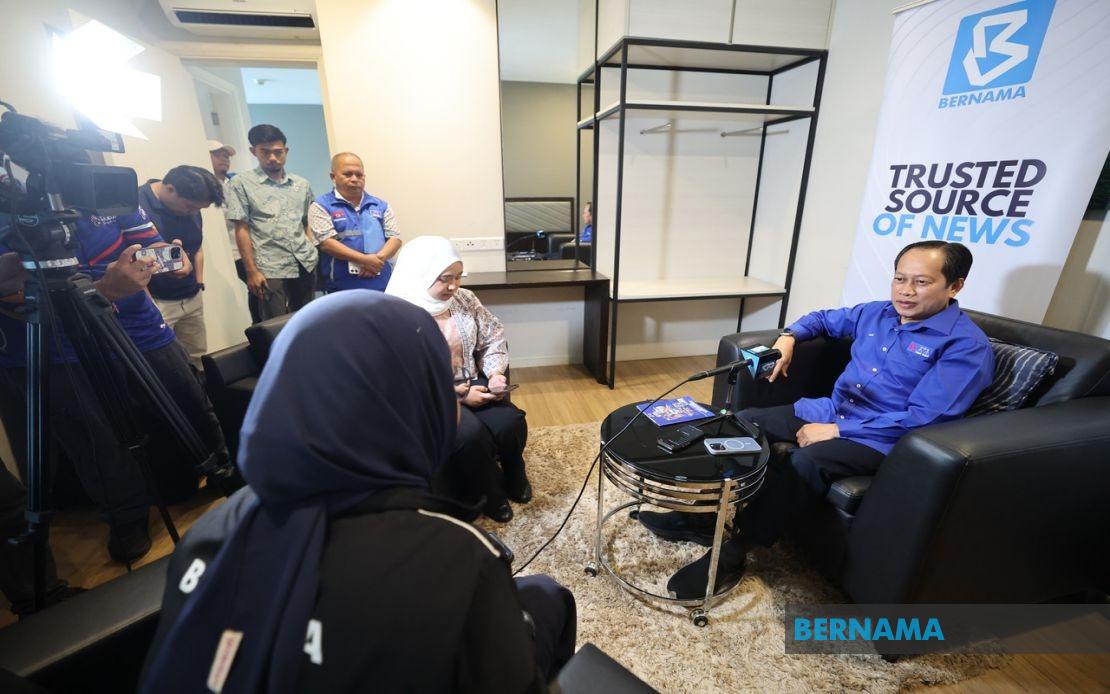
Barisan Nasional is confident it will secure victory in the upcoming Johor state election and form the next government, ensuring administrative continuity in Malaysia's southern state. Datuk Seri Dr Ahmad Maslan, the Johor UMNO deputy liaison committee chairman, stated that the coalition is on track to surpass its target of winning more than 40 seats in the 56-seat State Legislative Assembly. The election is scheduled for July 11.
Ahmad's optimism stems from extensive ground observations and strategic assessments conducted across Johor's parliamentary divisions. Having personally involved himself in campaign assistance throughout 25 of the state's 26 parliamentary constituencies, he has developed what he characterizes as a detailed and informed perspective on voter sentiment and electoral momentum. In an exclusive interview, he projected that BN is positioned to achieve a decisive win, based on his direct engagement with campaign operations at multiple levels.
The foundation for this confidence lies in several measurable factors that the BN leadership has evaluated throughout the campaign period. Strong voter response to party messaging, effective campaign performance by individual candidates, and the demonstrated organizational capacity of party machinery at the District Polling Centre level have all contributed to the coalition's bullish assessment. Ahmad emphasized that these elements, working in tandem, create conditions favourable for exceeding the 40-seat threshold.
The ground campaign infrastructure has remained remarkably active throughout the pre-election period. From early morning to late evening, BN's organizational machinery has sustained a relentless pace of voter engagement activities. These operations encompass traditional house-to-house canvassing, sophisticated voter data analysis utilizing party records and demographic information, campaign simulation exercises designed to refine messaging and candidate performance, and the coordination of operations from purpose-built command centres at the polling district level. This comprehensive approach reflects a systematic effort to maintain voter contact and reinforce party support across diverse demographic segments.
Ahmad expressed particular confidence in the organizational strength visible at the District Polling Centre level, which serve as crucial operational hubs for the BN machinery. These centres function as both strategic command posts and grassroots engagement bases, enabling constant coordination between party leadership and frontline volunteers. The sustained activity levels at these venues, maintained from sunrise to late evening, demonstrate the depth of organizational commitment and the comprehensive nature of BN's electoral strategy.
A significant strategic development has been the deployment of reinforcement teams from other Malaysian states to bolster Johor's campaign efforts. These external teams bring complementary expertise, fresh operational perspectives, and proven campaign methodologies from their home states. Rather than duplicating existing approaches, these reinforcement units introduce innovative strategies and alternative viewpoints that enhance the effectiveness of BN's overall electoral machine. Ahmad highlighted that this cross-state collaboration adds measurable value by exposing local campaign teams to different tactical approaches and campaign philosophies.
A concrete example of this inter-state collaboration involves the Pontian parliamentary constituency, where a reinforcement contingent led by Pahang's Menteri Besar has been deployed. This team extends its influence beyond Pontian itself, actively participating in campaign efforts across four additional state constituencies: Pulai Sebatang, Benut, Kukup, and Pekan Nanas. The Pahang-led team brings perspectives and campaign experiences rooted in different electoral and political contexts, allowing Johor's BN operatives to incorporate strategies that have proven effective in other states. Ahmad credited this arrangement with boosting morale among local campaign participants while infusing operations with fresh analytical frameworks.
The cross-constituency coordination and resource allocation strategy reflects a sophisticated approach to maximizing electoral impact across Johor's diverse parliamentary divisions. Rather than concentrating resources narrowly, BN has distributed reinforcement teams strategically to amplify campaign effectiveness in multiple constituencies simultaneously. This allocation methodology suggests the coalition has identified specific constituencies as priority targets while ensuring comprehensive coverage across the state's competitive areas. Ahmad indicated that his personal campaign focus would remain concentrated on constituencies designated as BN priorities throughout the remaining days before the July 11 polling date.
For Malaysian voters and regional observers, the Johor election carries significance beyond the state itself. Johor's electoral outcome will influence the broader political trajectory in Malaysia, potentially affecting future national parliamentary configurations and the balance of power within UMNO and BN's larger coalition structure. A decisive BN victory of the magnitude being targeted would reinforce the coalition's positioning as a viable national force, particularly following recent electoral challenges in other states. Conversely, the results would provide crucial data regarding voter sentiment on governance, administrative performance, and the coalition's appeal to diverse demographic constituencies.
The state election also serves as a bellwether for voter attitudes toward specific policy areas and governance priorities that resonate in Malaysia's industrial, trading, and increasingly urbanized southern region. Johor's economic importance and demographic diversity make it a closely watched test case for parties seeking to understand electoral trends across Malaysia's more developed and interconnected communities. Results here may influence strategic calculations for future national-level contests and inform parties' policy positioning across key sectors including manufacturing, logistics, trade, and emerging technology industries.
Ahmad's detailed confidence assessment, grounded in systematic observation rather than mere partisan optimism, suggests that internal BN polling and sentiment tracking have validated the coalition's 40-plus seat target as realistic rather than aspirational. The specificity of campaign activities reported—from voter data analysis to operations room coordination to structured campaign simulations—indicates a professionalized electoral operation deploying contemporary campaign management methodologies. Whether this confidence translates into the projected outcome on July 11 will become clear once voting concludes and results are tallied across Johor's 56 state constituencies.

