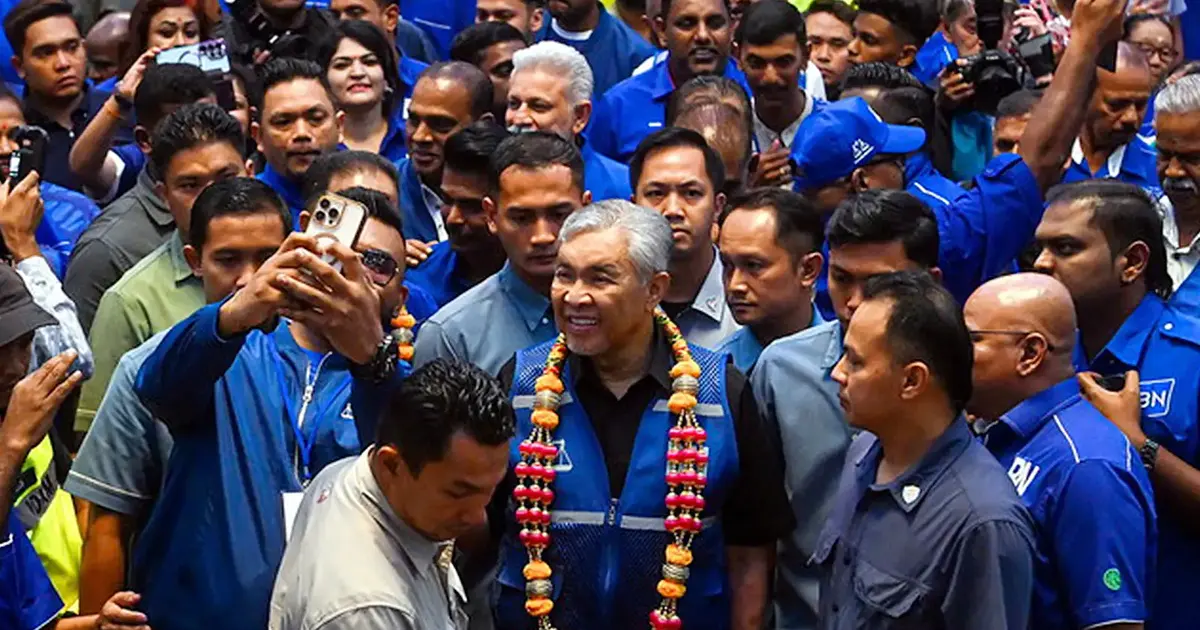
BN chairman Ahmad Zahid Hamidi has made a significant commitment to Malaysia's Indian community, pledging that the coalition will secure two exco positions for them if victorious in the Negeri Sembilan state election. The assurance underscores the broader bargain between BN's component parties and signals the coalition's determination to consolidate support across all major ethnic blocs ahead of the crucial polls.
Zahid's pledge reflects the strategic importance of the Indian community in Negeri Sembilan's electoral calculus. While they represent a smaller demographic compared to Malay-Muslim and Chinese voters, their presence in specific constituencies can prove decisive, particularly in three-cornered contests where votes are fragmented. The exco commitment effectively translates into substantive decision-making power and ministerial portfolios, positioning the Indian community not merely as vote recipients but as stakeholders in state governance.
The BN chairman's confidence that the Malaysian Indian Congress can achieve a clean sweep similar to its Johor performance signals internal party optimism about the electoral environment. In the 2023 Johor state election, MIC delivered a 100% success rate in all its contested seats, a remarkable feat that demonstrated the party's organisational prowess and the receptiveness of Indian voters to BN's messaging. Zahid's reference to this achievement appears designed to boost morale within MIC and reassure the broader Indian electorate that supporting BN yields tangible returns.
The Negeri Sembilan context, however, presents distinct challenges compared to Johor. The state has witnessed more competitive electoral dynamics in recent years, with opposition parties making strategic inroads into traditionally BN-held constituencies. The Indian community, though economically significant, composes approximately 7-8% of Negeri Sembilan's population, concentrated primarily in urban centres and estate areas. This distribution means that MIC's performance will hinge both on mobilising traditional support bases and expanding appeal among younger, more urbanised Indian voters who may prioritise economic and education policies over communal identity politics.
For Malaysia's Indian community more broadly, such explicit commitments represent an evolution in how mainstream coalitions engage with minority groups. Rather than treating the Indian vote as peripheral to broader Malay-Muslim concerns, BN's two-exco pledge acknowledges their economic contributions and political relevance. This approach contrasts with periods when Indian community demands were either overlooked or subsumed within broader communal negotiations. The visibility of this commitment, made at the highest leadership level, signals to Indian voters that their electoral support translates into institutional representation and policy influence.
The pledge also carries implications for BN's internal dynamics, particularly regarding MIC's standing within the coalition. Historically, MIC has occupied a subordinate position relative to UMNO and the BN's Malay-dominated structure. By securing a concrete promise of two exco posts—a significant allocation given Negeri Sembilan's exco structure—the party gains both political capital and negotiating leverage. This strengthens MIC's capacity to champion Indian interests and defend its constituency base against challenges from rival Indian-based political movements.
Negeri Sembilan's political trajectory since 2018 has featured intensified competition and shifting coalition arrangements. The state has experienced transitions between different ruling coalitions, making voter sentiment volatile and unpredictable. In this environment, BN's attempt to lock in support through specific, quantifiable commitments serves as a stabilisation mechanism. By publicly committing to exco positions before the election, rather than negotiating these posts as ad-hoc arrangements afterward, Zahid attempts to build trustworthiness and demonstrate that BN treats its component party agreements seriously.
The timing of this announcement also merits consideration within the broader electoral calendar. As state elections approach, parties intensify outreach to target communities with concrete benefits and assurances. Such pledges can accelerate decision-making among swing voters and consolidate the coalition's existing support. For Indian voters who may feel underrepresented or whose concerns regarding economic opportunity, education scholarships, and temple development remain unaddressed, the promise of two exco posts translates into accessible channels for pursuing community interests at the state policy level.
Critically, this pledge carries implementation challenges that deserve scrutiny. Two exco positions, while significant, remain limited within a state cabinet. The distribution of portfolios matters considerably—educational and economic portfolios offer greater leverage than ceremonial or narrowly-scoped positions. Moreover, exco members must still navigate the complexities of state governance and competing budgetary demands. The actual effectiveness of two Indian representatives will depend on their individual capabilities, political relationships within the exco, and the ruling coalition's overall direction and resource availability.
The pledge also reflects broader changes in Malaysian electoral politics where ethnic communities increasingly demand explicit, quantifiable commitments rather than accepting vague promises or patronising assurances. This represents a maturation of political discourse, where communities actively negotiate for representation rather than passively receiving allocations. For BN, demonstrating responsiveness to such demands becomes essential for coalition maintenance, particularly given the fragmented nature of contemporary Malaysian politics where no single coalition commands overwhelming dominance.
Zahid's confidence in MIC's electoral prospects, while understandable from a coalition chairman's perspective, should be tempered by recognising that Johor's specific conditions—including rural constituencies with strong traditional bases and limited opposition infrastructure—do not necessarily replicate in Negeri Sembilan. The state's more urbanised character and competitive electoral environment suggest that MIC will face more robust challenges than in Johor. Nevertheless, the exco commitment provides MIC with tangible resources to mobilise its base and attract fence-sitting voters.
Moving forward, the success of this electoral strategy will be determined not merely by whether BN wins Negeri Sembilan, but by whether the coalition implements its commitment faithfully and whether the two exco representatives effectively advocate for Indian community concerns. Should BN emerge victorious and fail to honour these pledges, the reputational cost would extend beyond MIC, potentially eroding trust in coalition arrangements more broadly and providing opposition parties with powerful ammunition when courting minority voter blocs.

