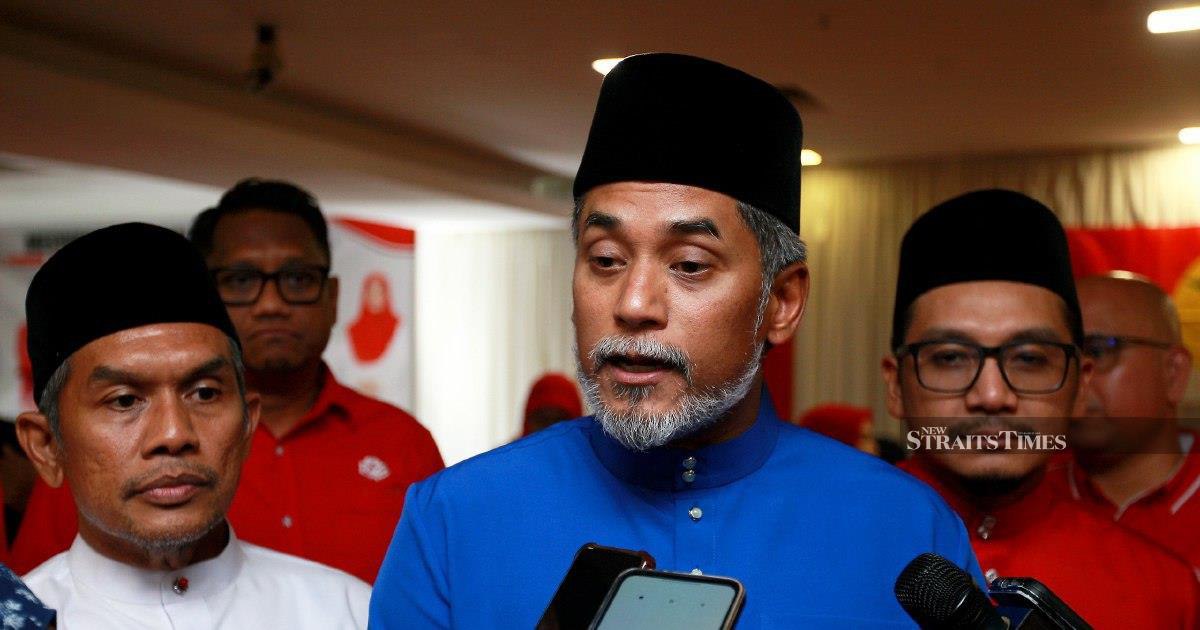
Khairy Jamaluddin, the former Umno Youth chief, has issued a stark warning about the electoral mathematics facing Malaysia's two major Malay-Muslim coalitions in the upcoming Negri Sembilan state election. Speaking in Shah Alam, he articulated a concern that resonates across Malaysia's fractious political landscape: without a unified approach to fielding candidates, both Barisan Nasional and Perikatan Nasional risk squandering their combined voter advantage by running competing candidates in the same constituencies.
The cautionary message from Khairy underscores a persistent structural vulnerability in Malaysian politics. When competing political organisations drawn from the same demographic base stand for election without coordination, they effectively hand victory to opposition parties that face no such internal fragmentation. This dynamic has repeatedly determined state and federal outcomes over the past decade, transforming narrow plurality winners into governments with inflated mandates.
Negri Sembilan, a state with historically competitive politics and a substantial Malay-majority population, presents an ideal test case for this principle. The state's electoral behaviour has traditionally reflected broader national political currents, and its outcome often serves as a barometer for Umno's organisational health and BN's viability. A decisive result there could establish momentum or reveal fractures heading into future national contests.
Khairy's intervention reflects concern within Umno circles that Perikatan Nasional, which incorporates PAS and other Malay-Muslim parties, could effectively fragment the conservative Malay vote. This preoccupation has become increasingly acute as PAS has consolidated its organisational machinery and expanded its electoral footprint, particularly in Malay-majority states. The party's ability to mobilise religious sentiment and rural constituencies has positioned it as a credible alternative to traditional BN structures.
The prospect of an electoral pact between the two coalitions would represent a significant realignment. Such arrangements have been periodically mooted in Malaysian politics, typically when calculations suggest that cooperation yields superior outcomes compared to open competition. However, they remain contentious because they require senior figures to negotiate not merely policy positions but also the allocation of candidacies—inherently zero-sum negotiations where concessions by one party represent gains for another.
For Barisan Nasional, the strategic question is acute because its traditional Malay-Muslim voter base has eroded over successive election cycles. The coalition's continued dependence on non-Malay voting blocs in urban and semi-urban areas has created an imbalance. In states where the voting population skews toward Malay-majority composition, BN's inability to dominate its own demographic category becomes an organisational liability. A unified front with Perikatan would theoretically allow BN to reassert dominance among Malay voters whilst delegating other constituencies to alliance partners.
For Perikatan Nasional, the calculation differs but points toward similar conclusions. The coalition's strength lies in its capacity to mobilise Malay-Muslim constituencies with particular intensity, but its relative weakness in non-Malay areas constrains its ability to govern states with diverse populations. An arrangement with BN would provide access to BN's non-Malay machinery in exchange for allowing Perikatan to maximise Malay-Muslim voting mobilisation in its designated constituencies.
The Negri Sembilan context adds specificity to these broader considerations. The state's economic structure, historical voting patterns, and demographic composition create particular dynamics. Any alliance would need to account for the state's incumbent administration, the distribution of marginal seats, and the specific organisational strengths of local BN and Perikatan branches. These granular factors often determine whether high-level political arrangements translate into effective electoral coordination.
Khairy's public warning also serves a signalling function within Umno. By articulating the downside scenario—electoral defeat caused by vote fragmentation—he seeks to create pressure for pragmatic negotiation with Perikatan leadership. The implicit message to BN decision-makers is that ideological or organisational pride cannot justify foregoing electoral advantage when institutional cooperation becomes available.
Regional observers note that such dynamics extend beyond Negri Sembilan. If the two coalitions successfully coordinate in that state, it could establish a template for cooperation in other Malay-majority states. Conversely, if they proceed to contest without arrangement, they risk demonstrating to opposition forces that fragmentation of the conservative coalition remains exploitable. For Malaysian voters and regional analysts tracking the peninsula's political trajectory, the Negri Sembilan outcome will carry significance beyond the state's borders.
The coming weeks will likely witness behind-the-scenes negotiations between BN and Perikatan structures as both coalitions weigh immediate electoral prospects against longer-term strategic positioning. Whether those negotiations yield formal coordination or proceed toward open competition may determine not merely Negri Sembilan's political complexion but also signal broader patterns about the future consolidation or fragmentation of Malaysia's Malay-Muslim political movements.

