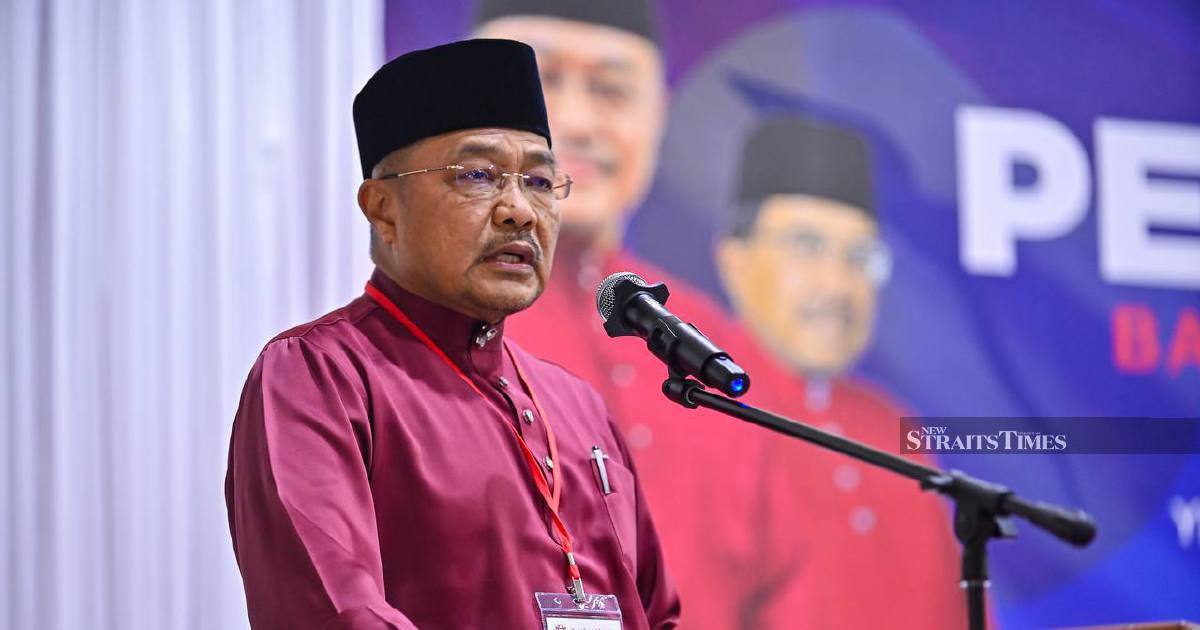
An Umno Supreme Council member has pushed back against expectations that the electoral alliance formed between Barisan Nasional and Perikatan Nasional during Negeri Sembilan's recent state polls should serve as a blueprint for coalition arrangements elsewhere in Malaysia. Speaking in Kuantan, the senior party official stressed that political dynamics vary significantly from one state to another, making blanket application of successful strategies elsewhere counterproductive.
The Negeri Sembilan state election, which saw BN and PN field a combined slate of candidates, has drawn attention as a potential model for coalition-building across the country. However, Sharkar's intervention reflects internal discussions within the ruling coalition about how to calibrate cooperation between the two blocs in different electoral contexts. The caution suggests that while collaboration worked tactically in one setting, the underlying political landscape differs sufficiently elsewhere that similar arrangements might not yield identical results.
Each Malaysian state operates within its own constellation of local grievances, demographic pressures, and historical voting patterns. Negeri Sembilan's political ecology—encompassing its urban-rural distribution, ethnic composition, and entrenched party support bases—created specific conditions that made the BN-PN cooperation feasible and electorally advantageous. These conditions cannot be assumed to exist uniformly across Johor, Selangor, Sabah, or other states where coalition structures must be negotiated separately.
The statement also reflects practical concerns about negotiating power between BN and PN in different states. In Negeri Sembilan, the balance of forces and seat distribution allowed both coalitions to cooperate without fundamentally threatening each other's core interests. In other states, the relative strength of component parties differs markedly. Umno's dominance within BN varies by state, as does PAS's leverage within PN. These asymmetries mean that seat-sharing formulas and candidacy allocations would need to be recalibrated entirely for each electoral contest.
Moreover, Sharkar's clarification addresses concerns within Umno itself about protecting the party's electoral turf. The Petaling Jaya MP has been vocal in recent months about preserving Umno's strategic interests in coalition arrangements. By emphasizing that Negeri Sembilan's model is not universally applicable, he shields the party from criticism that it should surrender seats or compromise its position in upcoming state elections in exchange for PN support. This framing allows Umno leadership flexibility in negotiating bilateral terms with PN in different contexts without being bound by precedent.
The timing of the statement is significant given that Malaysian states operate on staggered election cycles. While Negeri Sembilan has voted, other state assemblies approach dissolution or face imminent electoral contests. Politicians and observers have speculated about whether BN and PN might field joint candidates elsewhere, which could fundamentally reshape Malaysia's political landscape by institutionalizing cooperation between the two coalitions. Sharkar's comments introduce calibration and caution into those conversations.
Regionally, the BN-PN dynamic carries implications beyond electoral mathematics. A sustained alliance between the two blocs could reshape federal politics, given that PN controls the government in several states and commands significant parliamentary representation. However, their relationship remains transactional rather than ideological, built on pragmatic calculations rather than shared vision. Sharkar's intervention reflects awareness that forcing cooperation where it is not strategically optimal could strain these relationships unnecessarily.
For opposition parties, the BN-PN pact in Negeri Sembilan demonstrated the vulnerability of a fragmented challenge to the two main coalitions. If similar arrangements are extended to other states, opposition efforts to present a coherent alternative would face formidable structural obstacles. Conversely, if such cooperation remains ad-hoc and state-specific, opposition coalitions retain opportunities to exploit divisions and locate winnable constituencies where BN-PN coordination breaks down.
The comments also signal ongoing negotiations within Umno and BN about coalition direction. Some voices advocate for deeper partnership with PN as a bulwark against opposition resurgence, while others worry about diluting BN's brand and surrendering electoral opportunities to a rival coalition. Sharkar's position suggests the latter camp retains significant influence, at least within Umno's decision-making circles.
Looking forward, the Negeri Sembilan precedent will be dissected extensively as other state elections approach. The results there—including seat tallies, candidate performance, and voter turnout—will inform calculations about whether similar arrangements serve BN and PN's interests in other contexts. However, as Sharkar has made clear, those calculations must account for distinct local variables rather than assume uniform applicability. The flexibility his statement introduces suggests that Malaysia's coalition politics will continue to operate as a series of state-level negotiations rather than as a unified national realignment.

