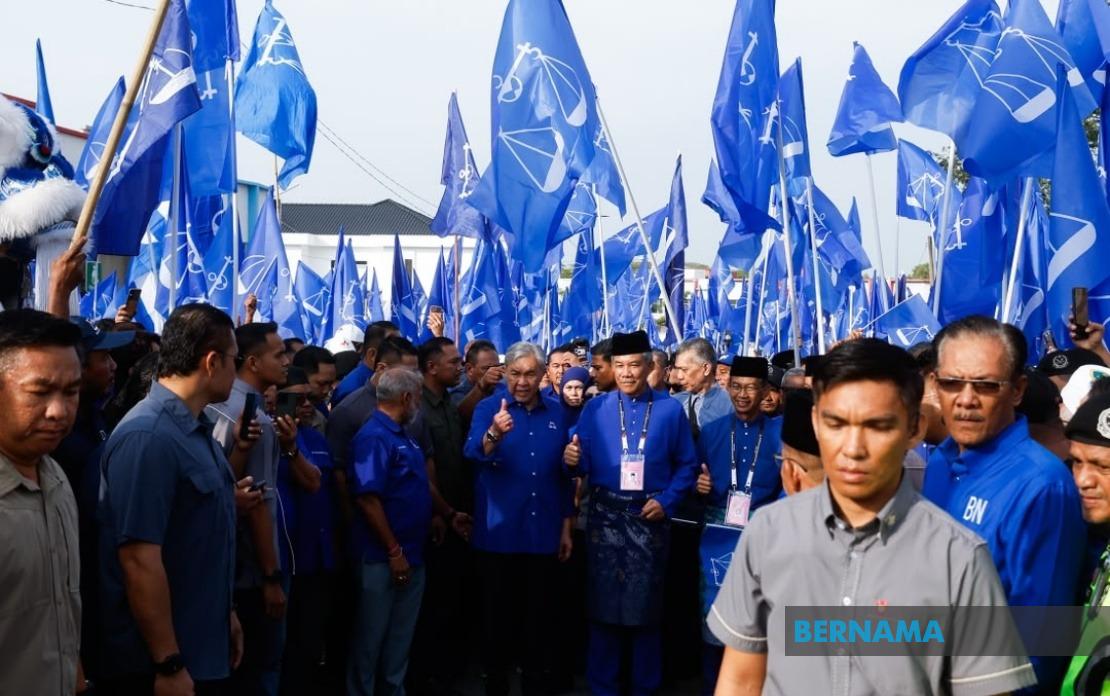
Senior Barisan Nasional figures were present across Negeri Sembilan on July 18 as the coalition's candidates submitted their nomination papers for the state election, demonstrating the leadership's active engagement in the electoral campaign. The coordinated show of strength by party heavyweights underscores BN's strategic focus on retaining control of the state assembly ahead of polling day on August 1.
BN chairman and UMNO president Datuk Seri Dr Ahmad Zahid Hamidi personally escorted his deputy, Datuk Seri Mohamad Hasan, to the Dewan Seri Rembau nomination centre in Rembau at 8.40 am. Mohamad Hasan's presence was particularly significant as he filed papers to seek another term representing the Rantau state seat, a constituency he has represented continuously since 2004. The decision by Ahmad Zahid to accompany his deputy at this early stage of the nomination process reflected the leadership's priority in ensuring retention of this long-held seat.
Across the state, the nomination process unfolded simultaneously at all eight centres beginning at 9 am, with each venue remaining open for exactly one hour. This compressed timeline created a concentrated window for candidates to complete their filings, and the presence of senior party figures throughout the morning demonstrated a highly coordinated campaign apparatus.
BN's secretary-general, Datuk Seri Dr Zambry Abd Kadir, made his way to Port Dickson to support Datuk Mohd Faizal Ramli's nomination submission for the Linggi state seat. In parallel, UMNO vice-president Datuk Seri Johari Ghani accompanied Suhaimizan Bizar, who is contesting the Gemencheh state seat located within the Tampin parliamentary constituency. These placements of senior figures across different constituencies suggested a deliberate strategy to generate momentum and media visibility for multiple candidates simultaneously.
UMNO's secretary-general, Datuk Dr Asyraf Wajdi Dusuki, took responsibility for the Jempol parliamentary area, personally accompanying three BN candidates as they lodged their nomination papers. Datuk Mustapha Nagoor, seeking the Palong state seat, Datuk Mohd Zaidy Abdul Kadir in Jeram Padang, and Chong Fui Ming contesting Bahau all received the support of this influential party official. The concentration of multiple nominations within a single parliamentary constituency allowed for efficient deployment of senior leadership resources while maintaining high-profile visibility.
Beyond UMNO, coalition partner PAS also demonstrated its commitment to the election. PAS president Tan Sri Abdul Hadi Awang travelled to support Mohd Fairuz Mohd Isa's nomination for the Serting state seat, marking a visible partnership between the two traditional BN components. Meanwhile, Parti Orang Asli Malaysia (ASLI), another coalition member, had its president Rashid Ka present when Dayana Dal submitted nomination papers for the Jeram Padang state seat in Jempol. These appearances by leaders of smaller coalition partners highlighted the broader alliance structure BN is deploying for this election cycle.
The Negeri Sembilan state election represents the first major electoral test following political realignments within Peninsular Malaysia. The August 1 polling day will determine the composition of the state assembly, with early voting opportunities provided on July 28 for those unable to cast ballots on election day. The timing of this election, occurring after recent political developments at the federal level, carries implications for how voters in this central Malaysian state assess coalition governance and performance.
The state assembly was formally dissolved on June 5 following receipt of consent from the Yang Dipertuan Besar of Negeri Sembilan, Tuanku Muhriz Tuanku Munawir. This procedural step initiated the election timeline, with nomination day arriving six weeks later. The extended campaign period allows candidates and parties to conduct grassroots outreach across their respective constituencies.
Negeri Sembilan's political significance extends beyond its individual state legislature. The state has served historically as a bellwether for broader Malaysian political trends, with its voting patterns often preceding shifts observed in national sentiment. For BN, ensuring a strong showing is essential for demonstrating continued relevance and electoral competitiveness in an increasingly competitive political environment. The personal participation of national party leaders in the nomination process sends a message that the coalition is taking the election seriously and mobilising its full organisational capacity to secure victory.

