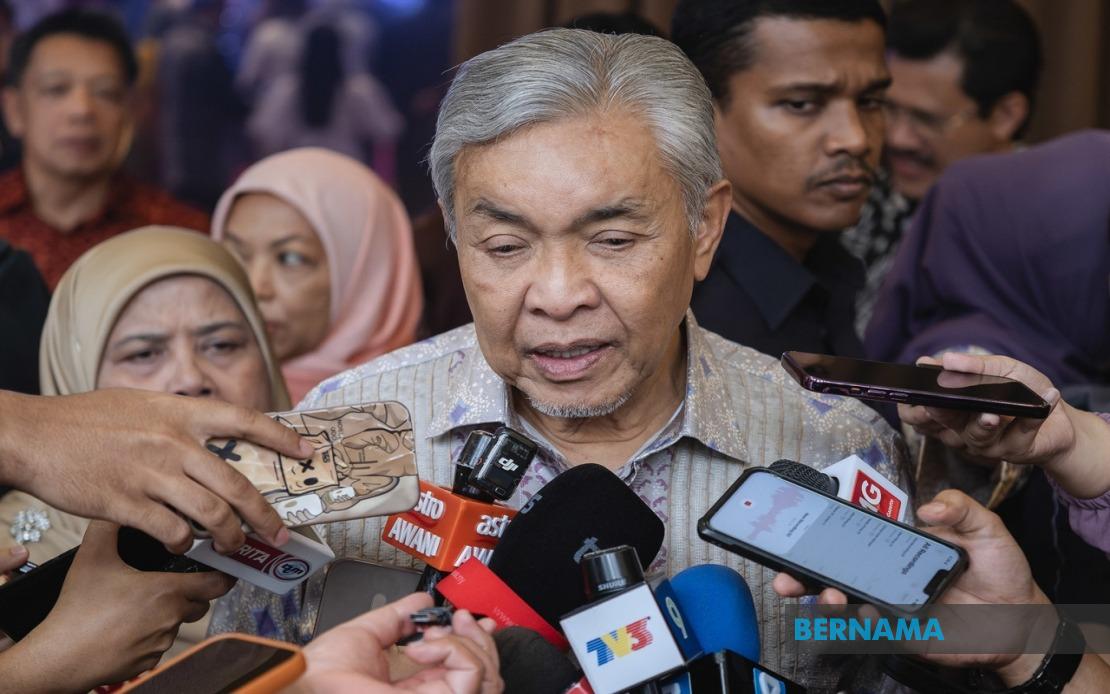
Deputy Prime Minister Datuk Seri Dr Ahmad Zahid Hamidi has made clear that Barisan Nasional will maintain strict separation from affairs involving the Negeri Sembilan royal palace and the state's Council of Justice and Laws, known locally as the Dewan Ketua-Ketua Negeri (DKU), as the coalition prepares for the upcoming state election. Speaking after a ceremony at the Ministry of Rural and Regional Development in Kuala Lumpur on June 29, Ahmad Zahid stressed that the BN leadership had reached this understanding during consultations with party figures in Negeri Sembilan regarding their electoral campaign strategy.
The commitment to non-interference represents a deliberate strategic positioning by the BN ahead of what promises to be a closely contested poll. By explicitly ruling out involvement in institutional and legal matters, the coalition appears to be signalling to both royal authorities and the broader public that it intends to conduct its campaign within clearly defined boundaries. This approach carries particular significance given Malaysia's constitutional framework, which accords special protections and authority to the sultans in their respective states. Ahmad Zahid's pronouncement effectively positions the BN as respecting these established hierarchies and the independence of legal institutions.
As UMNO president in addition to his role as Deputy Prime Minister, Ahmad Zahid holds considerable authority within the BN structure. His emphasis on staying outside the sphere of royal and judicial matters suggests that party headquarters has given explicit guidance to component parties and state-level operatives on this issue. Such clarity from the highest levels of leadership typically reflects an effort to prevent local party figures from becoming entangled in controversies that could undermine the broader coalition's electoral prospects or damage relationships with state institutions.
The BN coalition is preparing to contest 36 state seats in Negeri Sembilan on August 1, marking a significant electoral moment for the state. The political terrain has shifted noticeably since the previous state election, the 15th, when BN operated in partnership with certain Pakatan Harapan components. Ahmad Zahid explicitly acknowledged this changing dynamic, indicating that the coalition would not replicate that collaborative approach in the forthcoming election. This recalibration reflects the broader volatility in Malaysian politics, where previously stable political alignments have become fluid and coalition partners have shifted.
Under the new electoral circumstances, Ahmad Zahid identified internal party cohesion as the paramount concern for BN. He stressed the necessity of maintaining unity among leaders and members across all organisational levels, from state headquarters down to grassroots structures. This emphasis reflects a recognition that in a more competitive electoral environment, where the BN no longer enjoys the luxury of multi-coalition partnerships, the coalition must maximise its organisational efficiency and ensure that all party units work in synchronized fashion. Fragmentation or discord within BN ranks could prove costly against a unified opposition.
The mention of the DKU in the context of pre-election positioning warrants particular attention for Malaysian political observers. As a constitutional body overseeing legal and governance matters within the state framework, the DKU operates with some independence from partisan politics. By publicly committing to non-interference, Ahmad Zahid is essentially signalling that BN respects this institutional separation and will not attempt to leverage or politicize the council's work for electoral advantage. Such restraint, if maintained, could help insulate these institutions from the polarization that sometimes accompanies election campaigns.
For Southeast Asian observers monitoring Malaysian politics, this declaration illustrates how Malaysia's constitutional monarchy and institutional frameworks continue to shape political behaviour, even during competitive electoral periods. Unlike some regional democracies where institutional independence is more fragile or contested, Malaysia's formal respect for royal and judicial authority constrains what political parties can appropriately do or say during campaigns. BN's public commitment reflects an internalization of these norms.
The timing of Ahmad Zahid's remarks—several weeks before the August 1 polling date—allows sufficient advance notice for all BN units to align their conduct accordingly. By establishing clear parameters before the campaign enters its most intensive phase, party leadership seeks to prevent the kind of missteps that could generate controversy. This preemptive approach to message discipline suggests that BN strategists have analysed previous elections and identified areas where grassroots enthusiasm or local political tensions could create complications.
The broader significance of maintaining unity across BN's component parties cannot be overstated in the Negeri Sembilan context. The coalition comprises multiple party structures with sometimes divergent interests and local power bases. By repeatedly emphasizing the importance of leadership cohesion, Ahmad Zahid is essentially appealing to component party leaders to subordinate factional or local concerns to the broader goal of BN electoral success. This is a perpetual challenge for multi-party coalitions, and the explicit articulation of this priority suggests that BN strategists view internal discipline as potentially determinative in a closely fought contest.
The reference to the Ministry of Rural and Regional Development ceremony where Ahmad Zahid made these comments also carries subtle messaging value. By anchoring his political remarks within a government service excellence event, he positioned the BN as focused on delivery and administrative performance rather than on procedural or constitutional controversies. This framing attempts to set the narrative for the campaign around competence and governance rather than around institutional or political disputes.
As Negeri Sembilan moves toward its August election, the BN's pledge to maintain institutional respect provides a baseline for assessing whether political conduct during the campaign reflects or deviates from stated principles. For Malaysian voters in the state, Ahmad Zahid's declaration offers some reassurance that established institutions will not become weaponized in the electoral struggle. Whether this commitment proves durable when the campaign intensifies will test the strength of BN's leadership positioning on this issue.

