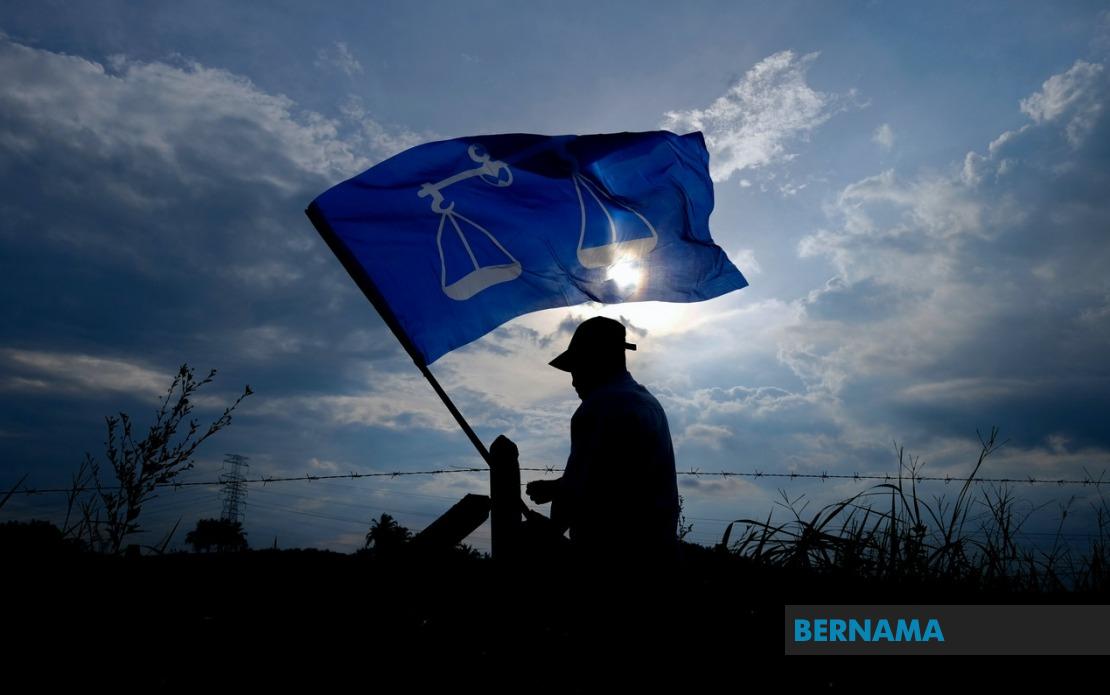
Barisan Nasional will customise its political strategy and candidate selection process for the forthcoming Negeri Sembilan state election by carefully analysing the state's unique demographics and established voting patterns, according to party chairman Datuk Seri Dr Ahmad Zahid Hamidi. The Deputy Prime Minister stressed that a one-size-fits-all approach would be inappropriate given that Negeri Sembilan presents distinctly different electoral characteristics compared to other Malaysian states, particularly in terms of the number of available seats and the composition of its population.
Ahmad Zahid outlined this position while speaking to journalists following his attendance at a briefing session organised by the Rural and Regional Development Ministry featuring TVET@KKDW participants who are competing in WorldSkills Shanghai 2026. The event was also attended by Deputy Rural and Regional Development Minister Datuk Rubiah Wang. The BN leader indicated that candidate announcements would be forthcoming within the week, signalling that the coalition's preparation for the election was progressing according to schedule.
The strategic recalibration reflects lessons learned from BN's successful campaign in the Johor state election, which took place the previous Saturday. During his speech at the WorldSkills event, Ahmad Zahid attributed that victory to what he characterised as the coalition's mental resilience and emotional creativity in surmounting obstacles encountered during the campaign period. This framing suggests that BN views electoral success not merely as a function of resources or organisational machinery, but as requiring psychological fortitude and adaptive problem-solving capabilities among campaign teams and party machinery.
For Malaysian political observers, the emphasis on demographic-sensitive strategy carries particular significance. Negeri Sembilan's electoral landscape differs markedly from larger states like Selangor or Johor, with a smaller number of state assembly seats and consequently different patterns of urban and rural voter concentration. The state has traditionally displayed complex voting behaviour, with certain areas showing strong support for particular coalitions while others remain more fluid. By acknowledging these nuances publicly, Ahmad Zahid is signalling that BN intends to conduct granular-level analysis of constituency-specific factors rather than relying on standardised messaging.
Regarding ongoing discussions with PAS about potential cooperation in the Negeri Sembilan contest, Ahmad Zahid adopted a notably cautious tone. He emphasised that no formal agreement exists between BN and the Islamist party, cautioning against interpreting preliminary discussions as settled arrangements. This measured language reflects the delicate negotiations occurring behind the scenes, where questions about candidate selection, particularly the proposed Menteri Besar candidate, remain unresolved. The absence of a finalised understanding underscores the complexity of coalition-building in Malaysia's contemporary political environment, where even allied parties must carefully manage issues of representation and leadership positions.
The BN chairman's comments on cooperation with PAS also carry implications for BN's relationship with its other coalition partners. While PAS negotiations dominate discussion of the Negeri Sembilan election, BN must simultaneously maintain cohesion within the broader Unity Government framework at the federal level. This multi-layered political chess involves balancing aspirations for expanded support in specific states against the need to preserve the stability of the national government, a challenge that has repeatedly tested Malaysian political leaders.
Ahmad Zahid also addressed broader questions about Unity Government stability by defending Housing and Local Government Minister Nga Kor Ming against calls for his resignation. The DAP deputy chairman had faced public criticism from certain quarters, prompting questions about the government's cohesion. Ahmad Zahid's response emphasised that such criticism should be avoided when coalition partners are governing together, as opposed to when operating in opposition. His point reflects a fundamental distinction in Malaysian political culture: statements and confrontations that might be acceptable for opposition parties could undermine the collaborative framework necessary for multi-party governments to function effectively.
The BN chairman characterised his relationship with Nga Kor Ming as one of personal friendship, while simultaneously stressing that relations among Unity Government leaders at the federal level remain constructive and professional. This assertion carries weight given persistent speculation about tensions within the coalition and questions about whether the government's various components can maintain unity through to the end of its term. By publicly affirming the stability of federal-level cooperation, Ahmad Zahid was attempting to project an image of governmental cohesion despite the complexity of managing multiple parties with distinct ideological orientations and constituencies.
The timing of Ahmad Zahid's remarks is significant, coming as Malaysia navigates a period of electoral activity and political repositioning. With Johor's election recently concluded and attention now shifting toward Negeri Sembilan, the country's political landscape remains dynamic. BN's apparent willingness to adopt state-specific strategies rather than imposing uniform approaches reflects a more sophisticated understanding of electoral mathematics, particularly given the coalition's need to maintain and expand support across diverse regions and demographic groups.
For Southeast Asian observers, BN's strategic recalibration offers insights into how established political coalitions adapt to contemporary electoral challenges. Rather than relying solely on traditional party structures or historically entrenched voting blocs, BN is demonstrating responsiveness to demographic change and shifting voter preferences. This approach may prove instructive for other regional political movements grappling with questions of coalition management and electoral strategy.
The road ahead for Negeri Sembilan presents multiple variables that will test BN's refined strategy. Urban voters, rural communities, different demographic cohorts, and the varied political preferences across the state's constituent areas will all require tailored messaging and candidate selection that reflects local realities. Ahmad Zahid's public acknowledgement of these complexities suggests that BN recognises the limitations of generic political formulae in contemporary Malaysian elections, where voters increasingly expect parties to demonstrate understanding of their specific concerns and contexts.

