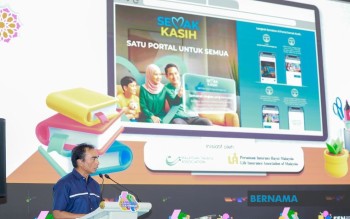
Bank Negara Malaysia has taken a significant step toward improving financial protection and awareness by launching the 'Semak Kasih' portal, a digital platform designed to reunite Malaysian families with insurance and takaful benefits they may not know they are entitled to receive. Unveiled at the Terengganu Financial Literacy Carnival, the portal represents a coordinated effort between the central bank, the Life Insurance Association of Malaysia (LIAM), and the Malaysian Takaful Association (MTA) to address a persistent gap in the country's insurance ecosystem—one that leaves grieving families unaware of protective coverage left behind by deceased loved ones.
According to industry estimates presented by BNM Deputy Governor Adnan Zaylani Mohamad Zahid, approximately 50,000 insurance policies and takaful certificates tied to death benefits remain unclaimed nationwide. This staggering figure underscores a troubling disconnect between the intentions of policyholders who secure these benefits for their families and the reality facing beneficiaries who often lack knowledge of such coverage. The problem is particularly acute in Malaysia's context, where many households still rely on informal communication channels to document financial arrangements, and where language barriers and low financial literacy can compound the difficulty of navigating insurance claims.
The genesis of the Semak Kasih platform reflects years of effort by insurers and takaful operators attempting to reconnect beneficiaries with their entitlements. Insurance companies and takaful providers have deployed traditional methods such as sending letters and deploying agents to make direct contact, yet these efforts have proven insufficient in bridging the awareness gap. The new portal transforms this process by placing agency directly in the hands of beneficiaries, allowing them to verify coverage independently and initiate contact with relevant providers—a shift that recognizes the digital capabilities of modern Malaysian society while accommodating those who may still require assistance.
The implications for Malaysian families extend beyond administrative convenience. During periods of financial distress—whether triggered by serious illness, unexpected accidents, or catastrophic events such as fires—the difference between knowing about insurance protection and not knowing can be profound. For lower and middle-income households already stretched by rising living costs, unclaimed death benefits represent lost opportunities to stabilize family finances during their most vulnerable moments. Adnan Zaylani emphasized that such protection mechanisms are not luxuries but essential safeguards that should form the foundation of household financial planning, yet the persistence of 50,000 unclaimed claims suggests that awareness campaigns to date have reached only a portion of the population.
The portal's launch occurs within a broader context of BNM's push to enhance financial literacy across Malaysia. The central bank recognizes that digital tools alone cannot solve ingrained behavioral and knowledge gaps. Research cited by Adnan Zaylani revealed that approximately 37 percent of Malaysian consumers engage in impulsive online purchases, while 26 percent carry unsustainable debt burdens—indicators of insufficient financial discipline and education. These patterns suggest that many Malaysians, while increasingly active in digital commerce, lack the foundational knowledge required to make prudent long-term financial decisions, including understanding the value of insurance and takaful products.
Beyond the insurance initiative, BNM has mobilized a comprehensive suite of financial support and education programs targeting different segments of society. Microfinancing schemes offering up to RM100,000 without collateral or guarantor requirements are designed to unlock capital for small entrepreneurs, while the SME Stabilisation Relief Facility, backed by RM5 billion in funding, addresses the specific challenges faced by companies affected by geopolitical disruptions such as the West Asia conflict. These interventions reflect the central bank's understanding that financial resilience requires multiple pillars—not just consumer awareness but also equitable access to credit and protection against external economic shocks.
The iTekad initiative has emerged as a particularly promising component of this strategy, having reached more than 14,000 participants nationwide, including approximately 600 in Terengganu, through targeted income-generation and skills-building programs. This initiative demonstrates the measurable impact of sustained, locally-adapted financial inclusion efforts. Similarly, the Financial Education Forum (FEN) initiative signals BNM's commitment to reaching underserved populations, including persons with disabilities, through the development of an inclusive, user-friendly financial education website positioned as a comprehensive resource.
Education efforts are being woven into the Malaysian education system itself. Programs such as the MyDuitStory competition and the FEN Proaktif 2.0 Programme, developed in collaboration with Universiti Malaysia Terengganu, aim to instill financial discipline and literacy in younger generations before they enter the workforce. The theory underpinning these initiatives is straightforward: early exposure to sound financial principles can yield compounding benefits over decades, providing individuals with the knowledge and confidence to navigate increasingly complex financial landscapes and avoid the pitfalls—excessive debt, inadequate insurance coverage, poor savings habits—that currently constrain wealth-building for many Malaysian households.
Adnan Zaylani's remarks about the importance of disciplined savings from a young age reflect a perspective grounded in long-term financial resilience. While macroeconomic challenges such as global economic volatility and rapid technological change lie beyond individual control, personal financial decision-making remains within the domain of household agency. This messaging—save and spend wisely, protect yourself and your dependents, continuously build financial knowledge—represents a philosophy that acknowledges both structural constraints and individual responsibility.
For Malaysian policymakers and financial institutions, the Semak Kasih portal represents a pragmatic response to a specific, measurable problem: the existence of substantial unclaimed benefits. However, the portal's true value lies not merely in administrative efficiency but in its potential to catalyze broader cultural shifts toward financial awareness and proactive household planning. Success will depend on sustained promotional efforts to ensure that the portal reaches beyond early adopters and reaches families in less urban areas and those with lower digital literacy.
The initiative also carries implications for regional financial systems across Southeast Asia. Malaysia's approach to consolidating insurance and takaful data and making it accessible through a single platform could serve as a model for other countries where similar awareness gaps persist. The integration of insurance, takaful, consumer credit, and financial education into a cohesive policy framework reflects sophisticated central banking that extends beyond traditional monetary policy into the foundational question of how to build financially resilient societies.
As Malaysia confronts mounting pressure from inflation, geopolitical uncertainty, and structural economic transitions, the importance of comprehensive financial protection and literacy becomes increasingly acute. Families that understand their insurance entitlements and possess the discipline to save and invest prudently are better equipped to weather these storms. The Semak Kasih portal, combined with broader initiatives spanning credit access, entrepreneurship support, and educational outreach, represents BNM's recognition that financial stability at the household level is inseparable from macroeconomic stability at the national level.

