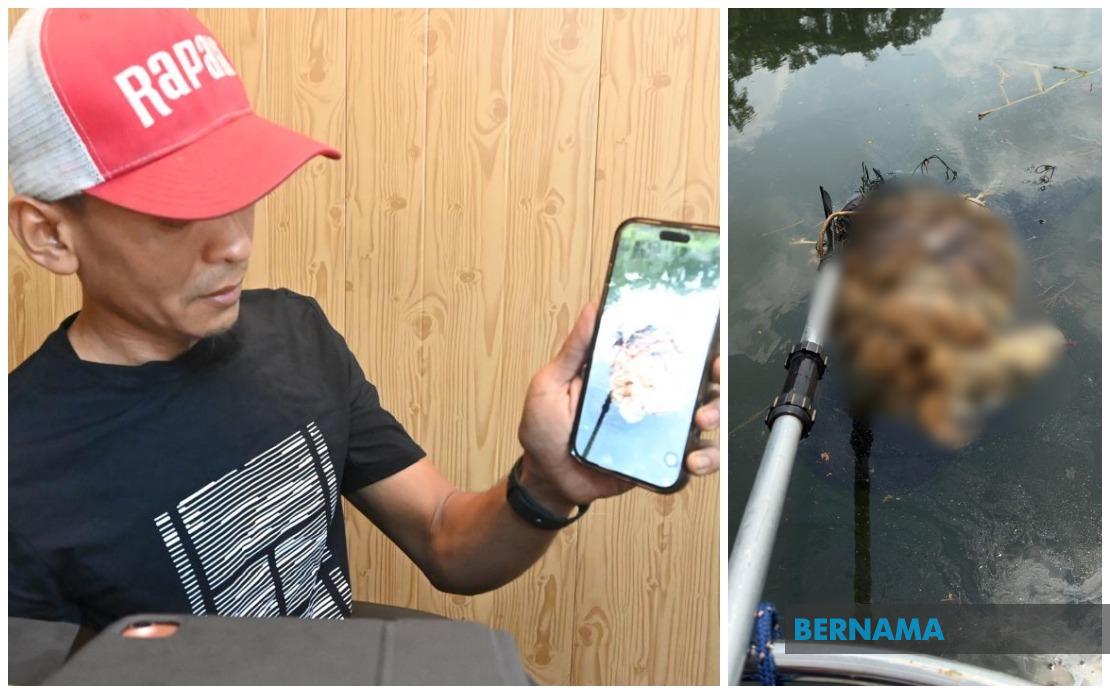
A macabre discovery unfolded on the waters of Sungai Tanjung Sembrong in Parit Raja, Batu Pahat, when a body wrapped and secured with netting was brought to light through the observant actions of a recreational fisherman. The grim find highlights how public vigilance, combined with circumstantial awareness, can lead authorities to victims who might otherwise remain undiscovered for extended periods in Johor's extensive waterways.
Muhamad Zul Fikri Borhanodin, a 33-year-old fishing enthusiast, was engaged in his usual activity along the river at approximately 11 am yesterday when he noticed a peculiar floating object in the water. His initial assessment suggested the item might be an animal carcass, a common sight in the area that would ordinarily warrant little investigation. However, certain details prompted him to look more carefully at what he had found. The overwhelming stench emanating from the object, combined with the deliberate wrapping and netting that enclosed it, suggested something far more sinister than routine debris.
Upon identifying what appeared to be a pair of jeans among the wrapping, Muhamad Zul Fikri's suspicions crystallised into certainty. Rather than attempt to handle the situation himself, he exercised sound judgment by immediately contacting a nearby friend who was operating another vessel in the vicinity. This decision to seek immediate assistance proved instrumental in ensuring the proper authorities would be notified without further disturbance to the scene. The discovery was formally reported to police at approximately 12.30 pm, setting in motion a criminal investigation that would extend beyond the river itself.
The fisherman's experience with Sungai Tanjung Sembrong spans more than two decades, granting him considerable familiarity with the waterway and its typical conditions. Remarkably, this represents only the second time in his extensive history along the river that he has encountered a body, suggesting that while such tragic discoveries do occur, they remain unusual even in this location. His previous encounter involved an individual who had fallen into the river several years prior, though the deliberate wrapping and securing of this latest victim indicated markedly different circumstances.
Authorising a rapid law enforcement response, Johor's deputy police chief DCP Hoo Chuan Huat disclosed that officers had expeditiously arrested three male suspects on the same day as the discovery. The ages of those detained ranged between 26 and 40 years old, and they were apprehended in the Batu Pahat vicinity to facilitate ongoing investigative procedures. The swift nature of these arrests suggests that police possessed considerable intelligence regarding potential perpetrators even before or immediately following the body's recovery.
Investigative work conducted by Johor police established a crucial connection linking the discovered victim to a missing persons report filed earlier in the month. The victim's wife had lodged a formal report on July 29 concerning her husband's disappearance from Mutiara Rini in Iskandar Puteri, a location some distance from where the body ultimately surfaced. This temporal gap of approximately five days between the missing person notification and the discovery indicates an investigation spanning considerable geographic and administrative territory within Johor's jurisdiction.
The circumstances of this case reflect broader concerns regarding personal safety and criminal activity in river systems that crisscross Malaysia's urban and semi-urban areas. The deliberate wrapping and securing of the body with netting strongly implicates premeditation and intentional concealment, distinguishing this incident from accidental drowning or natural death scenarios. Such methodical disposal techniques typically signal organised criminal behaviour or serious interpersonal violence, warranting intensive investigative scrutiny.
For residents and recreational users of Johor's waterways, the discovery underscores both the value of situational awareness and the importance of reporting suspicious findings to authorities rather than investigating independently. Fishermen, boatmen, and others who regularly frequent rivers occupy a unique vantage point for identifying anomalies that might escape the notice of land-based observers. The cooperation demonstrated by Muhamad Zul Fikri and his associate in promptly notifying police exemplifies responsible citizenship that assists law enforcement investigations.
As forensic examinations proceed and police interrogate the three detained individuals, the investigation will likely reveal further details regarding the victim's identity, circumstances surrounding the death, and potential motives or connections among those involved. The involvement of Iskandar Puteri in the missing person report suggests possible connections to wider Johor criminal networks or domestic circumstances that escalated to fatal consequences. The resolution of this case will depend significantly on physical evidence recovery, witness statements, and cooperation from the arrested suspects during questioning.

