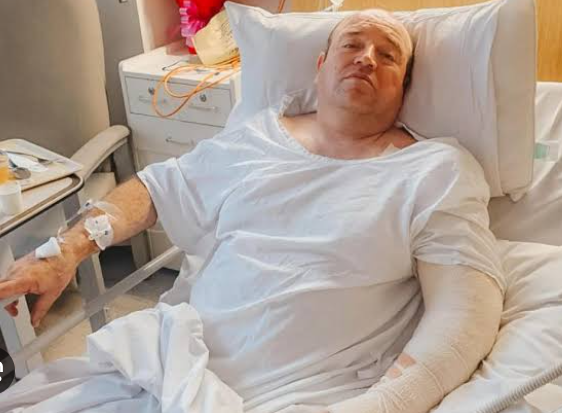
Ahmed al Ahmed, a 44-year-old fruit seller from Sydney, returned to court this week to face allegations of common assault and domestic stalking against his father—a stark contrast to the heroism that brought him international recognition just months earlier. Appearing in the Bankstown suburb, al Ahmed denied all charges, with his legal team signalling that proceedings would continue into August as further hearings are scheduled for that month. The case represents an unexpected turn in the narrative of a man whose bravery during one of Australia's deadliest mass casualty incidents earned him global admiration and national honours.
On December 14 last year, al Ahmed demonstrated extraordinary courage when a gunman opened fire at a Jewish festival gathering on Bondi Beach, killing 15 people in the process. Footage that circulated widely on social media captured the decisive moment when al Ahmed, moving between parked vehicles as bullets flew, confronted one of the two attackers. In a display of exceptional presence of mind and physical bravery, he managed to overpower the gunman and disarm him, directly preventing further casualties. Though he himself sustained gunshot wounds during the encounter, al Ahmed's actions were widely credited with stopping the attack from claiming even more lives.
The heroic intervention catapulted al Ahmed into the international spotlight almost overnight. Prime Minister Anthony Albanese publicly recognised his courage, and al Ahmed subsequently received an invitation to meet the nation's leader—a gesture that underscored the exceptional nature of his actions. Beyond political recognition, a public fundraising campaign launched in his honour raised over A$1 million, reflecting widespread community appreciation for his sacrifice and bravery. For many observers both within Australia and across the wider world, al Ahmed became a symbol of ordinary people rising to extraordinary circumstances and choosing action over self-preservation.
Yet the allegations now before the courts suggest that al Ahmed's life since the shooting has been complicated by personal and family tensions. His lawyer, Mohamad Sakr, acknowledged the difficulty of the situation outside the courtroom, describing it as a deeply personal family matter that no one would wish to encounter. Sakr's comments implied that despite the public accolades and recognition, al Ahmed has been navigating significant domestic challenges behind the scenes. The tension appears to have escalated to the point where legal proceedings were initiated, marking a sharp downturn from the triumphant narrative that defined his status in the months immediately following Bondi Beach.
The assault and intimidation allegations appear intertwined with deeper family disputes, particularly concerning the substantial fundraising proceeds that were raised in his name. According to local media reports, the situation became even more complex when al Ahmed's two brothers subsequently faced their own court appearances, having been accused of attempting to coerce their brother into surrendering portions of the million-dollar fund. This development suggests that the fundraising windfall, intended as recognition and support for al Ahmed's heroism, may have become a source of family conflict and acrimony rather than a path to stability and recovery.
From a psychological and sociological perspective, the case illustrates the particular vulnerabilities that can affect survivors and heroes of traumatic events. The sudden elevation to celebrity status, combined with the psychological impact of surviving a mass shooting while sustaining injuries, can create unpredictable and destabilising circumstances within families. Financial windfalls, while well-intentioned, can amplify existing tensions or create new ones, particularly when multiple family members become involved in discussions about distribution and use. Al Ahmed's situation reflects the complex reality that public heroism does not insulate individuals from private struggles.
The legal proceedings also raise broader questions about privacy, family dynamics, and the treatment of those thrust into the public eye through extraordinary circumstances. Al Ahmed's lawyer emphasised the importance of maintaining the presumption of innocence and protecting his client's dignity during what is clearly a difficult period. Sakr's statement to journalists stressed that al Ahmed's character as a heroic individual should be preserved, even as the domestic allegations are examined through the legal system. This appeal to broader context and character recognition is significant in cases where public figures face legal challenges.
For Malaysian and Southeast Asian observers, the case serves as a reminder of how mass casualty incidents reverberate through the lives and families of those involved, extending far beyond the immediate tragedy. The incident on Bondi Beach left 15 people dead, a toll that ranks it among Australia's most serious mass shootings in recent decades. While international focus typically concentrates on the immediate victims and the larger policy implications of such events, the experiences of survivors and those who intervened heroically deserve equal attention and compassion.
The court's next scheduled hearing in August will determine how the allegations against al Ahmed proceed. Until then, he remains protected by the presumption of innocence, though the public profile generated by his earlier heroism inevitably colours perceptions of the case. What emerges is a complex narrative in which a man recognised for saving lives now confronts serious legal charges within his family—a reminder that heroism and personal struggle are not mutually exclusive, and that the aftermath of tragedy often unfolds in ways far more complicated than initial headlines suggest.