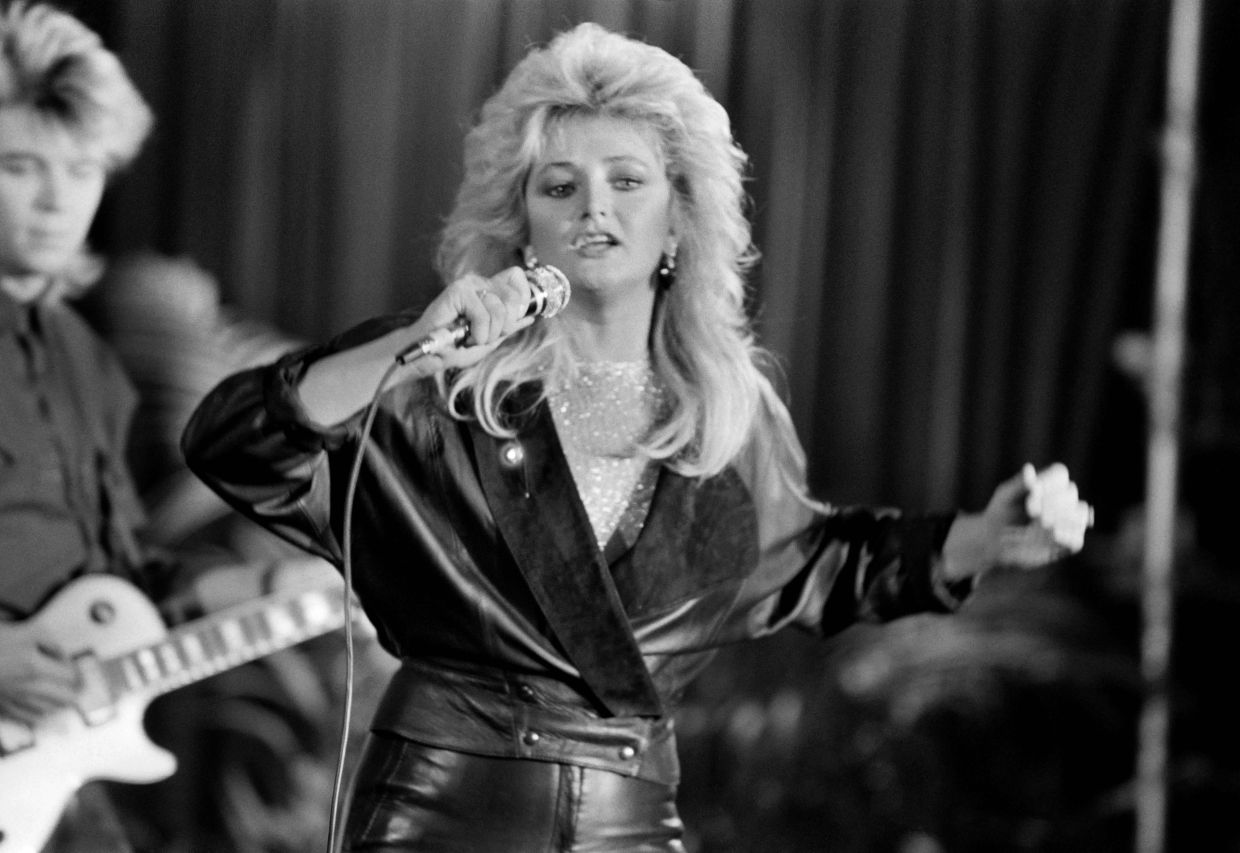
Bonnie Tyler, the distinctively husky-voiced Welsh pop sensation whose 1983 power ballad "Total Eclipse of the Heart" transcended decades to become a cultural phenomenon, died unexpectedly in a Portuguese hospital last week at 75. The Grammy-nominated artist had been undergoing treatment for an undisclosed illness at a medical facility in Faro, where she maintained a home. She had been hospitalised there in May for emergency intestinal surgery and subsequently placed in an induced coma before her unexpected passing.
Tyler's legacy rests primarily on one extraordinary achievement: the creation of a song so towering in its ambition and theatrical excess that it has become virtually immortal in popular culture. "Total Eclipse of the Heart" spent four weeks at number one on the charts, its accompanying music video accumulated over a billion views, and the track itself achieved more than a billion streams—a trajectory that accelerated dramatically during actual solar and lunar eclipses, as new generations discovered its bombastic charms. When music publication Stereogum reassessed the song in 2020, it described the track as an "extinction-level event rendered in musical form," capturing something fundamental about the composition's visceral power: "It's pop music as heart-pounding, chest-thumping, blood-gargling, heavens-falling passion explosion."
Beyond the enduring success of that singular composition, Tyler earned three Grammy nominations throughout her career, represented Britain at the Eurovision Song Contest in 2013 (finishing 19th), and received an MBE from Queen Elizabeth II in 2023 in recognition of her contributions to music. Her influence extended into popular culture in unexpected ways—the song was famously performed by Cate Blanchett in the 2001 film "Bandits," appeared in the 2003 comedy "Old School," and was covered by artists ranging from Westlife to One Direction, ensuring that multiple generations would encounter the anthem regardless of their era.
The artist was born Gaynor Hopkins in Skewen, Wales, a small coal-mining community about seven miles from Swansea, where she grew up in public housing with an outside toilet—circumstances that seemed to foreclose any possibility of international stardom. She was one of six children born into modest circumstances, yet music became her escape and obsession from childhood. Her musical education came from the Beatles, whose "A Hard Day's Night" served as her first album, and from devoted viewing of the British television programme "Top of the Pops," which she would meticulously record on a reel-to-reel machine, transcribing lyrics by hand. Her influences were the soul and blues greats: Janis Joplin, Nina Simone, Tina Turner, Wilson Pickett and Otis Redding, artists whose emotional intensity and vocal power she sought to emulate by singing into her hairbrush for hours at a time.
A critical moment arrived in 1976 when surgeons removed nodules from her throat—a medical intervention that paradoxically defined her artistic identity by bestowing upon her the trademark gravelly vocal quality that would become instantly recognisable. After performing under the stage name Sherene Davis with a soul band, she was discovered by talent scout Roger Bell, who arranged demo sessions in London. RCA Records eventually signed her, and under her final stage name, Bonnie Tyler, she released her debut album "The World Starts Tonight" in 1977, which contained her breakthrough hit "Lost in France." While "It's a Heartache" reached number three in 1978, subsequent attempts failed to sustain momentum until she shifted record labels to Sony and pursued a new creative direction.
The crucial turning point came through producer and songwriter Jim Steinman, who had gained prominence composing material for Meat Loaf. Impressed by Meat Loaf's theatrical approach to rock music, Tyler specifically requested to collaborate with Steinman on her fifth studio album, "Faster Than the Speed of Night." Steinman offered her an unusual composition: "Total Eclipse of the Heart," which drew its famous opening lyric—"Turn around, bright eyes"—from an obscure 1969 student musical Steinman had written at Amherst College called "The Dream Engine." According to Tyler's own account in The Guardian, Steinman explained that the piece derived from a proposed musical adaptation of the vampire film "Nosferatu." The producer's meticulous approach involved laying down basic rhythm tracks, recording multiple takes, selecting the strongest version, and then layering additional instrumentation—a technique he likened to Phil Spector's wall-of-sound methodology. The final recording benefited from contributions by E Street Band members Roy Bittan on piano and Max Weinberg on drums.
The song itself, beneath all its spectacular production, functions as a meditation on the pain of lost love, with Tyler delivering lines such as "Once upon a time there was light in my life, but now there's only love in the dark." The accompanying music video, filmed in a derelict psychiatric hospital in Surrey, became equally iconic—a gothic visual spectacle featuring slow-motion doves, dancing ninjas, fencers, gymnasts, wind machines, and male performers in goggles being doused with water. The location itself carried dark historical weight; security staff reported that guard dogs refused to enter the lower rooms where electroconvulsive therapy had once been administered. The video's theatrical absurdity—combined with Tyler's increasingly large shoulder pads—created a cultural artefact that defined the emerging MTV era.
While "Total Eclipse of the Heart" and its album earned Grammy nominations (competing unsuccessfully against Pat Benatar's "Love Is a Battlefield" and Irene Cara's "Flashdance—What a Feeling"), Tyler never again reached such commercial or critical heights. However, she remained professionally active throughout subsequent decades, recording movie soundtrack singles including "Holding Out For a Hero" from 1984's "Footloose" and maintaining steady recording and touring schedules. Her 2019 album "Between the Earth and the Stars" featured guest performances from Rod Stewart, Cliff Richard, and Status Quo's Francis Rossi, and she concluded that year performing at a Vatican Christmas concert before Pope Francis, demonstrating her sustained relevance within global popular culture.
In 2013, seeking fresh artistic territory, Tyler recorded a country-inflected album in Nashville titled "Rocks and Honey," which included a collaboration with Vince Gill and a ballad called "Believe in Me" written by American songwriter Desmond Child and British songwriters Lauren Christy and Christopher Braide. This track was selected to represent the United Kingdom at that year's Eurovision Song Contest in Sweden, continuing her role as an ambassador for British music on the international stage. Throughout her career, Tyler transformed from a Welsh coal-miner's daughter into a global phenomenon—a trajectory unlikely in popular music, driven almost entirely by a single composition whose theatrical grandeur and emotional sincerity proved sufficiently powerful to transcend the vagaries of popular taste and generational preference.

