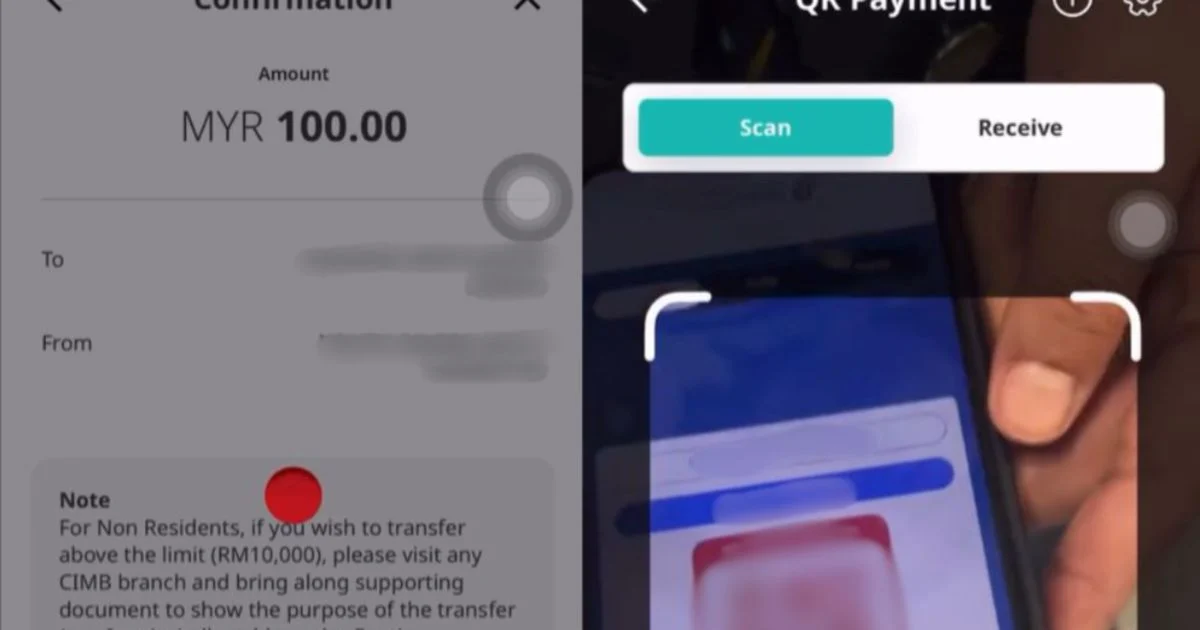
The Malaysian Border Control and Protection Agency (MCBA) has initiated a formal internal inquiry following allegations that an officer stationed at Kuala Lumpur International Airport's Terminal 2 facility accepted a direct monetary transfer of RM100 via personal quick response code, raising fresh concerns about financial impropriety within the country's border security apparatus.
The allegation, which centres on the use of a personal QR payment mechanism rather than official institutional channels, strikes at the heart of governance standards at Malaysia's primary international aviation gateway. Such transactions, if substantiated, would constitute a departure from established protocols that govern interactions between airport officials and the travelling public, and suggest potential vulnerabilities in oversight mechanisms at one of Southeast Asia's busiest transit hubs.
KLIA Terminal 2, which handles significant passenger throughput from both regional and international routes, has long been a focal point for regulatory scrutiny and passenger experience assessments. The facility's border control operations represent a critical interface between Malaysia's sovereignty and global travel flows, making the integrity of its personnel management particularly significant for the nation's standing as a professional international travel destination.
The emergence of this investigation reflects broader discussions within Malaysian governance circles regarding the adequacy of existing anti-corruption safeguards and digital transaction monitoring at federal agencies. The shift towards cashless payment systems, while generally improving transparency and reducing opportunities for traditional corruption, has created new vectors for misconduct when payment pathways remain ambiguous or lack proper institutional oversight.
Personal QR code transactions have become increasingly common in Malaysian commerce and personal finance, offering convenience to both parties in informal exchanges. However, when deployed in official settings—particularly where asymmetric power dynamics exist between government representatives and citizens—such mechanisms create conditions ripe for potential exploitation or coercion, even if unintentional on either party's part.
The MCBA, established to strengthen border security and immigration enforcement, operates under heightened public accountability expectations given its custodianship of national security interests. Officers within its ranks are entrusted with authority that could theoretically be leveraged to solicit irregular payments from passengers, whether through explicit demands or subtle pressure disguised as optional services or facilitation fees.
The investigation's scope will likely examine multiple dimensions: whether the payment was solicited or volunteered, what service or facilitation it purportedly covered, whether comparable transactions occurred with other travellers, and whether the officer maintained separate personal financial accounts that could mask systematic misconduct. Digital records from banking systems and QR transaction logs may provide crucial forensic evidence in reconstructing the incident's circumstances.
For Malaysian travellers and international visitors, such allegations underscore the importance of maintaining awareness during border procedures and understanding that legitimate border processing should not involve private monetary exchanges. Foreign visitors, in particular, may feel pressured to comply with requests from uniformed officials, especially when language barriers or unfamiliarity with Malaysian protocols compounds their uncertainty.
This incident arrives amid broader regional conversations about professionalising border agencies across Southeast Asia. Countries in the region have intensified efforts to elevate standards and eliminate petty corruption at ports of entry, recognising that such misconduct damages tourism revenue, deters legitimate business travel, and erodes public confidence in government institutions.
The investigation's outcome will carry significance beyond the individual officer involved. A thorough process that demonstrates institutional accountability could reinforce confidence in MCBA's self-regulatory mechanisms, while also signalling to the broader public service that improper financial dealings will face meaningful consequences. Conversely, any perception that internal inquiries lack rigour could deepen scepticism about official investigations into government misconduct.
Stakeholders including the Malaysian tourism industry, business travel associations, and civil society organisations will likely monitor the investigation's progress and conclusions, given the reputational implications for airport operations and Malaysia's broader investment and tourism competitiveness in the competitive Southeast Asian marketplace.
The MCBA's handling of this matter reflects whether Malaysian authorities possess sufficient investigative capacity and institutional will to address misconduct systematically, or whether such incidents remain marginalised as isolated lapses rather than symptoms of systemic deficiencies requiring structural remedies and renewed training protocols.

