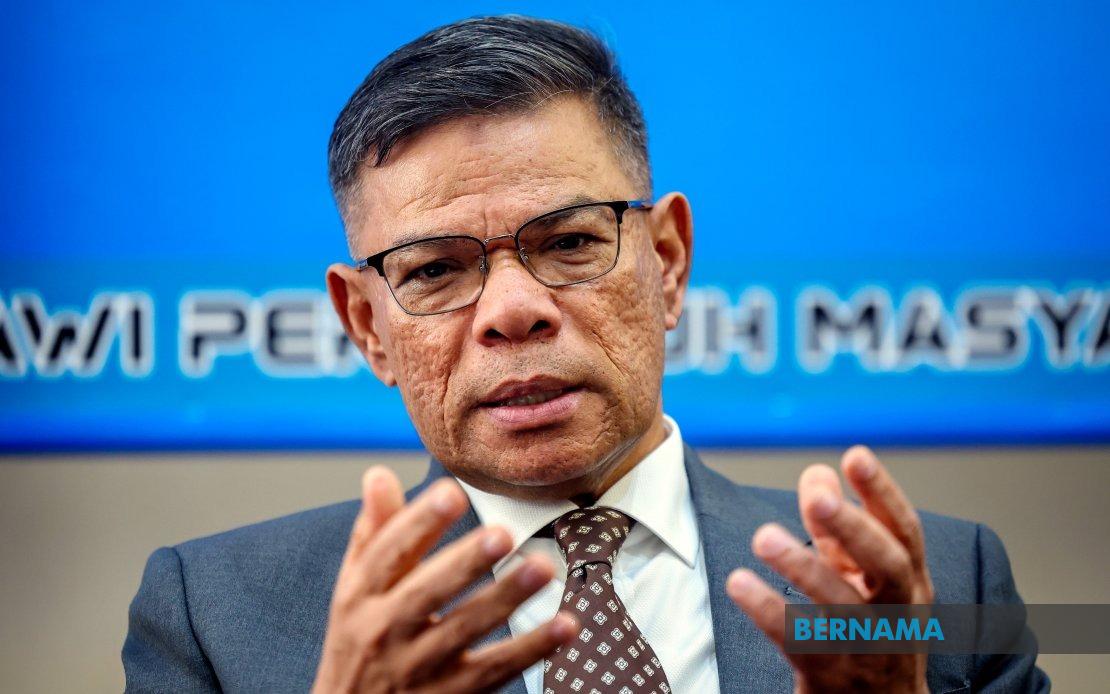
Travellers crossing between Singapore and Malaysia encountered efficient processing and smooth vehicle movement at both major land checkpoints on polling day for the 16th Johor state election, according to Malaysia's Home Minister Datuk Seri Saifuddin Nasution Ismail. The Sultan Iskandar Building in Johor Bahru and the Sultan Abu Bakar Complex in Kota Tinggi maintained steady traffic flows as approximately 2.6 million eligible voters made their way to participate in the significant state-level electoral exercise, which took place on July 11.
Saifuddin Nasution disclosed that his office had received positive operational updates from the Malaysian Border Control and Protection Agency, known locally as AKPS, detailing the morning's successful management of cross-border movements. The minister shared his assessment via social media, accompanying his statement with video documentation of conditions at both entry points to demonstrate the effectiveness of border operations. His public acknowledgement of AKPS performance underscored the coordination between federal agencies tasked with maintaining both security and efficiency during periods of elevated border traffic.
Antipating substantially higher volumes of travellers, AKPS had implemented comprehensive operational enhancements at both crossing points in the days preceding and throughout election day. The agency strategically established dedicated lanes for faster processing, activated additional hybrid counters combining automated and manual clearance systems, and deployed contra-flow arrangements to optimise vehicular routing. These tactical measures reflected careful planning based on historical patterns of cross-border movement during major electoral events, recognising that Singapore-based Malaysian voters would seek to return home to exercise their franchise.
The enhanced border operations commenced with extended special lane availability, which functioned continuously for 24 hours before election day. Services were maintained throughout the polling period, remaining operational from just after midnight until the evening closure at 6 pm, ensuring that voters throughout the day would encounter dedicated processing infrastructure. This extended timeframe demonstrated consideration for varying work schedules and personal circumstances that might influence when individuals chose to cross the border for voting purposes.
The Johor state election itself represented a substantial electoral undertaking, with 172 candidates competing across 56 state assembly constituencies. Polling operations commenced simultaneously at 8 am across 1,076 designated polling centres, with authorities establishing 4,889 individual polling channels to accommodate voter participation efficiently. The geographic distribution of polling locations and the significant number of concurrent voting channels reflected electoral commission planning to prevent bottlenecks and accommodate high participation rates.
Electoral authorities had established an ambitious participation target of approximately 70 per cent voter turnout, representing the benchmark against which engagement would be measured. This target acknowledged the importance of securing strong legitimacy for the resulting state government through demonstrable public participation. The Election Commission anticipated completing result tabulation and announcing final outcomes by 10 pm, allowing for rapid determination of the new Johor state government's composition and mandate.
The successful border management on election day carried broader implications for Malaysia's transport infrastructure and inter-agency coordination capabilities. The cross-border movement between Johor and Singapore represents one of Southeast Asia's most heavily trafficked land routes, with hundreds of thousands of daily commuters, business travellers, and tourists regularly transiting through these checkpoints. The ability of AKPS to seamlessly scale operations during exceptional demand periods while maintaining security standards demonstrates sophisticated operational planning and resource deployment.
For Malaysian voters based in Singapore, access to reliable border crossing efficiency directly affects their ability to participate in democratic processes. The substantial contingent of Malaysians residing in Singapore—many of whom retain voting rights in their home states—depend on convenient cross-border movement to exercise electoral participation. Effective border management thus becomes intertwined with democratic accessibility, enabling geographically dispersed citizens to engage in national and state-level governance without prohibitive logistical barriers.
The election's significance extended beyond mere numbers, as the Johor state legislature represents one of Malaysia's largest and most economically important regional governments. The 56-seat assembly exercises authority over substantial fiscal resources, infrastructure development, and policy implementation across a state that forms Malaysia's southern economic gateway. Voter participation and electoral legitimacy in such contests carry ramifications for governance effectiveness and public confidence in state institutions throughout the subsequent term.
Cross-border coordination during elections also reflects the increasingly integrated nature of the Malaysia-Singapore relationship, despite periodic diplomatic tensions. Both nations maintain sophisticated border management arrangements necessitating real-time communication, shared standard operating procedures, and mutual recognition of each other's operational requirements. Election-related traffic spikes test these arrangements while providing opportunities to refine protocols and identify potential improvements for future contingencies.
The successful execution of border operations during the Johor election underscores how electoral participation increasingly intersects with infrastructure capability, security protocols, and inter-agency effectiveness. As regional populations become more mobile and dispersed—with significant communities of nationals residing across multiple jurisdictions—governments must develop increasingly sophisticated mechanisms for accommodating citizen participation while maintaining border security and safety standards. The operations at Sultan Iskandar Building and Sultan Abu Bakar Complex demonstrated that Malaysia's border agencies possess the capacity to balance these competing demands effectively during periods of elevated demand.

