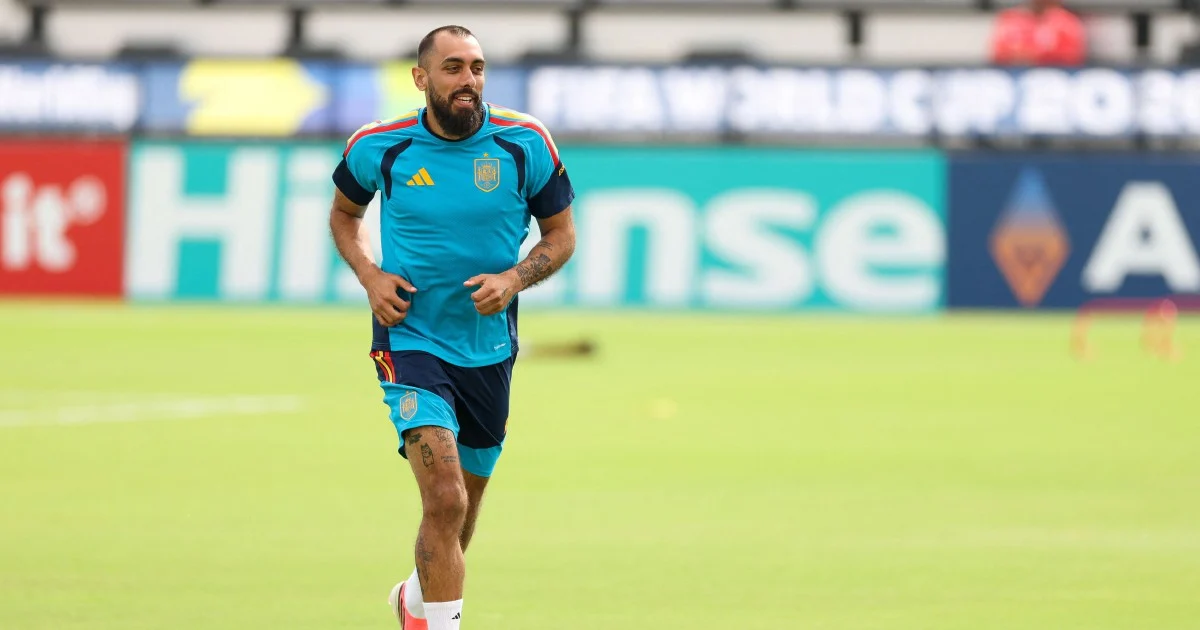
Borja Iglesias has become one of football's most unconventional voices, using his platform as a World Cup striker to engage directly with political and social issues that most professional footballers carefully avoid. The Spanish forward's willingness to speak candidly about matters ranging from the humanitarian situation in Gaza to homophobia within the sport has earned him a reputation as football's most candid commentator, a status that comes with both admiration and criticism from those who believe athletes should remain apolitical.
Iglesias' approach extends beyond mere words. His choice to paint his nails—a simple aesthetic statement that nonetheless carries symbolic weight in a conservative sport—represents his broader philosophy of using every available avenue, including his personal presentation, to challenge conventional norms. This visual defiance has become emblematic of his willingness to stand apart from the homogenised image that football has traditionally demanded from its elite athletes. In a sport where conformity has historically been rewarded and individuality often penalised, Iglesias' refusal to adopt the standard uniform of neutrality marks a significant departure.
The epithet "the alien of football" that has been applied to Iglesias captures both the novelty and the discomfort his approach generates within professional sports circles. Where traditional football culture celebrates athletes who maintain strict separation between their public sporting persona and any personal political convictions, Iglesias integrates his values into his professional identity. This integration challenges the long-established consensus that athletes should focus exclusively on their sport and leave social commentary to others.
His willingness to address Gaza specifically demonstrates how Iglesias has moved beyond safe, universally accepted causes into territory where public statements carry real reputational risk. Major international conflicts generate polarised opinions, and for a professional athlete whose career depends on sponsorships, fan support, and media goodwill, taking a position on such contested issues represents genuine courage or deliberate provocation, depending on one's perspective. The reaction from various stakeholders—some praising his moral clarity, others questioning whether he should use his platform this way—reflects deeper tensions within professional sport about the appropriate boundaries of athlete activism.
Homophobia in football, while more openly acknowledged than in previous decades, remains a persistent problem both on and off the pitch. Players and officials have documented widespread discrimination, from casual slurs in locker rooms to outright hostility towards openly gay athletes. By speaking explicitly about this issue, Iglesias aligns himself with a small but growing cohort of footballers willing to name and challenge these problems directly. His stance carries particular weight because it comes from someone deeply embedded within the professional game, not from external observers or activists.
The Spanish footballer's approach reflects broader generational shifts in professional sport. Younger athletes increasingly view silence on social issues as complicity rather than neutrality, a position markedly different from the perspective that dominated professional athletics for decades. This generational divide has created friction within teams, clubs, and sporting organisations, as established power structures struggle to accommodate athletes who refuse to accept the previous generation's unwritten rules about acceptable public behaviour.
For Southeast Asian and Malaysian audiences, Iglesias' example raises important questions about the role of public figures in democratic societies. Sports personalities in the region enjoy significant influence, and the question of whether that influence should extend to political commentary remains contested. Malaysia's particular social context—where discussions about certain issues remain sensitive—makes the case of an international athlete speaking freely on controversial matters especially relevant to local conversations about freedom of expression and the appropriate scope of public discourse.
Clubs and sponsors face their own dilemmas when dealing with politically vocal players. Supporting such players can enhance a brand's progressive credentials, but it can also alienate segments of the fanbase or invite controversy. The commercial calculations involved in managing athletes like Iglesias reveal how professional football operates as a commercial enterprise where every statement carries financial implications. His continued presence in the sport despite, or perhaps because of, his outspokenness suggests that the market for athletes willing to take principled stances may be growing.
Iglesias' career trajectory offers a test case for whether professional football can accommodate genuine moral seriousness from its players. If he continues to perform at a high level while maintaining his political engagement, it could help normalise athlete activism within the sport. Conversely, if he faces career consequences, that outcome would suggest football's institutional resistance to change runs deeper than recent progressive rhetoric might suggest. Either way, his example has already shifted conversations about what elite athletes are permitted to say and be.
The phenomenon of Iglesias also highlights how individual acts of integrity can challenge systemic conformity. His nail polish and his statements function together as elements of a larger refusal to accept football's conventional constraints on how athletes may present themselves and what they may discuss publicly. In this sense, he represents not merely a personality clash within sport but a fundamental challenge to the sport's underlying culture and values.

