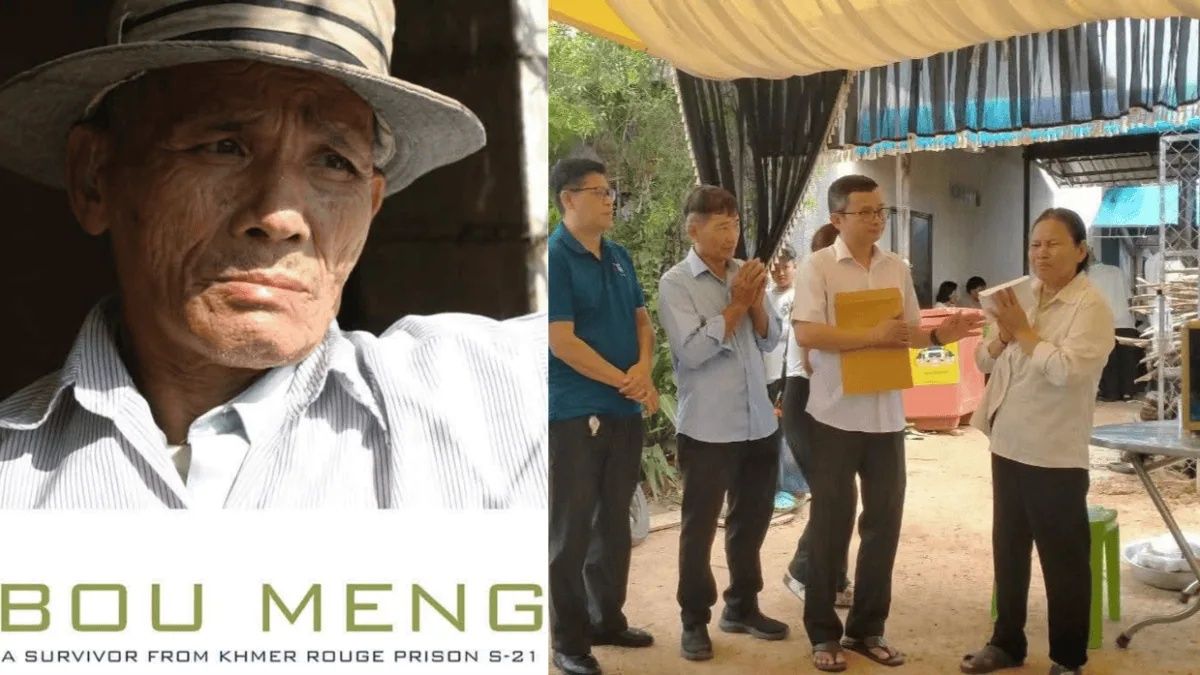
Bou Meng, among the handful of people to survive imprisonment at Cambodia's most infamous detention facility under Pol Pot's Khmer Rouge regime, has died at the age of 85. The Tuol Sleng Museum announced his passing on Friday, August 14, 2026, marking the loss of a pivotal historical figure whose personal testimony documented some of the regime's darkest crimes. Meng's death removes one of the last direct witnesses to the horrors perpetrated within the walls of S-21, the secret prison where an estimated 12,000 people were tortured and killed between 1975 and 1979.
The circumstances of Meng's imprisonment illustrate the arbitrary brutality that defined the Khmer Rouge era. In 1977, he and his wife were both arrested and taken to S-21, the regime's central interrogation and execution centre located in a converted school building in Phnom Penh. Their children were separated from them and sent to a labour camp for young people, part of the systematic destruction of family bonds that characterised the genocide. Meng would never reunite with his wife or children, a loss that haunted him throughout his remaining decades. Yet he remained among an extraordinarily small group—only seven people are known to have survived S-21—a distinction born partly from fortune and partly from skills that made him valuable to his captors.
Meng's survival owed much to his ability as a painter. The Khmer Rouge, despite their ideological commitment to erasing intellectuals and skilled workers, occasionally preserved individuals whose talents served regime purposes. Meng's artistic skills apparently convinced prison commandant Kaing Guek Eav, known as Comrade Duch, to keep him alive rather than execute him. This reprieve came after enduring extensive torture, a standard practice at S-21 where confessions were extracted through systematic brutality. Thousands died from torture, starvation, and execution within the prison's walls, their bodies disposed of in mass graves at the Choeung Ek killing fields outside the capital.
Following the Vietnamese invasion that toppled the Khmer Rouge in 1979, Meng emerged from captivity as a living archive of S-21's operations. Decades later, when the Extraordinary Chambers in the Courts of Cambodia was established to prosecute surviving Khmer Rouge leaders, Meng provided crucial testimony. He testified at the trial of Duch, the prison's commandant, helping to build the historical record of crimes committed at S-21. His eyewitness accounts corroborated documentary evidence and helped secure convictions, demonstrating the irreplaceable value of survivor testimony in transitional justice processes.
In his final years, Meng redirected his energies toward education and remembrance. He became a regular presence at the Tuol Sleng Museum, which now occupies the same building where he suffered imprisonment. Rather than retreat into private grief, he chose to engage with visitors—tourists, students, researchers, and Cambodians reconnecting with their nation's trauma—sharing his story in hopes of preventing future atrocities. This work carried profound emotional weight; revisiting the site of one's torture and discussing it with strangers requires extraordinary resilience and commitment to historical truth.
The museum's statement acknowledged Meng's dual significance: as both a historical witness and as a symbol of survival against systematic attempts at annihilation. The Khmer Rouge's four-year rule killed approximately 1.7 million Cambodians through execution, forced labour, starvation, and disease. The regime targeted educated people, ethnic minorities, city dwellers, and anyone deemed a threat to their agrarian utopia. That Meng survived S-21 made him statistically exceptional, and that he subsequently devoted decades to documenting and teaching about his experience made him morally exceptional as well.
For Southeast Asian readers, Meng's passing carries particular resonance. Cambodia's experience with genocide, while distinctive in scale and method, echoes warnings relevant across the region. The rapid collapse of societal norms, the dehumanisation of targeted populations, and the vulnerability of institutions to ideological capture remain cautionary lessons. Malaysia, Singapore, Indonesia, Thailand, and other ASEAN nations have grappled with their own historical traumas and questions of accountability. Meng's willingness to testify in court, despite the personal cost of reliving trauma, provides a model of how survivors can contribute to justice and historical memory.
The Khmer Rouge Tribunal itself has faced criticism and resource constraints that have slowed accountability efforts. Several senior leaders died before facing trial, and investigations into mid-ranking officials remain incomplete. Meng's testimony helped secure one of the tribunal's few convictions—Duch received a life sentence—demonstrating that survivor evidence can still yield justice, even decades after crimes. As the tribunal winds down its operations and fewer witnesses remain alive, Meng's passing underscores the urgency of completing investigations and ensuring that institutional memory, not merely survivor memory, preserves knowledge of what occurred.
Bou Meng's legacy extends beyond his individual survival story. He represents a generation of Cambodian survivors whose collective testimony has shaped how the world understands genocide and its aftermath. The Tuol Sleng Museum, which houses portraits of thousands of victims, has become a global symbol of remembrance and a destination where historical education occurs through the voices of those who lived through horror. Meng's contributions to that mission—both through formal testimony and informal education—will influence how future generations reckon with Cambodia's traumatic past.
The broader implications of Meng's death concern the fragility of historical memory as survivor witnesses age and pass away. Within the next decade, most remaining S-21 survivors and other Khmer Rouge victims will likely be deceased. This demographic reality creates urgency around documenting survivor testimonies, establishing museums and memorials, and integrating this history into educational curricula. For Cambodia and the region, it emphasises the importance of institutional mechanisms for preserving and transmitting historical knowledge when living memory fades. Meng spent his final years ensuring that S-21's history would not die with him—a commitment that continues to challenge Cambodia and the international community to sustain accountability and remembrance long after all witnesses have gone.

